IRIS Dena safe harbor delay allegations intensify after Iranian captain says Sri Lanka’s hesitation left the disarmed frigate exposed.
The IRIS Dena safe harbor delay has triggered fresh diplomatic controversy after the Iranian frigate’s captain alleged that Sri Lanka indirectly enabled the deadly attack by failing to grant timely protection.
Fresh survivor testimony from the Iranian naval frigate IRIS Dena has intensified international scrutiny over the March 4 attack that sank the vessel near Sri Lanka. New accusations now claim that delays by regional actors contributed to the tragedy, raising serious questions over diplomatic hesitation, maritime protection, and regional alignment during escalating tensions involving Iran.

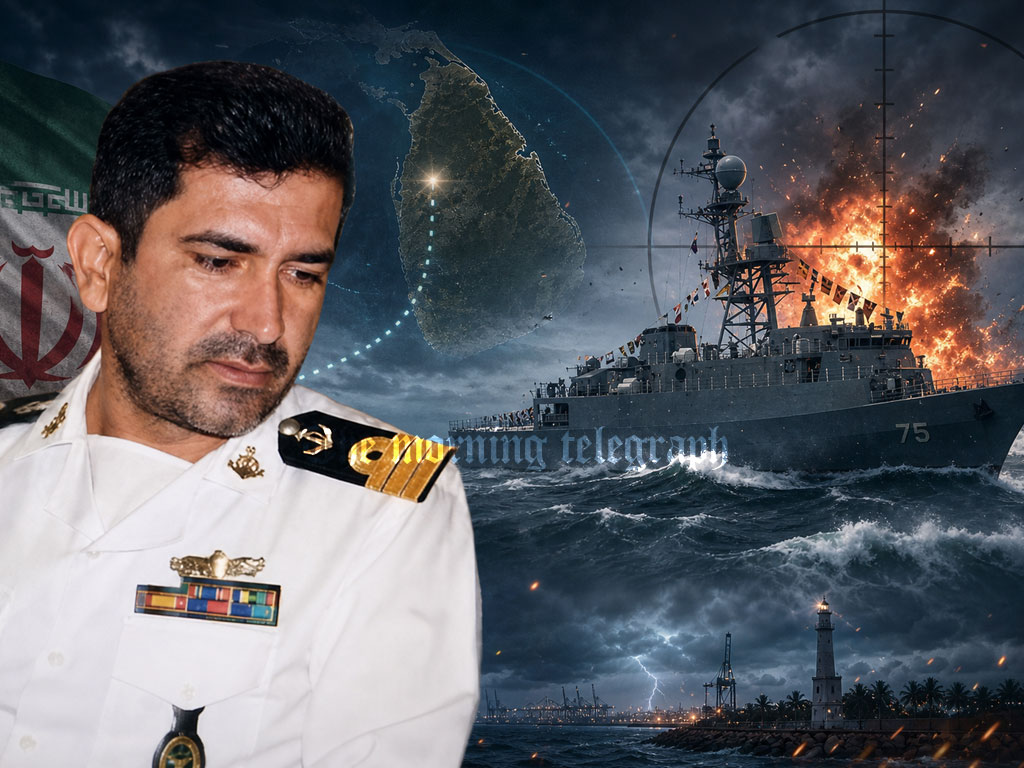
Commander Abuzar Zarri, the ship’s captain, has alleged that Sri Lanka indirectly helped create the conditions for the attack by failing to grant timely safe harbor. According to his account, the delay left the disarmed vessel exposed in international waters at a moment when it was unable to defend itself.
Zarri, who appeared injured in an Iranian television report released on April 21, described how the Dena had been returning from the MILAN 2026 naval exercise in India when it came under attack.
He confirmed that the frigate had been disarmed as a condition of participation in the exercise, carrying no missiles or torpedoes. That meant the ship had no ability to defend itself when the strike began.
According to Zarri’s account, the first U.S. torpedo struck at 3:35 a.m., crippling the ship’s propulsion system. The strike disabled the vessel but did not cause immediate fatalities.
For the next 90 minutes, the crew attempted emergency procedures as the damaged frigate remained vulnerable at sea. Sailors then gathered on the aft deck in preparation for evacuation.
At 5:06 a.m., a second torpedo hit the same area where the sailors had assembled, killing 104 crew members.
Zarri alleged that the timing and targeting of the second strike indicated an intention to inflict maximum casualties rather than simply neutralize a military threat. This raises concerns about the nature of the attack and the circumstances that left the vessel exposed.
The attack took place just minutes before the IRIS Dena was expected to enter Sri Lankan territorial waters near Galle. The ship had hoped to find protection there after seeking safe harbor.
Iranian officials had previously requested safe harbor for the Dena and its accompanying ships. However, Sri Lanka did not grant immediate access.
India later approved docking permission, but only one of the three vessels was allowed to enter port. According to the allegations, that decision left the Dena exposed in a dangerous position.
Zarri and other Iranian officials argue that these delays played a critical role in the outcome. They claim the failure to grant faster protection effectively prevented the frigate from reaching safety.
Critics in the region have also echoed these concerns, suggesting that quicker decisions by Sri Lankan authorities could have saved lives.
However, questions remain over what pressures may have influenced the handling of the safe harbor request, and whether Sri Lanka had the diplomatic space to act faster during a fast-moving military crisis.
The diplomatic fallout has continued to grow. Sri Lankan officials have acknowledged external pressure over how to handle the aftermath, including the repatriation of survivors.
India has also faced criticism over its handling of the docking requests, adding another layer to the controversy. The issue has now become more than a question of one vessel’s fate. It has opened a wider debate about regional complicity, naval neutrality, and how smaller states respond when great-power tensions reach their waters.
Survivors were eventually repatriated weeks later, but the controversy surrounding the sinking of the IRIS Dena remains unresolved.
For Tehran, the incident is now being framed not only as a military attack, but as a case where diplomatic delays contributed to a deadly outcome at sea.
What happens next could be critical, as the allegations over the IRIS Dena safe harbor delay may place Sri Lanka, India, and the wider region under renewed scrutiny over their roles during one of the most sensitive maritime incidents of the Iran crisis.