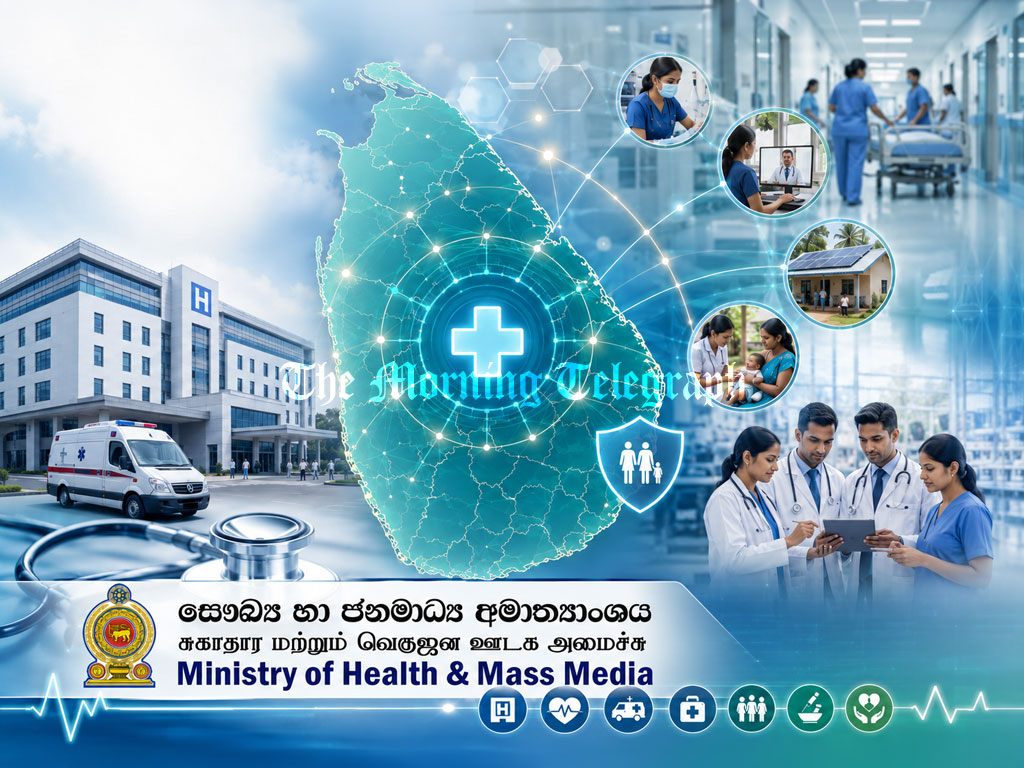
Health service coordination will be strengthened as Cabinet approves MPs as district officers to improve hospitals, resources and regional care.
Health service coordination across Sri Lanka is set for a major district-level change, with Members of Parliament to be appointed for every district.
Minister of Health and Media Dr. Nalinda Jayatissa has focused attention on strengthening health service coordination at district level, with the aim of bringing preventive and curative health services closer to the people in a more efficient manner.
The move is also intended to minimise existing shortcomings in Sri Lanka’s health system and ensure that resources are deployed efficiently according to identified priorities.

Accordingly, the Cabinet of Ministers has granted approval to a Cabinet paper recently submitted by the Minister of Health and Media.
The proposal seeks to appoint a group of Members of Parliament as “District Coordination Officers” covering all districts of the country.
One of the main objectives of this step is to improve preventive and curative services by addressing coordination weaknesses between health institutions controlled by the central government and those managed by provincial councils.
The appointment has also been motivated by practical difficulties that existed under the previous system, especially in properly identifying regional health issues and incorporating them into national-level plans.
The roles and responsibilities proposed for the newly appointed District Coordination Officers include identifying district-level health needs with priority given to public participation and ranking those needs accordingly.
They will also be expected to help integrate those needs with national and provincial health plans.
Their duties further include strengthening efficient resource utilisation and improving coordination between line ministry institutions and provincial health institutions.
They will also coordinate the implementation of regional development plans in line with ministry policies.
In addition, they are expected to identify priority projects and recommend them to the ministry.
They will also monitor the progress of ongoing projects and support their successful completion within the stipulated timeframes.
Sri Lanka’s health service system operates through a dual structure consisting of hospitals and health institutions controlled by line ministries, as well as those controlled by provincial councils.
Health services are also mainly divided into two sectors: Preventive Health Services and Curative Health Services.
Although this structure provides health services to a large population, several issues have been observed.
These include a lack of district-level coordination due to the separate functioning of line and provincial administration systems, inefficient resource utilisation, and the incomplete reflection of regional health needs in national plans.
Minister Dr. Nalinda Jayatissa noted these concerns when presenting the relevant Cabinet paper.
He further emphasised that limited public participation had led to insufficient identification and resolution of health issues at regional level.
Accordingly, the Cabinet paper names the following MPs as District Coordination Officers for the relevant districts:
Anuradhapura – Susantha Kumara Nawaratne, Badulla – Ravindra Bandara, Batticaloa – Kandasamy Prabhu, Colombo – Dr. Najith Indika, Digamadulla/Ampara – M.M. Sugath Rathnayake, Galle – Dr. Nishantha Samarawira, Gampaha – Dharmapriya Wijesinghe, Hambantota – Dr. Sadaruwani Madarasinghe, Jaffna – Dr. S. Sritharan, Kegalle – R.M. Samanatha Ranasinghe, Kalutara – Dr. Nihal Abeysinghe, Kandy – Thanura Dissanayake, Kurunegala – Dr. Jagath Gunawardhana, Matale – Deepthi Niranjani Wasalage, Matara – Lal Premanath, Monaragala – H.M. Sarath Kumara, Nuwara Eliya – T. Manjula Suraweeraarachchi, Polonnaruwa – Padmasiri Bandara, Puttalam – Gayan Janaka, Ratnapura – Dr. Janaka Senaratne, Trincomalee – Roshan Akmeemana, and Vanni – Selvathamby Thilakanadan.
Through this new system, the Ministry of Health and Media aims to improve the quality of health services and provide the people with a more accessible, reliable, and better coordinated healthcare service.