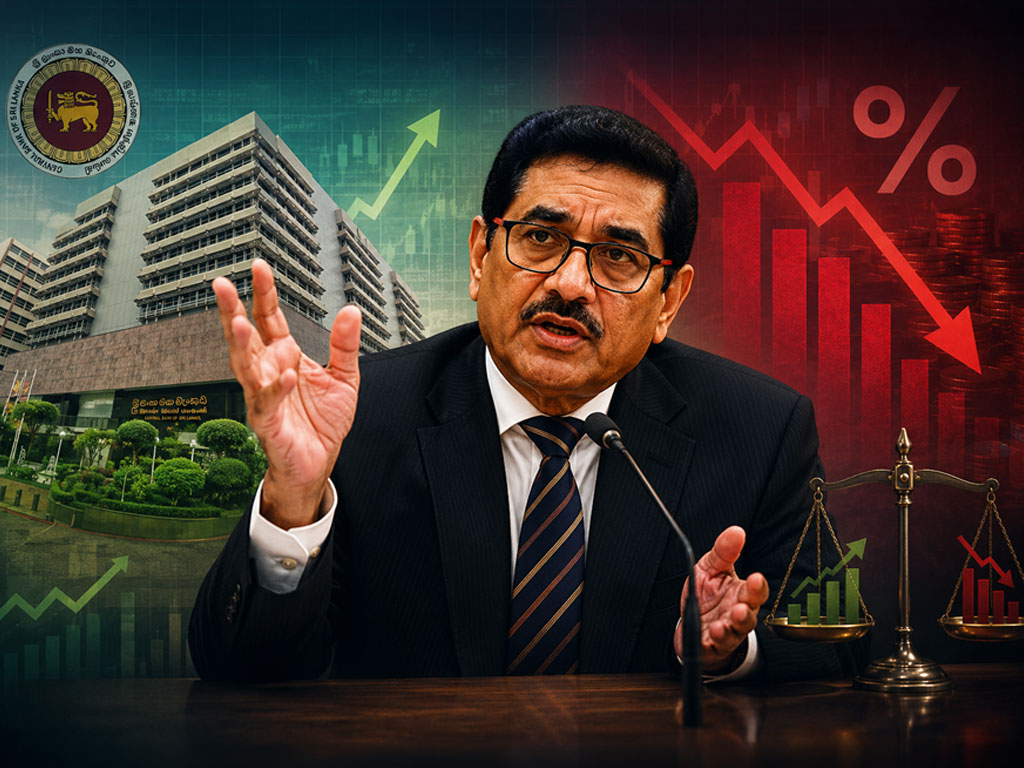
Sri Lanka inflation target cuts could force tighter monetary policy and slower growth, Central Bank Governor Nandalal Weerasinghe warned.
Sri Lanka inflation target reductions could force the country to compromise higher economic growth, Central Bank Governor Nandalal Weerasinghe told a parliamentary panel this week.
The Central Bank has been formulating monetary policy based on a 5% medium-term inflation target with a flexible exchange rate.
Under the new Act introduced in 2023, the Central Bank is allowed to maintain inflation between 3% and 7%, with the 5% medium-term target decided between the Bank and the Finance Ministry under a three-year agreement.

That agreement will end in August, and some government officials have already indicated that the inflation target should be reduced when the Finance Ministry enters into a new agreement later this year.
However, Governor Weerasinghe warned that lower inflation targets may require greater economic compromise.
“If we are to reduce the inflation target to 2% next year onwards, we have to very strictly tighten the monetary policy, raise interest rates unnecessarily to bring down current inflation and 5% to 2%,” Weerasinghe told the Parliament Committee on Public Finance on Thursday.
“I think that is not growth supporting. So for country like us to balance the growth and inflation, it has to be a balance between both. And we can achieve a low inflation at compromising the growth.”
He said slightly higher inflation could provide some support for economic growth, which is why consultations with the Ministry of Finance and the government are important.
“If we achieve a slightly higher inflation that will slightly support growth. So that’s where we have a consultation with the Ministry of Finance and the government to identify what is the desirable rate of growth for the country from the government’s point of view,” he said.
Weerasinghe added that if the government wants 5% growth while also seeking 2% inflation, the two goals may not be consistent under current conditions.
“So if government says we need 5% growth and the government same says we need 2% inflation that is not consistent at the current growth. We can bring 2% down to 2%, but then we have to raise interest rates that will have impact on the growth,” he said.