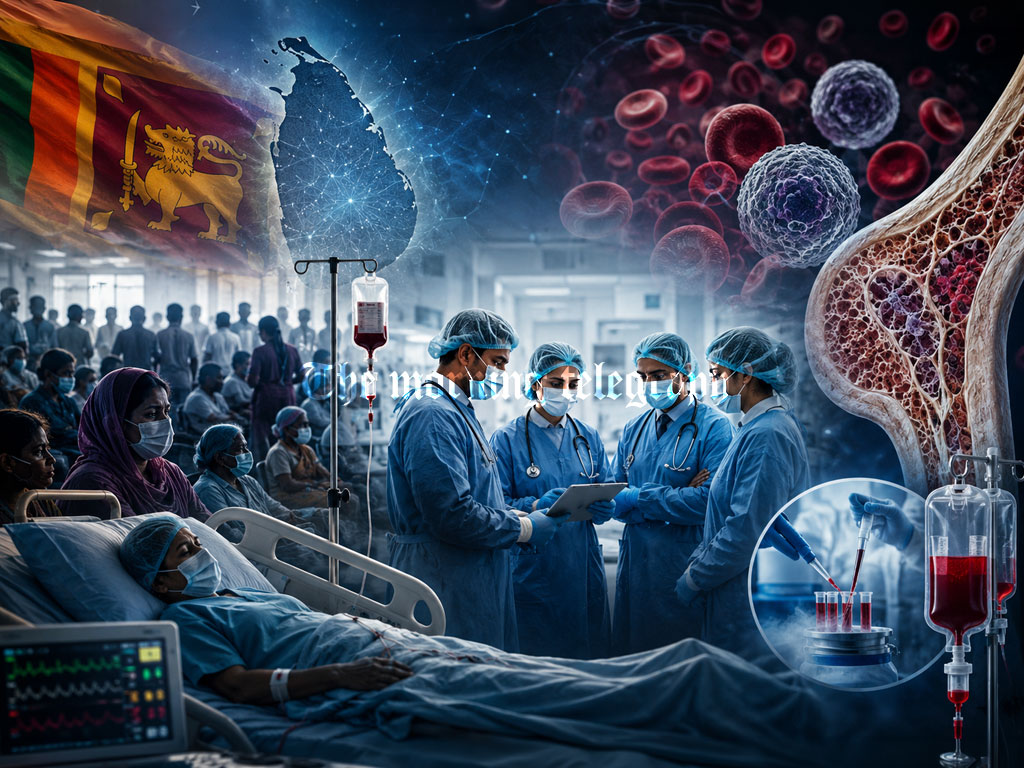
Cancer patients in Sri Lanka face a severe shortage of blood cancer and bone marrow transplant specialists as cases continue rising.
Cancer patients in Sri Lanka are facing a critical shortage of specialists for blood cancer treatment and bone marrow transplants, senior doctors warn.
Medical experts say the country’s healthcare system is struggling to meet rising demand for highly complex cancer care due to the limited number of trained specialists.
Specialist physician Dr. Buddhika Somawardhana stated that between 15,000 and 18,000 new cancer cases are recorded in Sri Lanka each year.
Among these patients, an estimated 1,500 to 2,000 require advanced treatment such as bone marrow transplants.

Such treatment requires highly specialized medical expertise, advanced infrastructure, and consistent healthcare support.
Dr. Somawardhana said only four specialists in the entire country are currently handling blood cancer and bone marrow transplant-related treatment.
Three of them, including himself, are based at Maharagama Apeksha Hospital.
The remaining specialist serves at Kandy National Hospital.
He also warned that several trained doctors have already left Sri Lanka for overseas employment, further worsening the shortage.
Experts say treatment for blood cancers and related conditions is extremely expensive.
They also note that such care often requires advanced medical resources, specialist teams, and uninterrupted availability of essential drugs.
Due to these limitations, many patients begin treatment in Sri Lanka but are later referred abroad for further care.
India and other countries are among the common destinations for such patients.
Dr. Somawardhana also referred to 2022 national data, which recorded 35,855 new cancer cases in Sri Lanka.
Out of that figure, around 5,400 were blood cancer cases.
He stressed that unless specialist training is expanded and healthcare infrastructure is improved, the gap between patient needs and available treatment will continue to grow.
Consultant hematologist Dr. Nilupuli Gunaratne also emphasized the importance of strict follow-up care after intensive cancer treatment.
She warned that treatment costs can range from Rs. 10 million to Rs. 20 million.
According to her, failure to maintain proper follow-up after treatment can lead to serious and even life-threatening complications.
She added that patients remain highly vulnerable after treatment because their immune systems are weakened.
As a result, regular monitoring is essential to prevent infections and other medical risks.
Doctors say Sri Lanka must urgently strengthen specialist training, retain skilled medical professionals, and expand treatment capacity if the country is to protect patients facing complex cancer conditions.