Roy Denish
Sri Lanka’s greatest cultural heist exposes a 16-year trail of missing masterpieces, vanished records, elite impunity, and a national art legacy left hanging in empty frames.
For sixteen agonizing years, the National Art Gallery of Sri Lanka, known historically as Kalabhavana, has been a grave. Not of ancient kings, but of a South Asian nation’s vibrant artistic heritage, buried behind continuously closed doors, swallowed by the slow, sneaky decomposition of what was publicly termed a refurbishment. Now, a shocking truth has ricocheted through its silent halls and been officially laid bare before parliament in Colombo: the sacred trust has been shattered, and exactly 42 invaluable, ancient masterpieces have vanished into thin air. This is not mere local theft; it is an act of global cultural desecration, a chilling testament to institutional mismanagement, political impunity, and the sinister creep of organized corruption. As of June 2026, Sri Lanka faces a devastating dual crisis of cultural heritage loss: the systemic, ongoing looting and illegal excavation of ancient sites by treasure hunters, and severe, compounding lapses in the security and cataloging of its most prominent national institutions, highlighted by this shocking gallery catastrophe.

To an international audience unfamiliar with the island’s cultural landscape, the Kalabhavana is far more than just a regional repository; it was built to be a fountain of dreams. Erected in 1932 as a monument to the burgeoning national identity of Ceylon under British rule, its elegant colonial-era architecture whispered tales of a proud, sovereign past. Designed by the renowned Colombo-based architectural firm of Edwards, Reid & Begg, it was envisioned as a South Asian beacon, a grand space where the unique visual spirit of the island could flourish and be preserved for future generations. Its various subsections historically housed distinct collections, including dedicated wings for early twentieth-century modernist works, traditional Buddhist and island folk art, portraits of foundational national figures, and a gallery of contemporary masters. Each room, each wall, was a silent guardian of stories, aesthetic innovation, and a distinct Eastern identity.
Today, those stories are screaming silently from their empty frames. The missing artworks carry not only immense cultural weight but also a formidable monetary value on the global market. While official valuations are carefully cloaked in bureaucratic silence, a conservative estimate places their collective worth in the tens, possibly even hundreds, of millions of Sri Lankan rupees, which translates into multi-millions in international currency on the global black market. Their true value, however, is immeasurable; they are the bedrock of Sri Lanka’s artistic legacy, irreplaceable pieces of a national jigsaw puzzle. Among the vanished canvases are irreplaceable twentieth-century works by titans like A.C.G.S. Amarasekara and J.D.A. Perera, alongside landmark creations from the iconic, globally celebrated Forty-Three Group—a mid-century modernist collective that included master artists like Lionel Wendt and George Keyt. The theft also claimed historic portraits of former Prime Minister Dudley Senanayake, representing a direct assault on the visual history of the state itself.
Art theft, on an international scale, is no petty crime; it is a shadowy global empire, consistently ranking third in the illicit underworld, trailing only narcotics and the illegal arms trade. This global industry thrives on the unique, irreplaceable value of each piece, converting cultural artifacts into untraceable assets that fuel organized crime networks and permanently erase national heritage. The chilling echo of the 1990 Isabella Stewart Gardner Museum heist in Boston, where masterpieces by Rembrandt and Vermeer valued at over 500 million dollars vanished without a trace, serves as a stark warning to the international community. Decades later, not a single piece from that American heist has been recovered, a testament to the sophistication and enduring impunity of high-stakes cultural plunder.
The perpetrators in Colombo did not carry out this heist through a dramatic, Hollywood-style midnight break-in with shattered glass and blaring alarms, but rather through a meticulously orchestrated, slow-motion inside operation that actively exploited decades of institutional rot. The primary weapon of the thieves was a total, deliberate absence of administrative accountability. Police and state investigators have publicly admitted that procedures at the gallery had been conducted entirely outside standard state administrative guidelines for decades. The gallery completely lacked a centralized, secure digital database or formalized data management system, which has made it incredibly difficult for current investigators to verify the exact dates of when specific paintings vanished or were destroyed. The plunder escalated dramatically during a prolonged renovation project that began around 2010. Behind the literal and metaphorical smokescreen of construction scaffolding, dusty transitions, and locked doors, the gallery was transformed into an impenetrable fortress of secrecy. Under the convenient façade of structural progress, the perpetrators slowly and quietly bled the masterpieces out of the building. With the keys to heavily fortified vaults and dimly lit exhibition rooms held by a rotating, poorly supervised cast of officials, individual paintings were removed one by one over several years, safe in the knowledge that no international bodies were looking, and no local authorities were counting.
The criminal enterprise was completed by a deliberate destruction of evidence. The ultimate confirmation of this internal sabotage is that the original 1987 inventory registry book, which formally documented the existence of these 42 foundational paintings, has itself mysteriously vanished from the gallery archives. This strategic erasure of records was designed to make proving theft a titanic, nearly impossible legal task, creating a perfect shield of deniability for those who walked away with the nation’s treasures.
This sixteen-year stretch of continuous closure under the guise of renovation raises a deeply frustrating question for international observers: how can a single building restoration drag on for nearly two decades, as if attempting a grim, unprecedented entry in the Guinness Book of World Records? The agonizing delay is not due to architectural complexity, but rather a deliberate strategy of stalling. The endless renovation served as the perfect, state-sanctioned alibi, keeping the public, international tourists, and the broader artistic community away from the premises while the collection was systematically hollowed out. By keeping the doors locked year after year, those in power ensured that the discrepancy between the official ledger and the actual physical inventory would remain hidden in the dark, stretching the timeline to blur the tracks of past administrations.
The reality of this profound systemic failure was finally brought to light in parliament by the current Minister of Buddhasasana, Religious and Cultural Affairs, Dr. Hiniduma Sunil Senevi. Responding to sharp oral questions, the minister revealed that a physical verification and survey committee was initially appointed back in 2015 under the instructions of the then Director of Cultural Affairs to inspect the collection. The resulting stock verification report exposed a glaring gap between official asset records and the actual physical inventory on-site. According to the official ledger and stock books, the National Art Gallery should possess a total collection of 281 paintings. However, the physical number actually remaining inside the Kalabhavana was a mere 239, exposing a deficit of 42 irreplaceable treasures.
Minister Senevi confirmed that standard enforcement and necessary legal steps have been set in motion regarding the missing artwork. Two distinct, high-level investigations are currently running simultaneously. A preliminary investigation has been initiated by an internal ministry inquiry committee appointed directly by the Secretary to the Ministry of Cultural Affairs to pinpoint internal accountability, and this committee is actively recording statements and gathering evidence. In tandem with this internal inquiry, a sweeping criminal investigation is underway, with the Colombo South Division Criminal Investigation Bureau, led by District Deputy Inspector General Nishantha de Zoysa, conducting extensive assessments.
Police have already interrogated and recorded official statements from at least 15 individuals, including nine former high-ranking officials and Officers-in-Charge of the Department of Cultural Affairs dating as far back as 1990. This widening dragnet has uncovered shocking historical precedents of institutional abuse. Most notably, investigators uncovered a highly suspicious incident from 1999 where 63 paintings from the gallery’s collection were sold off for a meager total of 1,500 rupees after being arbitrarily classified as damaged works. (The 1999 transaction involving the 63 paintings was neither a public auction, an estate sale, nor a transaction at a private collector’s home. Instead, it was an entirely private, unrecorded internal transaction that took place quietly within the institutional network.
The paintings were offloaded directly by the specific individual entrusted with safeguarding the art collection at the time, under the arbitrary justification that they were simply “damaged works”. Because this transaction bypassed all formal government auction channels and state administrative procedures, no official records or documentation of the sale exist anywhere in the public archives of the National Art Gallery or the Department of Cultural Affairs. The entire operation was kept entirely off the books, and the police only uncovered the details of the highly suspicious sale through private records held by the custodian who oversaw the collection during that period).
No official government archive contains documentation for this bulk sale; the only existing records were found held entirely privately by the specific individual entrusted with overseeing the paintings at the time. Detectives are also reviewing historical records showing that multiple paintings were legally cleared and taken out of Sri Lanka to be displayed at foreign exhibitions, but certain masterworks were simply never returned to the National Art Gallery. Furthermore, a formal complaint about the missing 42 pieces had been quietly filed by a Cultural Affairs Director with the Cinnamon Gardens Police back in 2023, but a comprehensive investigation was never thoroughly executed until the current Minister forcefully pushed the issue to the forefront of parliamentary debate, exposing how deeply entrenched the systemic desire to cover up the crime has been.
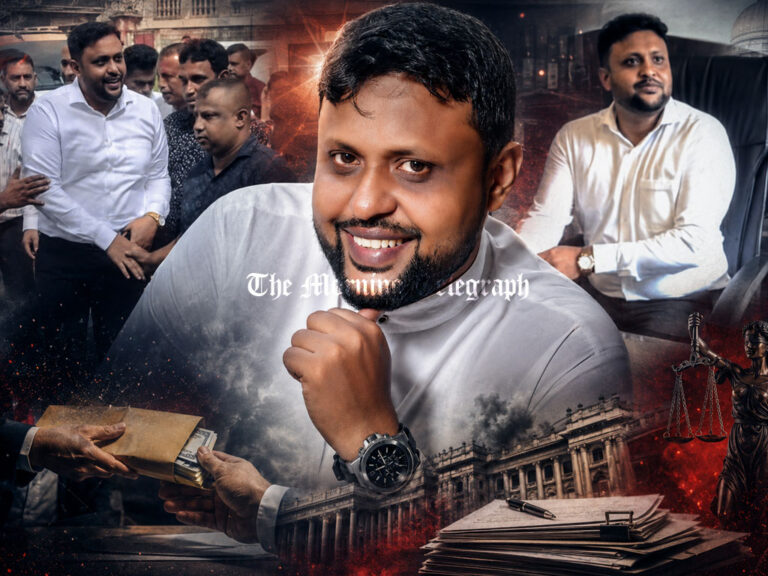
Yet, the pervasive silence of the media on this catastrophic cultural loss stems from a toxic mix of political leverage, corporate influence, and deliberate institutional suppression. In a landscape where high-profile individuals manipulate the levers of power, mainstream media outlets are often pressured or economically incentivized to look the other way. The investigation exposes a web of influence so entrenched that it snuffs out public discourse before it can even ignite. Powerful figures, including a prominent businessman heavily linked to the international gaming industry and the well-connected brother-in-law of a former minister from the previous Yahapalana government, have been directly implicated in possessing or trafficking the stolen works, yet they continue to walk scott free. Because these individuals hold immense financial and political sway, investigative reporting is actively choked by bureaucratic obfuscation, crucial evidence is quietly misplaced by compromised law enforcement, and the public is kept in the dark to protect the elite from the fallout of criminal prosecution.
At the center of this cultural tragedy stands a shadowy mastermind, an architect of corruption who operates from the highest echelons of political and business alliance. This mastermind is not a alone-wolf, but an entrenched network of powerful elites who have successfully weaponized state machinery to shield themselves from justice. While successive cultural directors and ministers have filed complaints and confirmed the devastating losses, the wheels of justice grind to a sudden, screeching halt whenever investigators approach the true controllers of this operation. By exploiting legal loopholes, stalling police inquiries, and ensuring that the lack of a comprehensive inventory remains unrectified, this mastermind has successfully orchestrated the greatest cultural heist in the nation’s history with absolute impunity and aura of audacity.
This institutional looting is mirrored by a broader lawlessness across the country’s landscape, where relic and antiquities theft remains dangerously prevalent at vulnerable religious and historical sites. A recent burglary at the Hanthana Sandagiri Maha Seya resulted in the brazen theft of gold jewelry worth millions of rupees directly from the sacred relic chamber, prompting a major K9 and intelligence-led police investigation. This modern crisis follows a grim pattern of past museum heists, such as the infamous theft of 221 valuable historical artifacts from the National Museum, an investigation that has largely stalled in the court system while some recovered items remain sealed away under court orders, drawing sharp criticism from the Auditor General.
Compounding the crisis is a massive surge in treasure hunting across the country. The Director General of Archaeology, Senarath Wickramasinghe, reported over 100 incidents of illegal archaeological excavations in the early months of 2026 alone. These illicit digs are primarily driven by false folklore regarding buried royal treasure, prompting criminal syndicates to inflict severe physical damage on protected historical landscapes. Authorities have notably had to clamp down on unlawful and highly destructive industrial-scale mining operations, such as illegal ilmenite mining encroaching on protected ancient sites in regions like Puttalam. At the borders, customs and airport authorities consistently thwart desperate attempts by smugglers to illegally export these historical items, regularly detaining ancient coins, beads, and irreplaceable antique stone statues at the departure terminals of the Bandaranaike International Airport.
In response to this multi-front assault on the nation’s soul, Sri Lankan authorities are attempting to pursue repatriation and major legal reforms. The state continues to actively negotiate the colonial return of thousands of cultural properties currently housed in museums across 27 countries, while simultaneously demanding compensation for the damages and losses suffered under foreign occupation. To combat modern-day looting, the cabinet has moved to significantly revise the Antiquities Ordinance Number 9 of 1940, introducing harsher punitive measures, including significantly increased fines and mandatory jail terms, to deter treasure hunters and illicit exporters.
The inescapable, burning indictment of this entire tragedy, however, is that the stolen masterpieces from the National Art Gallery are not hidden away in a subterranean vault or an anonymous offshore shipping container; instead, they are widely believed to be displayed in plain sight, adorning the private walls of a man with immense political connections who is a highly prominent figure in the gambling world. This glaring open secret turns the theft into a continuous, public insult to the nation’s heritage, transforming what should be an aggressive criminal manhunt into a staged performance of bureaucratic delays. The brazen nature of the heist is further illuminated by long-ignored eyewitness accounts from the very period the artwork began to bleed from the gallery. Observers noted an unusual influx of vehicles operating around the shuttered premises, including a distinct sports utility vehicle with heavily tinted glass and an obscured license plate parked suspiciously nearby, acting with the quiet confidence of those who know they operate completely above the law.
This critical revelation exposes the fundamental mockery being made of the ongoing state and police investigations. While committees record administrative statements and file periodic briefs, the actual fruits of the crime remain insulated by an iron wall of political patronage, proving that in a system choked by impunity, the law only cuts downward. Leaving these irreplaceable symbols of Sri Lankan identity in the hands of a gambling tycoon is more than a failure of law enforcement; it is a profound moral surrender. The ongoing sixteen-year renovation is no longer just an administrative failure worthy of a grim entry in a record book, but a visible monument to state-sponsored cover-ups. Until the state musters the courage to cross the thresholds of the powerful, seize the canvases from plain sight, and prosecute the elites who orchestrated this plunder, the empty frames of the Kalabhavana will remain a devastating symbol of a nation whose cultural soul was sold to the highest bidder.