By Dwayne Ferreira
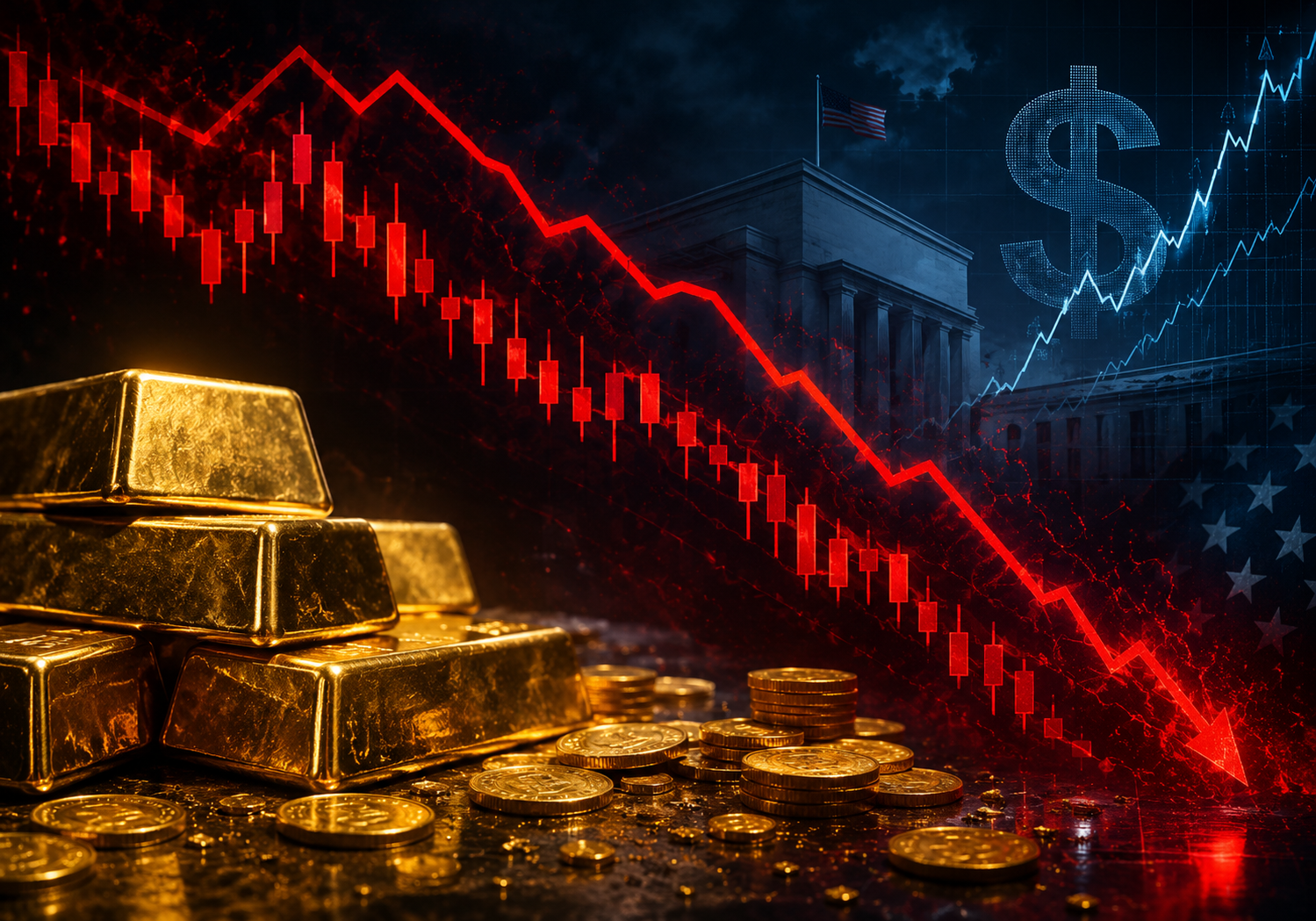
Gold entered the new trading week under pressure after a violent Friday sell-off changed the tone of the precious metals market before the weekend. Before markets closed on Saturday, gold had already lost much of the strength that had supported it earlier in the week, with spot gold falling nearly 3% on Friday to around $4,341.52 per ounce, while U.S. gold futures also dropped to about $4,365.30. The immediate trigger was a stronger than expected U.S. jobs report, which showed the American labour market remained stronger than investors had expected. That forced investors to rethink the Federal Reserve’s next move, because a strong jobs market gives the Fed more room to keep interest rates higher for longer, or even raise them again if inflation remains stubborn. For gold, that is a serious short-term problem because bullion does not pay interest. When U.S. Treasury yields rise and the dollar strengthens, investors often move money away from gold and into assets that offer a return.
When markets reopened on Monday, gold failed to produce a convincing recovery and instead extended its losses, showing that Friday’s fall had not been fully absorbed. Spot gold slipped another 0.2% to around $4,321.49 per ounce, while U.S. gold futures for August delivery fell 0.5% to about $4,345.60. The market reaction suggests that traders are not simply treating Friday’s fall as a one-day shock, but as part of a wider repricing of interest-rate expectations. In normal conditions, geopolitical fear often pushes investors toward gold as a safe haven asset, but today’s market is more complicated. Traders are worried that war tensions are not only creating fear, but also feeding inflation through higher oil prices, and that may force central banks to stay hawkish.
The war-tension factor is now central to the gold story. Renewed Middle East instability, including Israeli strikes on Lebanon and Iranian missile attacks on Israel, pushed oil prices sharply higher on Monday, with Brent crude rising more than $2 to around $95.42 and U.S. crude climbing to about $92.64. That matters for gold because rising oil prices can increase inflation expectations across the global economy.
Still, the long-term gold story has not disappeared. Beneath the current selling pressure, central bank demand remains one of the strongest supports for the precious metal. China’s central bank reportedly extended its gold-buying streak into a 19th consecutive month, with holdings now close to 75 million fine troy ounces. That shows official-sector demand remains active even while short-term traders are selling on rate fears. For now, gold is trapped between two powerful forces: short-term pressure from the dollar, Treasury yields and Fed-rate fears, against longer-term support from central bank buying, geopolitical risk and inflation anxiety. The next major direction will likely depend on whether the market becomes more afraid of war itself or more afraid of the inflation and interest-rate consequences that war may create.
Hashtags:
#GoldMarket #GoldPrice #XAUUSD #GoldCrash #GoldTrading #FederalReserve #USJobsReport #MiddleEastTensions #OilPrices #Inflation #DollarIndex #TreasuryYields #PreciousMetals #CentralBanks #ChinaGold #SafeHavenAssets #Commodities #MarketNews #GlobalMarkets #TheMorningTelegraph