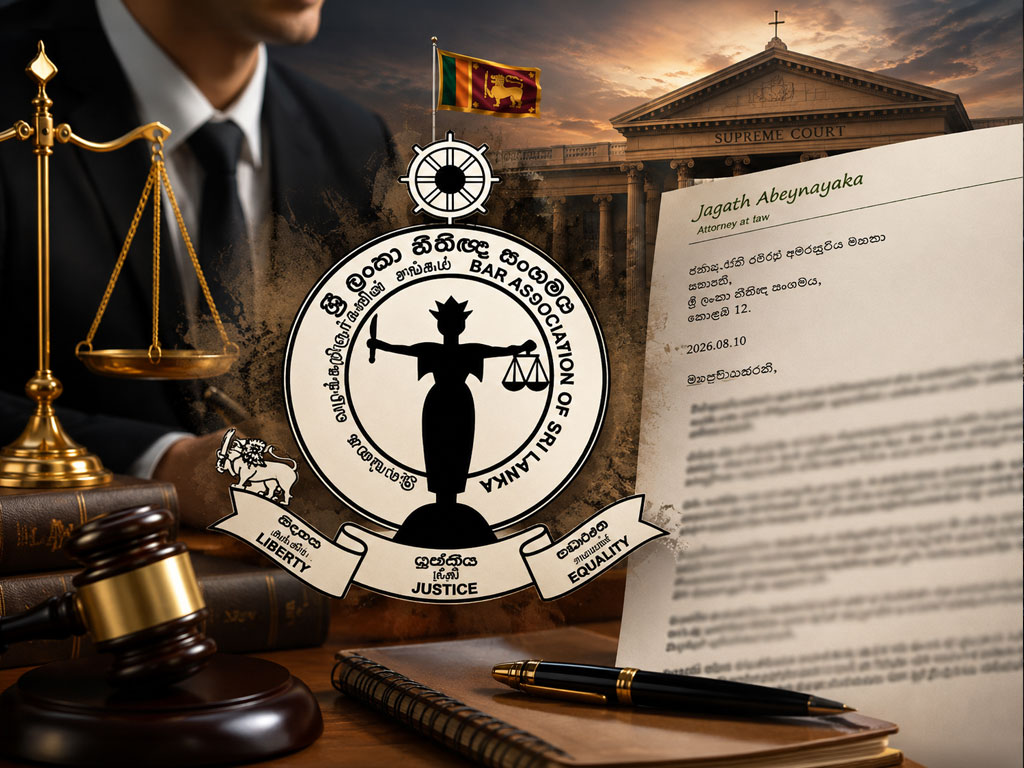
BASL Chief Justice controversy deepens as a senior lawyer urges action over personal attacks during Sri Lanka’s 22nd Amendment debate.
The BASL Chief Justice controversy has intensified after a senior lawyer urged the Bar Association of Sri Lanka to respond to alleged personal attacks against the incumbent Chief Justice.
Attorney-at-Law Jagath Abeynayake, a member of the BASL Executive Committee, addressed a letter to BASL President Rajeev Amarasuriya on August 10. He raised concerns over statements made amid the debate surrounding the proposed 22nd Constitutional Amendment and Judicature Amendment Bill.
The proposed legislation seeks to increase judges’ retirement ages by two years and has already been gazetted. The constitutional debate has triggered strong political and legal disagreement over judicial independence and the implications of extending judicial tenure.
Get
Breaking News
First
on WhatsApp
Follow The Morning Telegraph for instant alerts, top stories and exclusive updates delivered straight to your phone.

BASL Chief Justice Controversy Focuses on Personal Attacks
Abeynayake’s central argument is that criticism of constitutional policy should not become a personal campaign against the Chief Justice.
According to the letter, some politicians and other groups have portrayed the proposed amendments as an attempt to extend the tenure of the current Chief Justice alone.
Abeynayake argues that this interpretation is misleading because the proposed changes concern judges more broadly rather than a single judicial office-holder. He also alleges that such claims have misled sections of the public and the Maha Sangha.
The letter further raises concern over statements made under parliamentary privilege which allegedly targeted the Chief Justice personally.
Abeynayake argues that the BASL has traditionally treated attacks against sitting judges as matters affecting the judiciary as a whole.
He warned that the Association’s failure to respond to the latest statements could create a public perception that it accepts, or silently endorses, those remarks.
Judicial Independence and BASL’s Traditional Role
The issue carries additional weight because judges cannot ordinarily enter public political disputes to defend themselves.
Abeynayake therefore argues that the legal profession has a responsibility to intervene when attacks against individual judges risk undermining confidence in the judiciary.
He called on BASL to maintain professionalism and separate legitimate disagreement over constitutional reform from personal attacks against judicial officers.
The BASL has previously taken strong public positions when it believed judicial independence was threatened. In May, the Association expressed “grave concern” over remarks by President Anura Kumara Dissanayake concerning a pending judicial decision. BASL said judicial independence was fundamental to democracy and the rule of law.
That history strengthens the argument now being made by Abeynayake: if the Association speaks when the judiciary faces pressure from the executive, should it also respond when politicians or other actors personally target a sitting Chief Justice?
Call for Executive Committee Discussion
Abeynayake has requested that the issue be taken up at an upcoming BASL Executive Committee meeting.
He wants the Association to clarify its position on statements targeting the Chief Justice while continuing to debate the proposed extension of judges’ retirement ages.
Importantly, the dispute is not simply about whether BASL supports or opposes the constitutional amendments. Newswire reports that Abeynayake himself noted differing views within the legal profession and said the BASL leadership had adopted a position supportive of the proposed changes.
His criticism instead focuses on what he describes as BASL’s silence over attacks directed personally at the Chief Justice.
The BASL Chief Justice controversy therefore raises a broader question about professional responsibility.
Lawyers, politicians and civil society groups are entitled to challenge constitutional reforms. However, Abeynayake’s letter argues that criticism should remain focused on policy, law and constitutional principle rather than become personalised against judges who are institutionally constrained from answering political allegations themselves.
Whether BASL responds formally will now be closely watched as the 22nd Amendment debate continues.