By Roy Denish
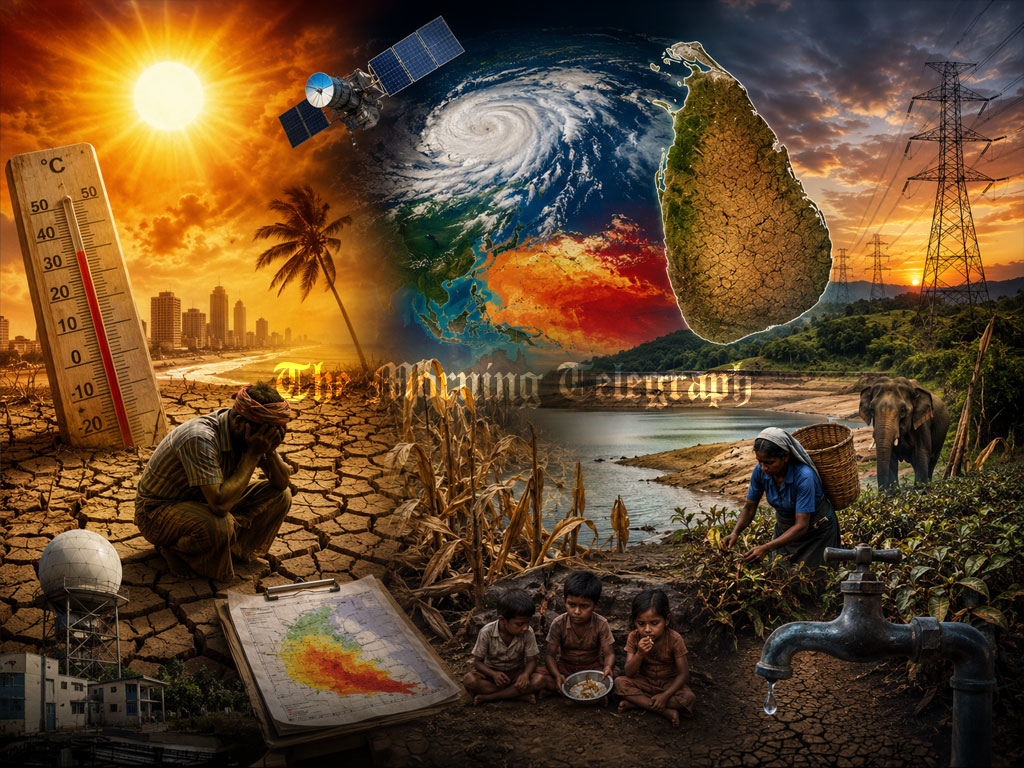
A looming El Niño-driven climate crisis could bring severe drought, extreme heat, crop failures, and mounting economic pressure across Sri Lanka. As global agencies sound the alarm, concerns are growing over the country’s ability to forecast and respond to rapidly intensifying weather threats.
The U.S.-based National Oceanic and Atmospheric Administration has warned residents in Sri Lanka’s southern coastal cities to brace for intense dry spells and scorching heatwaves in the coming months, a regional consequence of a powerful El Niño climate pattern emerging in the tropical Pacific.
According to NOAA climate modeling data, the rapid development of the warming system is actively disrupting South Asian weather systems, suppressing the monsoon winds that usually deliver reliable rainfall to the island nation’s southern and western shorelines. NOAA puts the probability of El Niño conditions emerging between June and September at over 90%, warning it could intensify into a strong, multi-month event that will grip the region through February 2027.

Local weather officials, aligning with the global warnings, project a drastic drop in rainfall alongside significantly above-average temperatures for July and August.
However, local efforts to track the impending crisis are severely hindered by a critical lack of modern infrastructure within the country. Critics and local experts point out that the Department of Meteorology of Sri Lanka is not capable of forecasting these rapidly shifting micro-climates because it relies on old equipment, and a functioning Doppler weather radar system is not available. For nearly two decades, procurement efforts to establish a Doppler system have been derailed by bureaucratic missteps, administrative negligence, and multi-million rupee losses, including a failed 2008 radar installation in Gongala and stalled subsequent initiatives. This technological gap leaves the country functionally blind to incoming atmospheric hazards and highly reliant on foreign agencies like NOAA for advanced climate tracking.
The impending dry cycle has triggered urgent joint meetings between Sri Lanka’s Disaster Management Centre (DMC) and the Ceylon Electricity Board (CEB). Authorities are already drafting emergency water management protocols to protect the agricultural sector and prevent severe strain on the national power grid, which relies heavily on hydropower reservoirs.
“We are preparing for a period of heightened water stress,” said a representative from the DMC, urging coastal communities to immediately implement conservation measures.
This meteorological failure folds into a broader systemic collapse across Sri Lanka’s rural landscape. The traditional agricultural calendar, organized around the Yala and Maha monsoons, has completely fractured under a volatile climate. Over 1.5 million agrarian families and smallholders are expected to suffer severe livelihoods disruptions as fields dry to cracked earth.
The pain will stretch from the northern plains down to the central highlands. Across the northern and eastern regions, where rice cultivators rely heavily on stable reservoir levels, hundreds of thousands of subsistence farmers face total crop failures as irrigation channels recede to dead storage. Meanwhile, in the central hill country, estate tea pluckers face brutal, direct exposure to unprecedented heatwaves. Extreme midday temperatures are already scorching the delicate tea flushes, threatening to degrade the quality and yield of Ceylon tea, the nation’s premier agricultural export. For these tea laborers, who are paid based on the daily weight of their harvest, the parched conditions threaten to slash their daily wages to a fraction of their meager baselines.
The compounding macroeconomic consequences could not arrive at a worse time. Following a fragile path toward post-default recovery, the island nation’s economic growth projection has already been slashed from 5% to 3% as structural vulnerabilities remain exposed. The looming agricultural shock threatens to drive catastrophic ripple effects through the broader economy: crashing domestic food production will fuel soaring inflation, while the depletion of hydropower reservoirs will force the debt-laden state to divert scarce foreign currency reserves toward purchasing expensive, imported emergency fuel.
Compounding this instability is a severe ecological imbalance and shortsighted local governance. As climate stress degrades native forests, aggressive invasive plant species are choking out native vegetation and depleting limited groundwater reserves. This habitat loss has driven the human-wildlife conflict to historic highs, with foraging wild elephants, macaques, and peacocks routinely destroying village crops and grain stores.
Furthermore, rural vulnerability has been exacerbated by poorly planned concrete infrastructure that blocks natural drainage pathways, turning moderate rains into destructive, artificial floods. Structurally, successive political administrations have routinely bypassed environmental regulations ahead of elections to distribute ecologically sensitive state lands, such as vital forest reserves and wildlife corridors, to voter blocks without feasibility studies. This ad-hoc land distribution has destroyed soil stability on steep slopes, triggering landslides during monsoon periods and permanently fracturing natural wildlife zones.
The ultimate measure of this compounded crisis is a deepening humanitarian toll in the provinces. Collapsing farm incomes have driven rural families below the poverty line, forcing them to cut back on basic healthcare and meals. Today, approximately 42 percent of Sri Lankan children under the age of four are living in multi-dimensional poverty, with nearly 17 percent suffering from chronic malnutrition. Public health data indicates alarming rates of stunting and wasting among young children as soaring inflation and ruined harvests make essential proteins completely unaffordable.
As global climate leadership remains fractured by waves of climate skepticism and shifts away from international accords like the Paris Agreement, the financial and structural burden of these climate disasters continues to shift heavily onto developing island states like Sri Lanka.
Meteorologists also cautioned that the current extreme dry period could give way to further “climate whiplash” late in the year. While mid-summer is expected to be parched along the south coast, the subsequent inter-monsoon period in October and November could trigger sudden, torrential downpours that threaten to overwhelm the island’s compromised drainage networks.