By Roy Denish
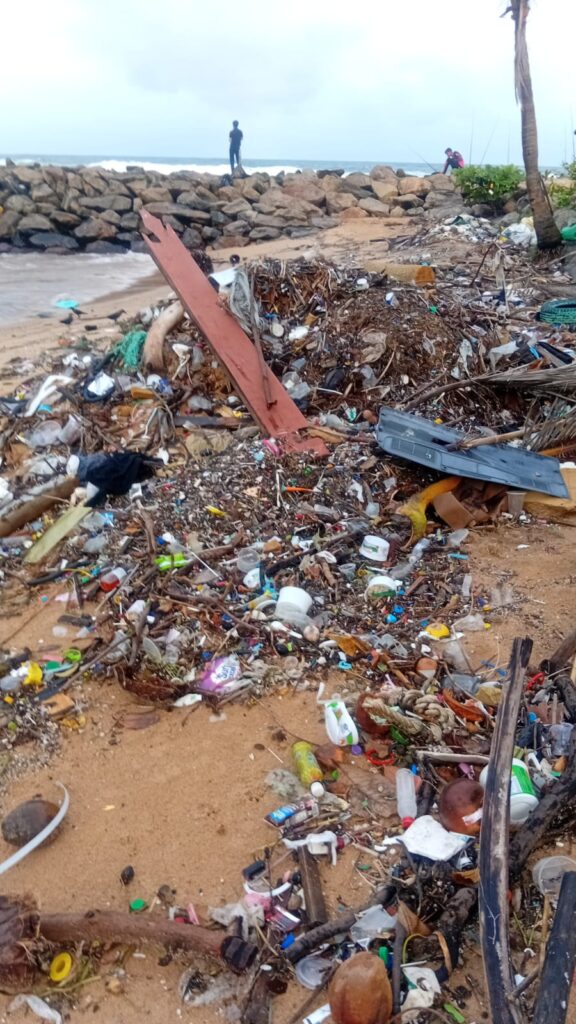
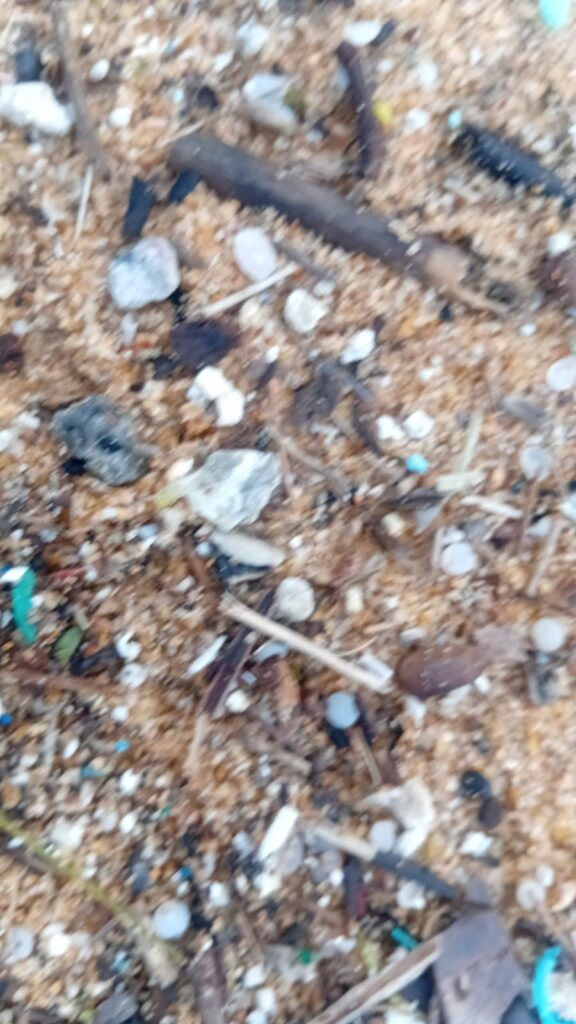
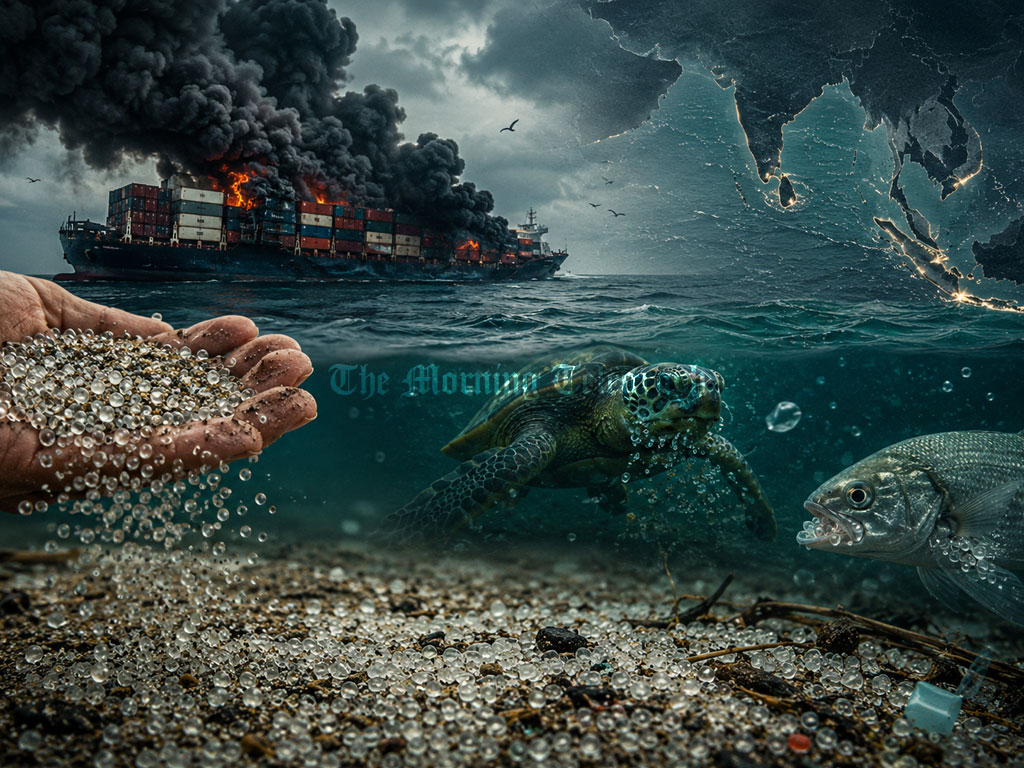
Five years after the X-Press Pearl disaster shocked the world, billions of toxic plastic pellets remain scattered across the Indian Ocean, buried beneath beaches, drifting through international waters, and entering the marine food chain. Scientists now warn that what began as a shipping catastrophe has evolved into a permanent environmental legacy that may impact marine ecosystems and coastal communities for generations.
The global maritime container trade operates as a high-stakes calculus where commercial timetables are routinely weighed against systemic safety protocols, yet few incidents expose the fatal flaws of this framework as starkly as the death of the container vessel X-Press Pearl.
On its fateful final transit through the Straits to the Middle East loop, the newly commissioned thirty-seven thousand deadweight tonne vessel became the catalyst for the most severe marine ecological calamity in the history of Sri Lanka.
Built by the Zhoushan Changhong International Shipyard and flying the flag of Singapore, the container ship was only on its third operational voyage when an active chemical emergency transformed it into a floating time bomb.
The genesis of the catastrophe trace directly back to Jebel Ali Port in Dubai, United Arab Emirates, where a highly volatile cargo configuration was loaded onto the deck.

Among the array of twenty-foot equivalent units was container FSCU 7712264, packed tightly with twenty-five metric tons of concentrated nitric acid alongside caustic soda, methanol, and hundreds of tons of fuel oil.
This toxic inventory was stowed adjacent to one hundred and twenty containers entirely dedicated to carrying one thousand six hundred and eighty tons of low-density polyethylene plastic pellets.
Commonly known as nurdles, these tiny raw material beads serve as the foundational essential feedstocks for the global plastics manufacturing industry, melted down by the billions to create everyday items ranging from plastic bottles and food packaging to pipes, synthetic textiles, and automotive components.
Nitric acid behaves as a savage oxidizing agent that possesses an innate capacity to destabilize neighboring stowage if structural containment fails.
While the liquid itself is technically non-combustible, its chemical properties make it an extreme threat when exposed to organic matter.
Soon after departing the berth in Dubai and setting a course toward the Gulf of Oman, the shipboard crew identified that container FSCU 7712264 was actively leaking its corrosive contents.
The acid rapidly began to liquefy its immediate containment drums, trickling downward to initiate a highly exothermic reaction with the wooden dunnage, cardboard packaging, and nearby plastic raw materials.
This interaction acts as a rapid donor of oxygen atoms to organic fuels, prompting spontaneous combustion when trapped inside an unventilated steel box.
As the internal temperatures escalated toward the autoignition point of the surrounding cargo, the master realized the escalating severity of the chemical breach.
The vessel altered its operational route to make an emergency call at Hamad Port in Qatar, where the master urgently requested to discharge the compromised container to neutralize the chemical hazard.
Port authorities in Qatar flatly refused to permit entry or offload the box, citing a lack of specialized hazardous materials facilities and an unwillingness to compromise their own shores with toxic runoffs.
Faced with this refusal, the vessel was forced to resume its itinerary, carrying its leaking cargo across the Arabian Sea to Hazira Port in Gujarat, India.
The script repeated with identical obstinacy.
Indian port officials turned the ship away, reiterating that they lacked the technical expertise and secure handling zones required to decant an active nitric acid leak.
The decision-making process at this juncture shifted from maritime safety to commercial risk mitigation.
To declare a formal General Average emergency in the middle of the Indian Ocean would mean dropping anchor in international waters, activating maritime insurance adjusters, and freezing the vessel’s entire manifest, which incurs massive daily losses for the charterers and shipowners.
Choosing to avoid a commercially crippling stalemate, the captain gambled that the ship could navigate the remaining nineteen hundred and forty-two nautical miles to Colombo, Sri Lanka, before the thermal runway crossed the point of no return.
The container ship completed its five-day ocean crossing and dropped anchor roughly nine and a half kilometers outside the Colombo harbor limits, where local port inspectors cleared the vessel despite the lurking danger.
Within hours of receiving this anchorage clearance, the leaking acid finally breached adjacent storage compartments, causing dense, reddish-brown clouds of nitrogen dioxide gas to erupt from the deck before giving way to open flames.
The emergency response was instantly paralyzed by a severe meteorological intervention.
Cyclone Yaas, a severe tropical cyclone intensifying rapidly within the Bay of Bengal, began lashing the western coast of Sri Lanka with intense southwest monsoonal winds and violent, five-meter swells.
The fierce atmospheric conditions rendered standard maritime firefighting tactics obsolete.
International news agencies including Al Jazeera, CNN, and the BBC broadcasted reports emphasizing that Sri Lanka completely lacked the heavy-duty machinery and chemical firefighting infrastructure necessary to suppress an emergency of this scale.
While local naval and air force teams executed daring sorties to drop dry chemical powder from helicopters, their efforts were dwarfed by the sheer physics of the storm.
The monsoonal gales generated by Cyclone Yaas acted like a colossal blacksmith’s bellows, driving immense currents of oxygen directly into the exposed holds and generating a forge effect that transformed the hull into an unquenchable furnace.
The country possessed no high-capacity salvage tugs capable of deploying massive volumes of specialized fire-retardant foam, nor did it have deep-water support vessels able to counter the heavy sea states.
In a desperate bid to combat the spreading inferno under these cyclonic conditions, the Sri Lankan Navy deployed an array of offshore patrol vessels and fast attack craft into the hazardous zone.
Vessels including the SLNS Sindirola, SLNS Gajabahu, and the specialized fast attack craft P481 and P484 braved the extreme swells and exploding cargo to douse the listing hull with high-pressure water monitors.
Tugboats from the Sri Lanka Ports Authority, including the Raja and Megha, joined the flotilla alongside Indian Coast Guard assets like the ICGS Vaibhav and ICGS Vajra to dump chemical dispersants and retardants onto the blazing deck.
However, these surface assets were severely outmatched, and the cooling streams of seawater inadvertently destabilized the vessel’s internal buoyancy.
Caught in a bureaucratic impasse, Sri Lankan authorities hesitated for days while the ship burned, locked in debates over legal jurisdiction and insurance liabilities rather than authorizing an immediate tow out to the deep ocean.
By the time the international salvage team from Smit Salvage was legally cleared to attach towlines to pull the charred vessel into deeper water, the extreme heat had destroyed the structural integrity of the ship’s bulkhead partitions.
The monsoonal currents relentlessly dragged the listing vessel northward toward the sensitive, shallow fishing banks of Negombo.
Water flooded the aft compartments, making the stern incredibly heavy until it struck the seabed at a shallow depth of twenty-one meters, trapping the toxic wreckage on the continental shelf where it partially sank.
The resulting environmental devastation completely eclipsed previous regional maritime incidents, including those managed by international shipping networks involving the Liberian-flagged feeder container vessel MSC Elsa 3 off the coast of Kerala, India.
When the MSC Elsa 3 developed a severe twenty-six degree starboard list and capsized due to progressive flooding and structural ballast water management failures, it triggered widespread regional alarm by spilling hundreds of tons of fuel oil and hazardous calcium carbide containers into the Arabian Sea.
The toxic debris, ruptured cargo, and unmanaged plastic raw materials from that vessel washed directly onto southern Indian shores and drifted across maritime lines into the northern waters of Sri Lanka, illustrating how quickly poorly regulated regional feeder fleets can cause compounding international environmental damage.
Yet, the sheer scale of the wreckage from the Singaporean container ship discharged an even more unprecedented torrent of low-density polyethylene plastic nurdles from its one hundred and twenty dedicated containers directly into the marine biosphere.
An estimated seventy to seventy-five billion of these unburnt microplastic pellets escaped the ruptured containers alongside thousands of tons of caustic soda, methanol, and heavy fuel oil, marking the largest marine plastic spill recorded in global maritime history.
These nurdles function as hyper-efficient chemical sponges, rapidly absorbing ambient heavy metals like lead, cadmium, and arsenic, alongside carcinogenic dioxins from the surrounding seawater.
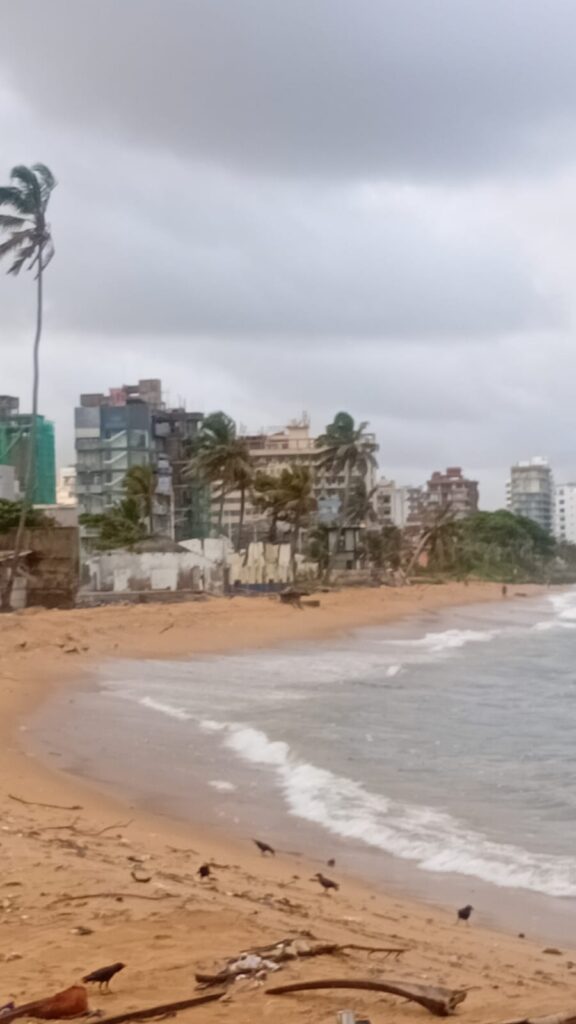
Driven by strong ocean currents, these toxic pellets dispersed across the vast expanse of the Indian Ocean, washing up on remote coastlines as far away as the beaches of northern and western Australia.
The impact of this chemical plastic plume on marine organisms and foundational coral ecosystems was catastrophic.
Marine animals, including sea turtles, pelagic seabirds, and commercial fish species, routinely mistake the floating lentil-sized nurdles for fish eggs, ingesting them until their digestive tracts are completely impacted, leading to widespread starvation and systemic toxicity.
In the immediate aftermath, the Marine Environment Protection Authority documented the carcasses of over four hundred endangered sea turtles, forty-eight dolphins, and eight whales washing ashore on the island.
Beneath the surface, the dense layers of microplastics and chemical residue settled over the vulnerable coral reefs off Sri Lanka’s western coast.
The floating plastic mass blocked vital solar penetration, depriving the symbiotic zooxanthellae algae within the corals of the light needed for photosynthesis, which triggered mass bleaching events and permanent reef mortality.
For the human communities reliant on these waters, the financial and social fallout was devastating.
A strict fishing ban was swiftly enforced across an eighty-kilometer coastal strip, completely wiping out the primary livelihoods of more than twenty thousand traditional fishing families from Wattala to Negombo.
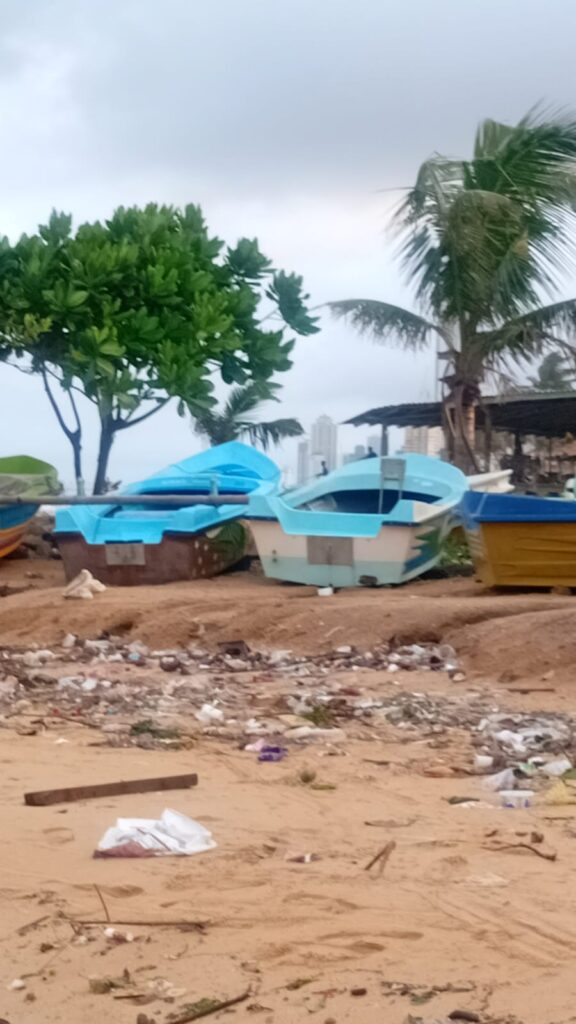
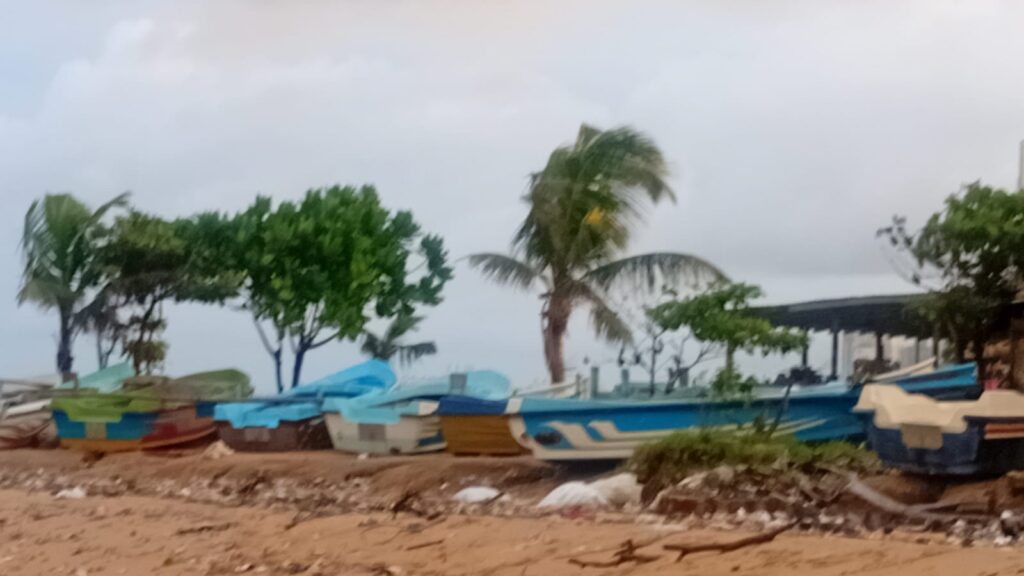
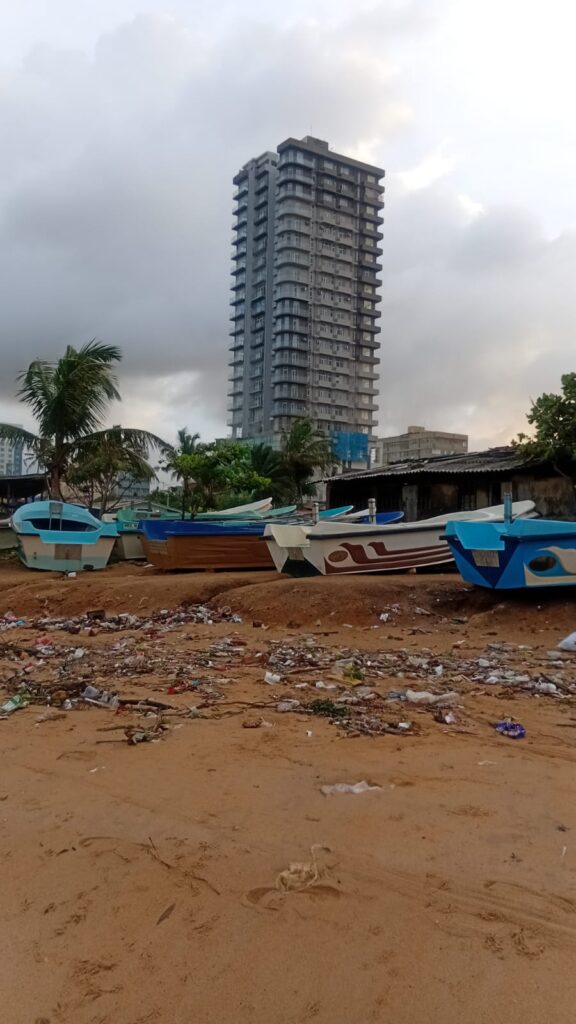
Seafood markets across the island collapsed overnight as consumers feared heavy metal poisoning, forcing many artisanal fishermen to abandon their generational trade, sell off their damaged boats, and slip into severe economic destitution.
The legal battle for accountability that followed exposed deep systemic fissures within the state machinery of Sri Lanka, characterized by heavy public suspicion regarding corporate subversion, political interference, and an alarming failure to secure vital investigative evidence.
In the immediate aftermath of the sinking, international investigators raised serious alarms regarding the disappearance of critical operational data, pointing to a glaring gap in the forensic trail.
Questions continue to loom over why the vessel’s internal log sheets, which are strictly mandated to be updated every four hours, were taken alongside key physical records by representatives of the Singaporean operator during the initial evacuation phases.
Furthermore, although local technicians managed to recover the physical capsule of the Voyage Data Recorder, or the shipboard black box, critical segments of the data regarding automated communications during the fire were found to be heavily compromised or missing, severely hindering local efforts to piece together the internal conversations between the master and the shoreside managers.
State investigators were further shellshocked when they discovered that actual computer terminals within the Colombo Harbor Master’s office, which held key communication records and digital logs relating to the ship’s clearance, had gone missing mysteriously from the high-security facility.
Public outrage intensified further when contrasting the treatment of the international crew with global standards of maritime accountability.
Within just one week of the disaster, Sri Lankan authorities made the highly criticized choice to release and repatriate twenty-five of the twenty-six crew members, leaving behind only the vessel’s master, a Russian national named Vitaly Tyutkalo, who has been subjected to a strict domestic travel ban for over four years.
This lenient handling of corporate personnel stands in stark, asymmetric contrast to global precedents; for instance, when the Singapore-flagged container ship Dali collided with the Francis Scott Key Bridge in Baltimore, federal authorities in the United States aggressively detained the entire twenty-one-member crew, who were mostly Indian nationals, holding them on board and within the country for months during intense federal and criminal investigations.
The swift release of the crew combined with questionable jurisdictional choices created a massive chasm between the true value of the ecological destruction and the financial relief that actually trickled down to the victims.
A massive political scandal erupted within the chambers of parliament when the Minister of Justice revealed that a staggering two hundred and fifty million US dollar bribe had allegedly been transferred by representatives of the ship’s protection and indemnity club and operating interests into a foreign bank account under a local entity.
The specific objective of this massive illicit payment was to compromise the legal chain of custody, intentionally delay the filing of civil litigation, and weaken the state’s multi-billion dollar damage evaluations.
Despite intense investigations launched by the Criminal Investigation Department into this foreign account transaction, no high-ranking official has faced successful criminal prosecution, leaving transparency advocates to lambast the state’s handling of the crisis.
Public anger intensified further when the government decided to file its primary compensation lawsuit in the Singapore International Commercial Court rather than utilizing the domestic legal framework.
The Attorney General’s Department defended the move to Singapore by arguing that since the shipowner, Sea Consortium, was headquartered there, an overseas judgment would offer better enforceability and prevent the parent company from evading domestic summons.
However, this legal maneuvering backfired significantly by subjecting Sri Lanka to the strict Limitation of Liability statutes governed by Singaporean and international maritime conventions, effectively enabling the polluters to cap their financial exposure.
Central to this breakdown of domestic oversight was the highly contentious role played by the Colombo Harbor Master during the opening hours of the crisis.
Investigative records reveal that the Harbor Master’s office permitted the vessel to enter Sri Lankan territorial waters and drop anchor despite receiving electronic declarations that highlighted a hazardous chemical leak on board.
Crucially, the Harbor Master failed to immediately inspect the vessel’s manifest, verify the nature of the deteriorating cargo, or coordinate an emergency offshore containment plan before the ship was cleared to sit adjacent to a highly populated coastline.
This administrative failure, compounded by the subsequent mysterious disappearance of the office computer terminals, effectively transferred the risk from international shipping lanes onto the sovereign territory of Sri Lanka, leaving local emergency responders completely unprepared for the spontaneous combustion that followed.
Although independent international scientific panels and economic experts comprehensively calculated the total economic loss—factoring in the total annihilation of artisanal fisheries, tourism deficits, shoreline decontamination costs, and the priceless, multi-generational ecological damage caused by the mass death of protected marine creatures—at a staggering ten billion US dollars, the actual funds recovered by the state were widely condemned as peanuts.
While the shipowners and international protection and indemnity clubs publicly claimed expenditures of over one hundred and seventy million US dollars for coastal cleanup efforts and wreck removal, the actual direct cash compensation received by the treasury of Sri Lanka was a minuscule ten million US dollars.
In a historic intervention aimed at correcting this gross imbalance, the Supreme Court of Sri Lanka delivered a comprehensive public law judgment that held the shipowners, operators, and their local agents jointly and severally liable under the Polluter Pays Principle.
The apex court explicitly ruled that enterprises engaging in the inherently dangerous transport of hazardous cargo owe an absolute, non-delegable duty to the citizens of the country where the harm manifests.
The court ordered the X-Press Pearl Group to pay an initial one billion US dollars in damages split across three specific installments, with the first major tranche mandated to fund long-term environmental remediation and community rehabilitation.
Yet, despite the absolute clarity of the domestic court’s decree, the Singaporean shipping entity fired back with absolute defiance, publicly rejecting the one billion dollar judgment and refusing to honor the payment terms, meaning the mandated state restoration fund has never received the ordered money.
The operators argued that complying with an uncapped domestic ruling would set a dangerous precedent for global maritime incident resolution, choosing instead to hide behind the protection of the London Admiralty Court liability caps of nineteen million pounds.
The structural handling of this disaster ultimately exposes a scathing reality: Sri Lanka was treated not as a sovereign partner in global trade, but as a defenseless dumping ground for maritime corporate interests.
The systemic failure of state institutions to secure physical evidence, the premature repatriation of key crew witnesses, the unvouched transfer of multi-million dollar corporate inducements, the vanishing computer hardware from vital port authorities, and the decision to abandon domestic courts in favor of a compromised foreign jurisdiction altogether suggest an alarming level of state complicity and regulatory capture.
By allowing international insurers to reduce a ten billion dollar ecological apocalypse down to a ten million dollar administrative settlement, the political and legal architecture of the country effectively traded the survival of its marine ecosystems and the livelihoods of twenty thousand coastal families for corporate convenience.
As the legal teams brace for a critical pre-trial showdown in the Singaporean courts, the ruined coastlines of Sri Lanka stand as a stark monument to corporate evasion, leaving an entire marine ecosystem and tens of thousands of coastal families to bear the permanent scars of a disaster that could have been prevented at the ports of Dubai, Qatar, or India.
Editor’s note:
The Morning Telegraph’s investigations uncovered the dangerous and largely untold chain of events that led to one of the world’s worst maritime disasters, when the X-Press Pearl container ship, carrying highly flammable nitric acid, caught fire and sank just off Sri Lanka’s coast. The disaster caused severe ecological destruction, with experts warning that the damage may be permanent after nearly 1,680 metric tons of plastic pellets, known as nurdles, spilled into the sea. These tiny pellets are often mistaken for fish eggs and ingested by marine life, raising serious concerns that contaminated seafood could eventually end up on the plates of unsuspecting consumers.