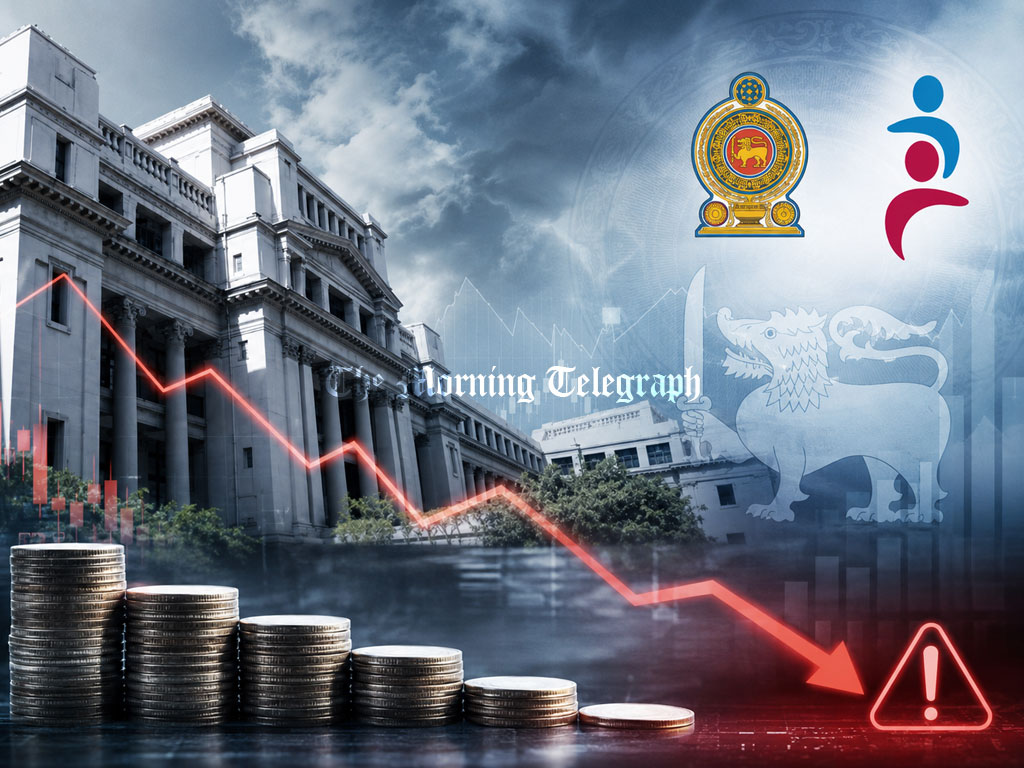
Treasury balance has fallen below Rs. 500 billion, raising public fears of higher borrowing costs and renewed pressure on Sri Lanka’s finances.
The Treasury balance has fallen below Rs. 500 billion, raising concern over the country’s weakening cash position.
This is based on a media release issued by the Sri Lanka Human Rights Centre.
The Treasury cash balance, which stood at Rs. 915 billion on January 1, 2026, dropped below Rs. 500 billion by close of business on Thursday, June 11, 2026. The Centre said the decline shows the country is slowly but steadily moving toward an economic crisis.
The Treasury offered Rs. 140 billion in Treasury bills, but only Rs. 71 billion, or 51 percent, was sold despite high interest rates. Treasury bonds worth Rs. 150 billion were also offered, yet only Rs. 92 billion, or 61 percent, was taken up.

The Sri Lanka Human Rights Centre said the Treasury had tried to raise the required money at the highest possible interest rates, but the failure to secure the full amount has pushed the Treasury cash balance below Rs. 500 billion.
Treasury bill interest rates stood at 8.63 percent in January 2022, 9.05 percent in February, and 13.83 percent in March, before rising to 23.53 percent by April 2022. By September 2022, the rate had climbed to 31 percent, and by October 2022, it reached 32.33 percent. The Centre warned that there is now a renewed risk that Treasury bill and bond interest rates could rise again in a similar pattern.
The business community understands that this steep fall in the Treasury cash balance means the Treasury is facing a serious financial shortfall. Since the government has no real alternative except to borrow, a sharp increase in interest rates could become unavoidable from the week beginning June 15.
When the 2026 budget was presented, the Treasury balance stood at one trillion rupees, or Rs. 1,000 billion, a point raised by Dr. Harsha de Silva when he opened the debate. Within five months, it fell from Rs. 915.83 billion to Rs. 620 billion. Its drop below Rs. 500 billion on June 11, the Centre said, is a clear sign of weakness in financial management. The Rs. 10 billion received as the Ditha fund is also included in this amount.
The Centre said it is particularly significant that the Treasury cash balance has fallen so low despite the government restructuring revenue-generating departments and collecting tax revenue from vehicle imports. Vehicle imports brought in more than Rs. 900 billion, a level not seen in previous years, while the government also earned around 40 percent more state revenue in 2025 than in 2024.
Out of the country’s capital expenditure allocation of Rs. 1,719 billion, only Rs. 106 billion, or 7.5 percent, was spent in the first quarter. By June 1, 2026, only Rs. 230 billion, or 13.4 percent, had been spent. The Centre said a country cannot achieve economic growth without making capital expenditure.
The Ministry of Finance, the Central Bank of Sri Lanka, and the government are making various attempts to hide the economic crisis, according to the statement, but have failed to take enough positive action.
By July 2022, the balance of the Treasury’s Consolidated Fund stood at negative Rs. 800 billion. By 2023, that had been reduced to negative Rs. 84 billion. By the time the current government came to power, it had risen again to Rs. 800 billion, and by January 2026, the Consolidated Fund balance had been lifted to Rs. 915 billion. Within six months, however, it has fallen below Rs. 500 billion.
If proper measures are not taken to manage the economic crisis, the Centre warned, the risk of the Treasury balance turning negative again by next September cannot be ruled out.