By Roy Denish
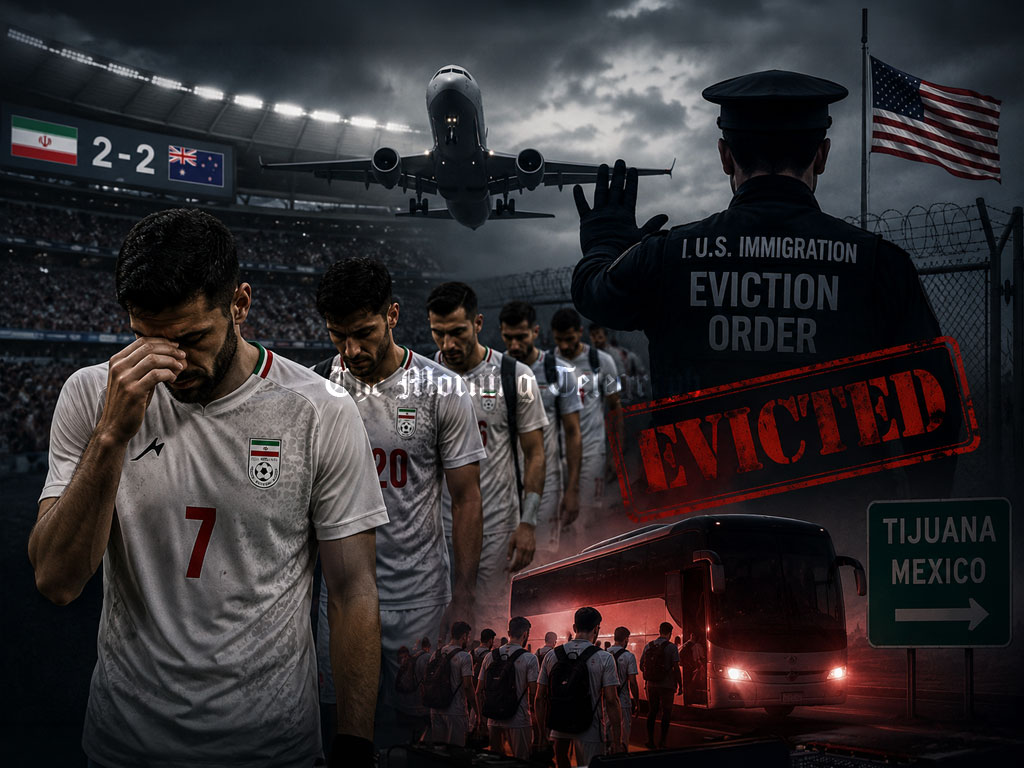
A dramatic World Cup controversy has erupted after Iran’s national team was reportedly ordered out of the United States hours after a grueling match, raising fresh questions about whether politics has overshadowed the spirit of international sport at football’s biggest tournament.
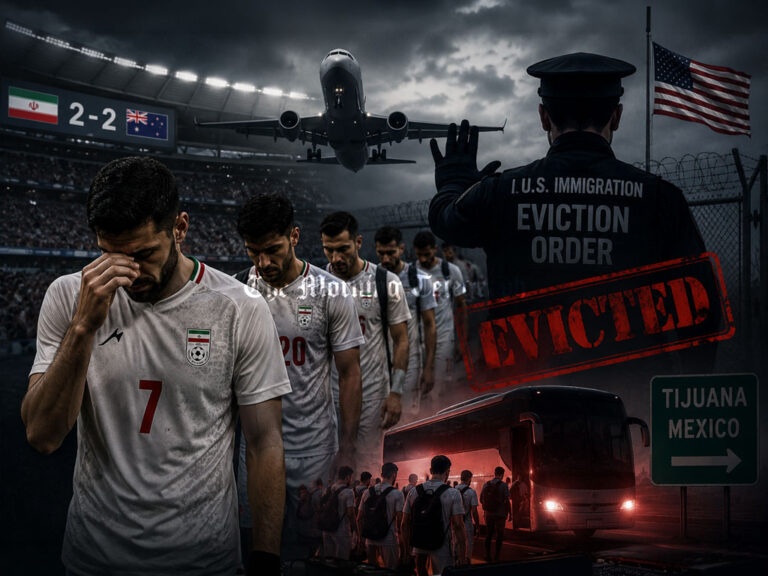
The beautiful game has been thoroughly stained by an ugly political theater. At the 2026 FIFA World Cup, the foundational Olympic principle that sports and politics exist as two separate entities, a boundary meant to protect athletes from the disputes of state governments, has been completely shattered. Following a grueling, hard-fought 2-2 draw against New Zealand at the Los Angeles Stadium, the Iranian national football team was subjected to treatment by United States authorities that resembled a counter-terrorism operation rather than the hospitality due to elite international athletes.

Instead of being allowed a standard overnight stay in California for vital medical assessments, muscle rehabilitation, and physical therapy, the Iranian squad was issued an immediate eviction order. Hours after the final whistle, heavily fatigued players were forced onto a plane and sent across the border to Tijuana, Mexico, where geopolitical friction has forced them to establish their base camp. Head coach Amir Ghalenoei did not hide his fury regarding the logistical hostility, labeling his squad the most oppressed team in the World Cup. The sudden forced departure directly disrupted the basic sports science recovery window required to protect athlete health after high-intensity competition.
The post-game expulsion is merely the latest escalation in a tournament cycle defined by bureaucratic intimidation. Reports indicate that U.S. authorities have implemented a highly restrictive match-day only entry policy for the Iranian team. Prior to arriving in Los Angeles, the players endured an exhausting five-hour ordeal at border control, facing intense vetting and security checks that treated professional footballers with the suspicion reserved for hostile subversives. Furthermore, Washington severely hollowed out the team’s administrative backing by denying visas to 14 essential backroom staff and federation officials, including Iranian Football Federation Secretary-General Hedayat Mombeini and Vice President Mehdi Mohammad Nabi. By systematically restricting their movement, denying access to their full staff, and implementing aggressive security gauntlets, host authorities have effectively weaponized administrative policy against competitors.
The core ethos of international sporting tournaments relies on the absolute separation of sports and politics. Governed by international frameworks, fields of play are meant to serve as neutral territory where athletic excellence transcends national animosities. When a host nation uses its border apparatus to intimidate and disrupt an opposing team due to ongoing international conflicts, it undermines the institutional credibility of the tournament. By allowing geopolitical hostilities to dictate the operational treatment of athletes, the spirit of the tournament has been deeply compromised. When professional football players are subjected to extreme surveillance and immediate removal, the message sent by the host authorities is clear: the pitch is no longer a sanctuary from the failures of international diplomacy.