By Roy Denish
Sri Lanka’s fastest sprinter is out, a slower athlete is in. The controversial Commonwealth Games selection has sparked allegations of favoritism, raising serious questions about whether performance or politics determined the final squad
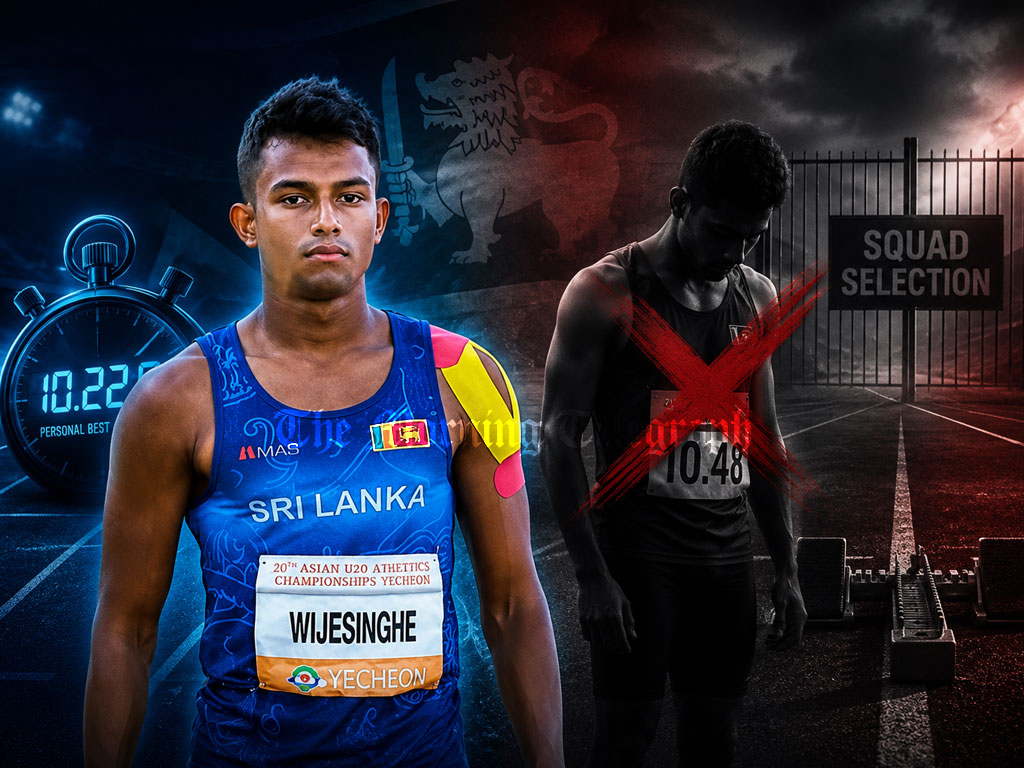
The omission of Sri Lanka’s fastest active speedster, Merone Wijesinghe, from the Commonwealth Games squad is increasingly being viewed not as a rigid adherence to bureaucratic protocol, but as a deliberate, calculated attempt by the National Selection Committee to sideline the nation’s top podium prospect.
Insiders and track analysts are calling foul, alleging that the federation used the “domestic trial attendance” rule as a convenient smokescreen to orchestrate a pre-determined outcome. Wijesinghe has been in scintillating form, dropping a blistering personal best of 10.22 seconds in January 2026 and backing it up with a lethal 10.31-second finish into the wind at the Perth Track Classic. By any objective metric, he is the undisputed king of the straightaway in Sri Lankan sprinting right now, possessing the top-end speed and mid-race transition needed to challenge Asia’s best.

Yet, instead of accommodating an elite asset who is actively sharpening his teeth against world-class fields in Australia, the selection committee chose to shut the gates. The decision looks even more egregious given the caliber of the athlete drafted into the lane in his place. The replacement runner reportedly carries a sluggish season’s best of 10.48 seconds. In the high-stakes world of elite sprinting, two-tenths of a second is a lifetime—it is the difference between making a major international final and bowing out in the morning heats.
By forcing a 10.48 runner into the blocks while a 10.22 bullet is left on the sidelines, critics argue the selectors have actively sabotaged the nation’s relay and individual medal chances. In track and field, the watch never lies, and right now, the numbers suggest that administrative maneuvering, rather than athletic merit, dictated the final roster. While the committee maintains it is protecting the integrity of local trials, the optics suggest a deliberate hit on the country’s brightest sprinting talent, leaving the athletic community furious that politics has once again outrun performance.