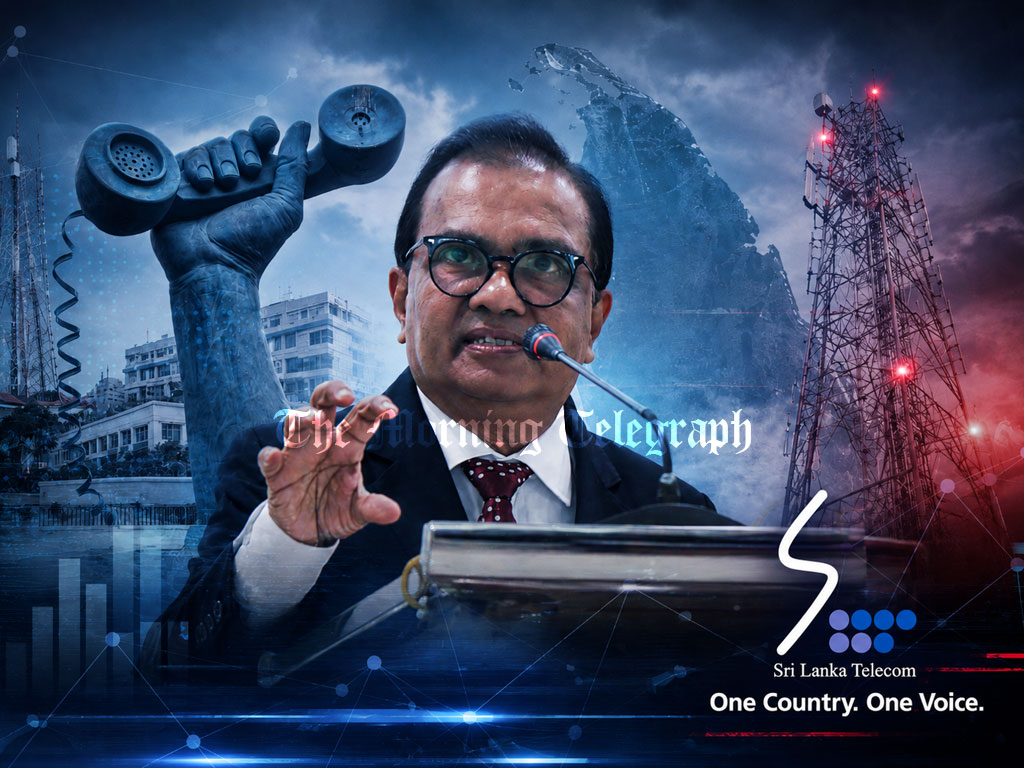
The Sri Lanka Telecom board faces mounting scrutiny over ageing leadership, legal loopholes, a virtual AGM and allegations of financial misconduct.
Sri Lanka Telecom PLC (SLT-Mobitel) is approaching its 29th Annual General Meeting (AGM) as the Sri Lanka Telecom board faces scrutiny over a corporate governance crisis. Although the company remains the backbone of the country’s telecommunications infrastructure and a major provider of national communications access, business attention is focused less on financial progress and more on the leadership controlling the institution. Critics argue that the country’s premier communications giant is stagnating under an ageing administration lacking “youthful sense,” technological urgency and a clear innovation strategy while the global digital sector advances rapidly.

Ageing Leadership and the Battle for Competitiveness
Shareholders and employee groups have publicly described the current Telecom Board of Directors as an “elderly swamp,” insisting the criticism extends beyond a political dispute. Chairman Dr. Motilal de Silva, born in 1956, Chen Chi Ben, representing GTH, the company’s second-largest shareholder, and recently appointed director Nihal Fonseca are all decision-makers who have either crossed or are approaching the age of 70.
The telecommunications industry is being reshaped by Artificial Intelligence (AI), 5G technology and digital economic transformation, raising questions about whether an ageing board can make decisions capable of surviving modern competition. Private-sector rivals such as Dialog Axiata have pursued innovation through youthful, dynamic and technologically knowledgeable leadership. By contrast, Sri Lanka Telecom is accused of falling behind because of conservative thinking and slow decision-making. The failure to introduce new discoveries, creative strategies and forward-looking technologies has increased fears that Telecom, despite being a national asset, could become an outdated institution remembered more for its past than its future.
Companies Act Provisions Offering Continued Protection
The repeated continuation of older directors in office has been enabled, critics claim, by loopholes and flexibility within Sri Lanka’s legal framework. Section 210 of the Companies Act No. 07 of 2007 states that a director of a public company must retire upon reaching 70. However, Section 211 of the same Act creates a mechanism through which that requirement can effectively be overridden. Under this provision, directors older than 70 may be reappointed through a special ordinary resolution passed at an Annual General Meeting.
The Companies (Amendment) Act No. 12 of 2025 has also made the process more convenient by extending the validity of such appointments until the “next Annual General Meeting.” Critics allege that the administration is relying on these provisions, together with majority shareholder voting power, particularly the government’s shareholding, to repeatedly retain ageing controllers within the institution and prevent leadership renewal.
Online AGM Raises Questions Over Shareholder Scrutiny
In what opponents describe as another attempt to protect the traditional leadership structure, the Board of Directors has decided to conduct this year’s AGM online, or virtually, instead of holding a physical meeting at the Ramada Hotel in Colombo as previously agreed. The decision has triggered strong objections from minority shareholders. They view the virtual format as a deliberate effort to weaken their democratic right to directly question the board about its ageing membership, financial management weaknesses and strategies for the company’s future.
Leadership Rivalry Deepens Institutional Stagnation
Sri Lanka Telecom also faces an internal leadership struggle because the proposed alternative to the current Chairman is burdened by allegations involving corruption and financial irregularities. Dr. Motilal de Silva faces accusations relating to employee suppression, judicial injunctions and procurement transparency. Meanwhile, Chandrasiri Kalupahana, reportedly being politically manoeuvred into position as his replacement, faces Auditor General’s allegations involving fraudulent reimbursement of millions of rupees, unauthorised foreign travel and financial irregularities totalling Rs. 615 million during his tenure at the Regional Development Bank (RDB).
Shareholders and employees are therefore being pushed towards a choice between a current leader accused of leaving behind employee suppression and technological backwardness, and a possible successor accused of lacking financial discipline. Critics warn that this leadership dilemma could pull the company deeper into decline rather than deliver the transformation it requires.
Although Sri Lanka Telecom PLC sought to demonstrate financial stability in 2025, its future has been obstructed by what critics call an ageing and corrupt governance structure. Until the company injects “young knowledge” into its Board of Directors and senior management by appointing people who understand innovation, the digital age and global competition, it will struggle to overtake private-sector rivals. Sri Lanka Telecom does not need renaissance appointments driven by political favouritism or controllers preserved through legal loopholes. It needs structural reform that places young knowledge, technological competence and accountable leadership at the centre of the institution.