
By Roy Denish.
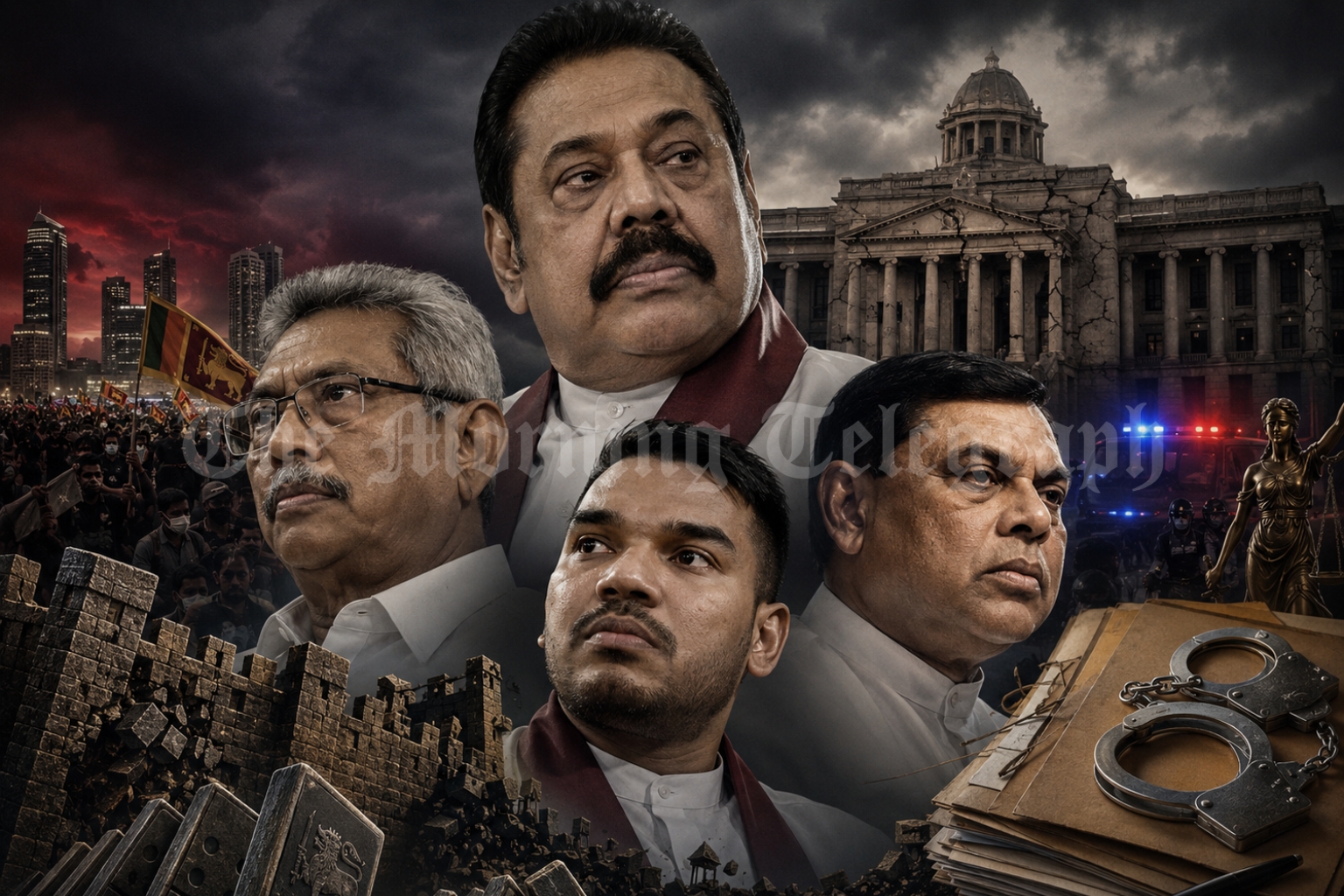
Sri Lanka’s once-dominant Rajapaksa dynasty confronts corruption cases, family scrutiny and a historic loss of political protection across the country.
For nearly two decades, the Rajapaksa dynasty represented near-absolute power in Sri Lanka, dominating government, Parliament and the machinery of the state. The family was credited with defeating a brutal, decades-long insurgency, winning commanding parliamentary majorities and running the island with the confidence of a private enterprise. From Mahinda Rajapaksa’s patriarchal command to Gotabaya Rajapaksa’s bureaucratic iron grip, the dynasty appeared untouchable, protected by a fiercely loyal rural electorate and powerful elite alliances. Today, that once-formidable fortress is corroding from within, breaking into fragments that cannot simply be concealed or swept aside. The family is now caught in a deepening political crisis, confronted by criminal investigations, prominent arrests and an overwhelming electoral rejection that resembles the familiar collapse of a fallen regime.
The decisive turning point came with the historic public uprising of 2022, when protesters stormed the presidential palace and forced Gotabaya Rajapaksa into temporary exile. Although that first wave of anger was driven by an unprecedented economic collapse, the political transition that followed has transformed public fury into institutional action. Under President Anura Kumara Dissanayake, the state has steadily stripped away the political protection that once surrounded the family. Allegations previously discussed in newsrooms and activist circles are now being tested in courtrooms, as the Commission to Investigate Allegations of Bribery or Corruption and several criminal investigation units pursue a broad anti-corruption campaign.
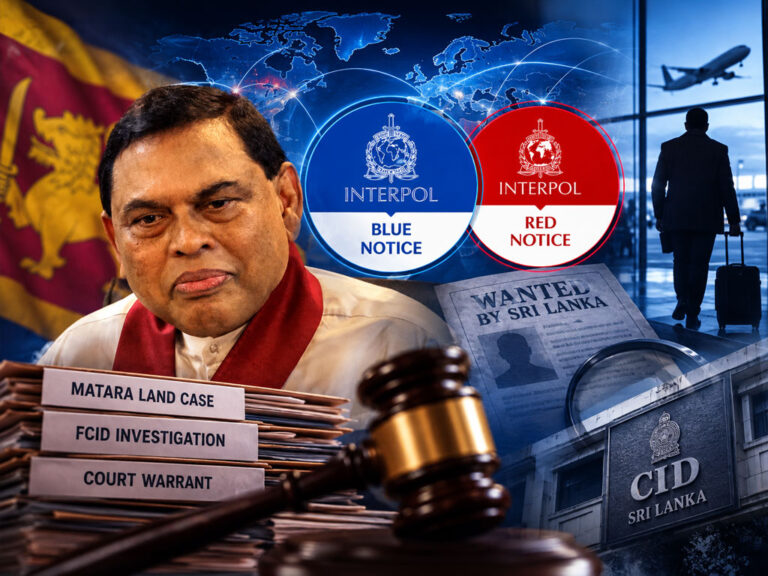
Few developments capture this new phase of accountability more clearly than the forceful rhetoric coming from the country’s leadership. In recent speeches, President Dissanayake has drawn an unmistakable line, focusing directly on former Finance Minister Basil Rajapaksa, often portrayed by critics as the operational mastermind behind the family’s financial network. In a fiery public pledge that resonated strongly with supporters, the President vowed that the state would pursue and arrest Basil, insisting that neither political influence nor the family’s past power would place him beyond the reach of the law.

That rhetoric has been accompanied by a rapidly expanding legal offensive. The Colombo Fort Magistrate’s Court recently ordered the Criminal Investigation Department to arrest Basil Rajapaksa over the alleged misappropriation of more than Rs. 7.8 million from the Sri Lanka Tourism Promotion Bureau. The money was reportedly diverted to print political campaign T-shirts carrying Mahinda Rajapaksa’s image. At the same time, the Matara Magistrate’s Court issued a separate warrant for Basil’s arrest in connection with the controversial Brown’s Hill land case, rejecting medical explanations submitted by his lawyers.
Those proceedings form only part of the controversies that have shaped Basil Rajapaksa’s public legacy and earned him the notorious nickname “Mr. Ten Percent” among opponents. The label emerged from repeated allegations that he demanded a ten percent commission from major government procurement deals, foreign investment ventures and infrastructure projects handled during his period as Minister of Economic Development. He has also faced prolonged scrutiny over alleged large-scale financial irregularities, including the Malwana villa case involving a luxury property said to have been acquired using laundered public funds. Beyond those individual cases, many economists regard his period as Finance Minister as one of severe policy negligence that contributed directly to Sri Lanka’s sovereign debt default.
Alongside his reputation for major financial calculations, Basil also became widely mocked for his limited command of English, a weakness that repeatedly exposed him to public ridicule. The best-known example came during a televised interview in which he struggled to describe how an ordinary bird strike could cause an aviation disaster. Unable to explain the technical process, he used an awkward literal translation from Sinhala and warned of “kaputa hitting planes.” The phrase, combining the Sinhala word for crow with English, spread immediately across social media and became a national meme. To many Sri Lankans, it represented more than a verbal mistake; it reflected the arrogance of an official operating confidently in international financial circles while failing to communicate a basic point clearly.
At the peak of their authority, estimates of the Rajapaksa dynasty’s wealth were extraordinary. International anti-corruption organisations and state intelligence reports were said to have placed the family’s external holdings in the billions of dollars. During its strongest years, the family’s reach was so extensive that Rajapaksa-controlled ministries effectively oversaw as much as seventy percent of Sri Lanka’s national budget, including defence, finance, ports and highways. Critics maintain that this enormous concentration of public capital created opportunities to build a vast international fortune. Later investigations reportedly traced billions of dollars allegedly hidden through offshore accounts, shell companies and luxury property stretching from Dubai to London.
During that period, critics say the machinery of government was fundamentally distorted, operating less like a public service and more like a private automated teller machine for the dynasty and its wider circle. State finances were treated as an apparently limitless reserve for family privilege, while development funds, government-backed businesses and treasury allocations could be redirected through bureaucratic decisions. Public money allegedly financed private portfolios and family political campaigns presented under the cover of development work. In this telling, the national treasury became the central instrument for maintaining a level of dynastic entitlement unmatched in Sri Lanka’s modern political history.
For many ordinary Sri Lankans, however, the resentment is not confined to debt figures, budgets or economic policy. It is personal, shaped by the family’s visible sense of entitlement during periods of severe national hardship. Few incidents captured that distance from the public more powerfully than the alleged use of state military assets for private convenience. The most frequently cited example involved state helicopters reportedly being used to collect Basil Rajapaksa’s daughter directly from Bandaranaike International Airport, turning national defence infrastructure into what critics described as a private luxury taxi service while citizens waited in fuel queues.
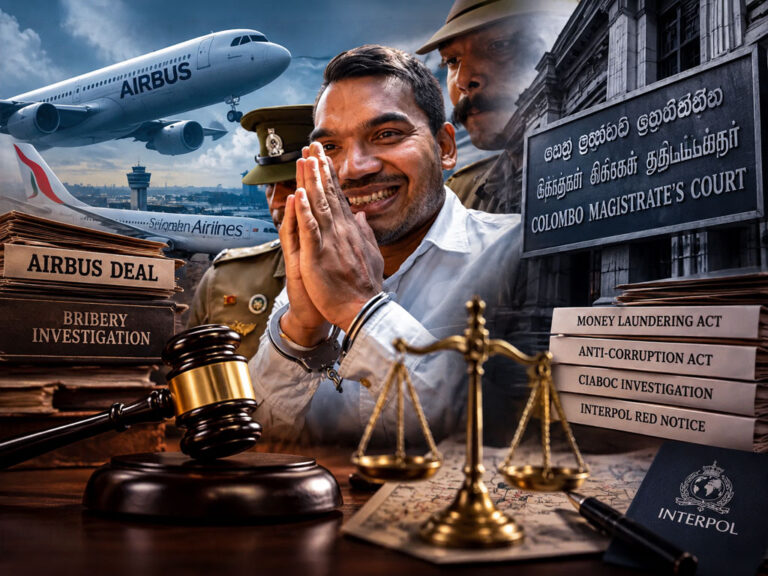
The widening legal net has also reached members of the next generation, strengthening fears that the Rajapaksa family brand may be permanently damaged. Mahinda Rajapaksa’s second son, Yoshitha Rajapaksa, was arrested over allegations involving the abuse of public funds and official authority. Investigators alleged that he bypassed compulsory recruitment procedures when entering the Sri Lanka Navy and improperly used state money to finance prestigious officer training at Dartmouth in Britain. Mahinda’s youngest son, Rohitha Rajapaksa, was meanwhile questioned for hours by the Colombo Central Crimes Investigation Bureau over a Rs. 19 million investment in private institutions between 2018 and 2021, an amount investigators considered far beyond his declared income. The scrutiny has also extended to the wider family. Former parliamentarian and nephew Shasheendra Rajapaksa was detained by anti-corruption investigators over alleged corruption and the suspected misappropriation of Mahaweli Authority property.
For the dynasty’s senior figures, the closing years of their political careers have offered little of the dignity traditionally associated with elder statesmen. Gotabaya Rajapaksa continues to face questioning over the allegedly unlawful allocation of residential housing units to political associates during his presidency. He also remains exposed to potential legal consequences connected to broader national security failures, including continuing scrutiny of accountability gaps surrounding the deadly Easter Sunday bombings of 2019.
The legal pressure has arrived alongside the dramatic collapse of the family’s political vehicle, the Sri Lanka Podujana Peramuna. Namal Rajapaksa, once carefully positioned as the dynasty’s future presidential candidate, has encountered deep public hostility in his attempts to rebuild the family name. The policy disasters associated with the previous administration, particularly the abrupt overnight prohibition on chemical fertilisers that devastated agriculture, have severely weakened support among the rural Sinhalese-Buddhist voters who once formed the Rajapaksas’ most dependable political base.
Most damaging may be the disappearance of the alliances that once protected the family. Networks of corporate magnates, senior bureaucrats and opportunistic political crossovers previously created an almost impenetrable shield around the dynasty. Those networks have now fractured. In the current anti-corruption environment, former allies are increasingly focused on defending their own positions, leaving the Rajapaksas to confront legal investigations and political decline with little protection. Their story is no longer principally one of survival and recovery. It has become a warning about how rapidly concentrated power can collapse when institutions begin functioning again and an angry electorate insists on accountability.
#RajapaksaDynasty #Rajapaksa #SriLankaPolitics #SriLanka #PoliticalAccountability #AntiCorruption #BasilRajapaksa #MahindaRajapaksa #GotabayaRajapaksa #NamalRajapaksa #AnuraKumaraDissanayake #CIABOC #SLPP #SriLankaNews #CorruptionProbe #PoliticalCrisis #EconomicCrisis #TheMorningTelegraph


It is amazing that the writer doesn’t show his stand or displeasure about anything or anyone of these crooks but writes in a dispassionate tone. Bloody analyst s worth their salt are expected to SAY SOMETHING!