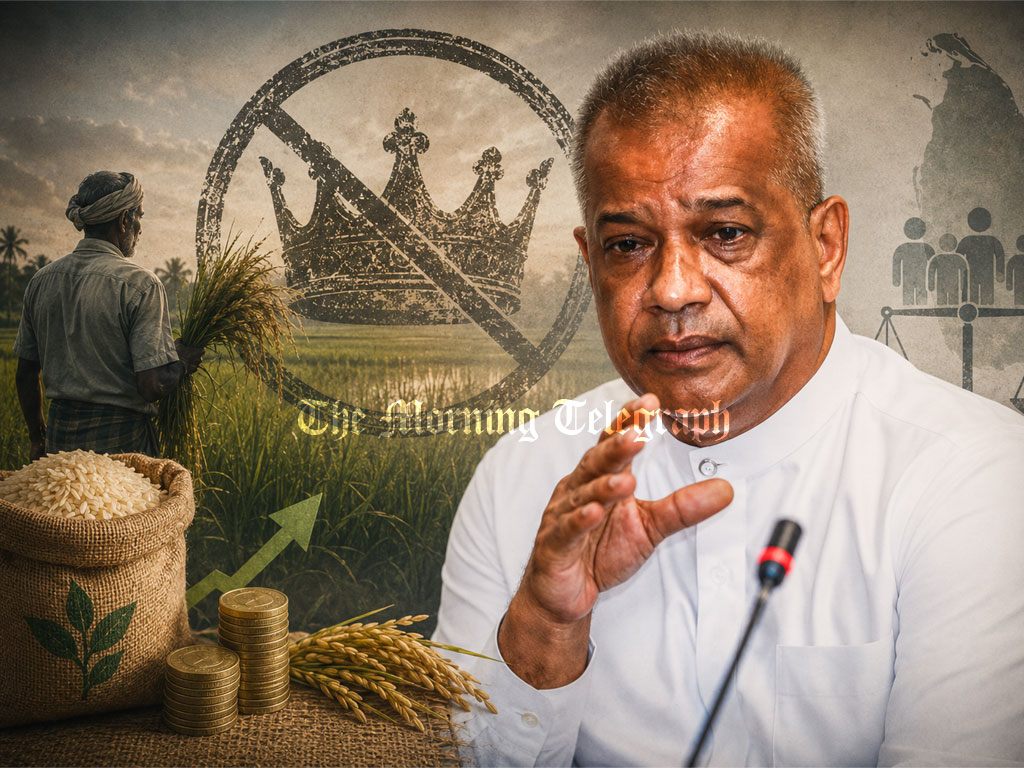
Agriculture Minister Lal Kantha says farmers should not think of themselves as kings, urging greater responsibility toward consumers and national food security.
Agriculture Minister K.D. Lal Kantha says the long-held belief that farmers are kings is outdated, arguing that agriculture must balance the interests of both producers and consumers rather than focusing solely on farmers.
The Minister of Agriculture, Livestock, Lands and Irrigation made the remarks while addressing a public event attended by Deputy Minister Namal Karunaratne.

Lal Kantha said describing farmers as kings is a misleading idea that has existed for generations and stressed that those engaged in agriculture should not view themselves as being above the rest of society.
He pointed out that enormous amounts of public tax revenue are invested in supporting the agricultural sector.
“The people of this country make tremendous sacrifices to provide irrigation systems, roads, culverts, bridges and fertilizer subsidies. Therefore, it is not appropriate for farmers alone to think of themselves as kings. That is an old tattoo,” the Minister said.
Lal Kantha further noted that farmers often focus exclusively on securing higher paddy prices while paying less attention to the burden placed on consumers who ultimately purchase rice.
According to the Minister, increases in paddy prices are inevitably reflected in the retail price of rice, making it important for farmers to consider the wider interests of the entire population when discussing pricing policies.
He also responded to proposals made by certain groups calling for a guaranteed purchase price of Rs. 150 per kilogram of paddy.
“Those demanding that farmers receive Rs. 150 per kilogram are the very same people who attempt to purchase paddy from farmers at only Rs. 90 to Rs. 95. That price does not exist in their own practice,” he said.
The Minister further stated that although Sri Lanka is surrounded by the sea, the period of relying on imported salmon has now come to an end, adding that the public should recognise the positive developments taking place within the country’s agricultural sector.
He also criticised sections of the media, claiming that while 99 percent of the work being carried out may be positive, attention is often directed only towards the remaining one percent of shortcomings, which then become headline news.