By Roy Denish.
Hijab discrimination ruling says Sri Lanka exam officials violated Muslim schoolgirls’ rights by withholding A-Level results.
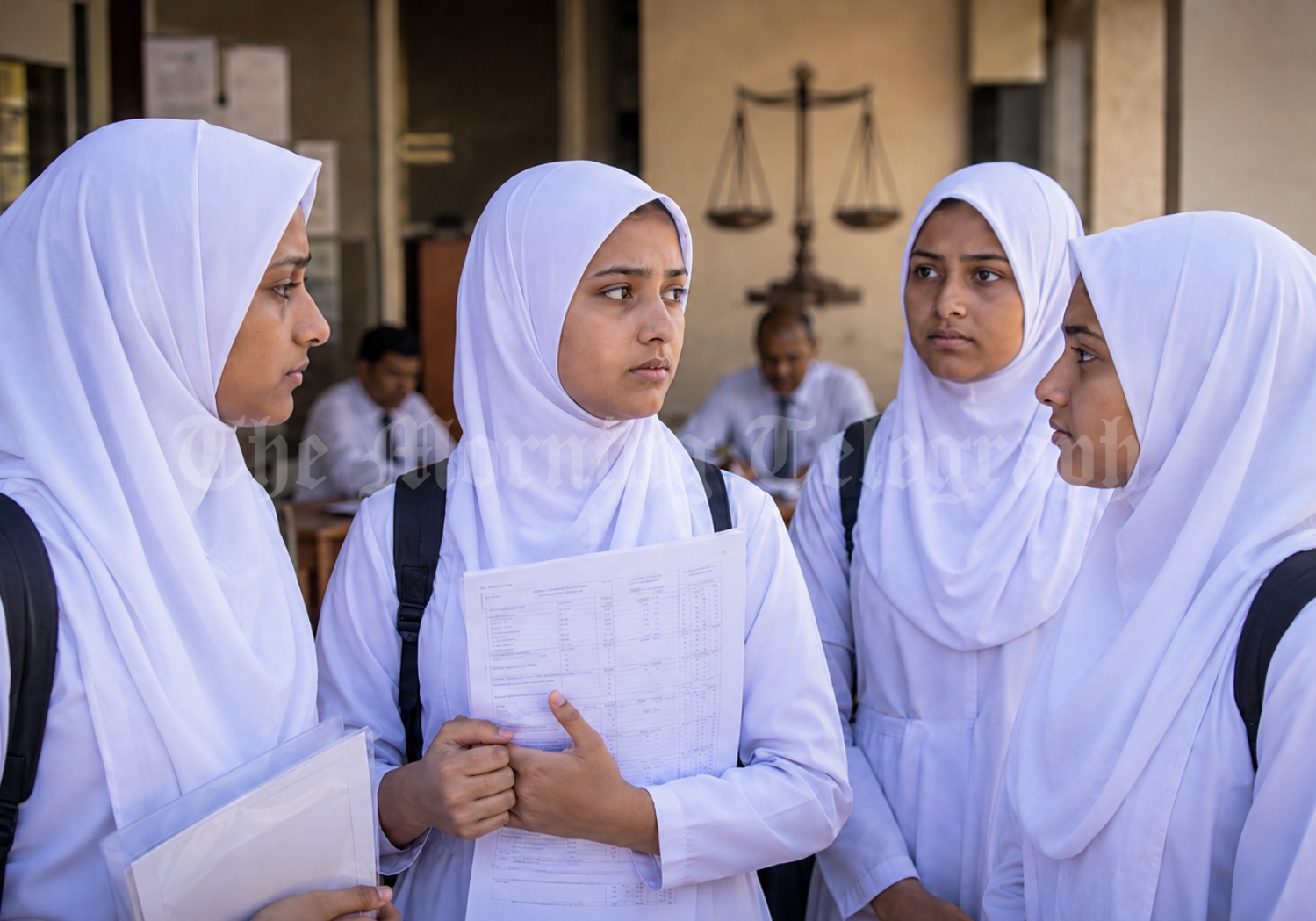
Hijab discrimination in national examinations has come under sharp scrutiny after the Human Rights Commission of Sri Lanka ruled that state education officials violated the constitutional rights of dozens of Muslim schoolgirls by withholding their results over traditional religious headscarves.
The final recommendation, issued after an extensive independent inquiry, found that the Department of Examinations acted arbitrarily, disproportionately, and unlawfully when it blocked the high-stakes exam results of about 70 female students from Zahira College.
The case, which triggered a national debate over security rules and religious liberty, arose from a strict examination protocol. Under Clause 17(IV) of the national exam guidelines, candidates must keep their ears fully visible during tests. Officials introduced the rule to prevent cheating and the possible use of hidden electronic earpieces.

Hijab Discrimination Ruling Targets Exam Officials
Local invigilators claimed the students’ loose shawls, or hijabs, breached the protocol. However, education authorities did not settle the matter at the exam center or allow a quick physical inspection. Instead, they froze the students’ academic futures by withholding their General Certificate of Education (GCE) Advanced Level results.
The A-Level exam remains a highly competitive, career-defining milestone because it determines access to state universities.
That punitive step pushed the rights commission to intervene on its own initiative, known as suo motu, and open a formal investigation into the state’s conduct.
According to the commission’s findings, witness testimony, including evidence from the examination department’s own field staff, showed that the students’ ears were visible despite their attire. The commission also faulted the department for imposing severe administrative penalties on the teenagers without holding a formal inquiry or giving them a chance to defend themselves.
The rights body ruled that the actions of the former Commissioner General of Examinations violated Articles 10, 12, and 14 of the Constitution. Together, those provisions protect absolute freedom of thought and religion, the right to manifest faith in public, and the right to equality and non-discrimination.
Read the official HRCSL recommendation: The Human Rights Commission of Sri Lanka’s full recommendation in Case No. HRC/SUO-MOTU/02/2024 sets out its findings on the withholding of A-Level results from Muslim schoolgirls over religious headscarves, including the constitutional rights violations and directives issued to the Department of Examinations. View the official HRCSL document here.
“The restriction placed on the students was an unnecessary, disproportionate, and unreasonable limitation on their freedom to manifest their religion,” the commission stated in its final report. It described the state’s conduct as an assault on the dignity and educational prospects of minority students.
Commission Orders Reforms After Results Row
Although the Department of Examinations came under legal pressure during mediation and eventually released the withheld grades, the commission refused to close the matter there. The release allowed the affected students to apply for university admission and re-scrutiny, but the rights body still issued strict, legally binding directives aimed at wider reform.
The commission ordered a full internal probe to identify and discipline examination officials who initially misrepresented the facts of the incident.
To prevent future cases of hijab discrimination, the department must issue a formal nationwide circular. That directive must make clear that security rules on “visible ears” cannot be used to bar traditional religious attire, as long as candidates adjust the attire to meet basic invigilation requirements at examination centers.
The commission also pointed to structural gaps in how minority communities face public testing. It ordered exam centers in diverse regions to use more inclusive personnel. In particular, it required the deployment of female invigilators fluent in Tamil, the primary language spoken by the country’s Muslim community.
#HijabDiscrimination #SriLanka #HumanRights #Education #ReligiousFreedom #MuslimSchoolgirls #GCEALevel #DepartmentOfExaminations #TheMorningTelegraph