By Roy Denish
“Impunity is the ultimate hallmark of a captured state, where the law exists only to discipline the weak, while the powerful remain entirely untouchable.”
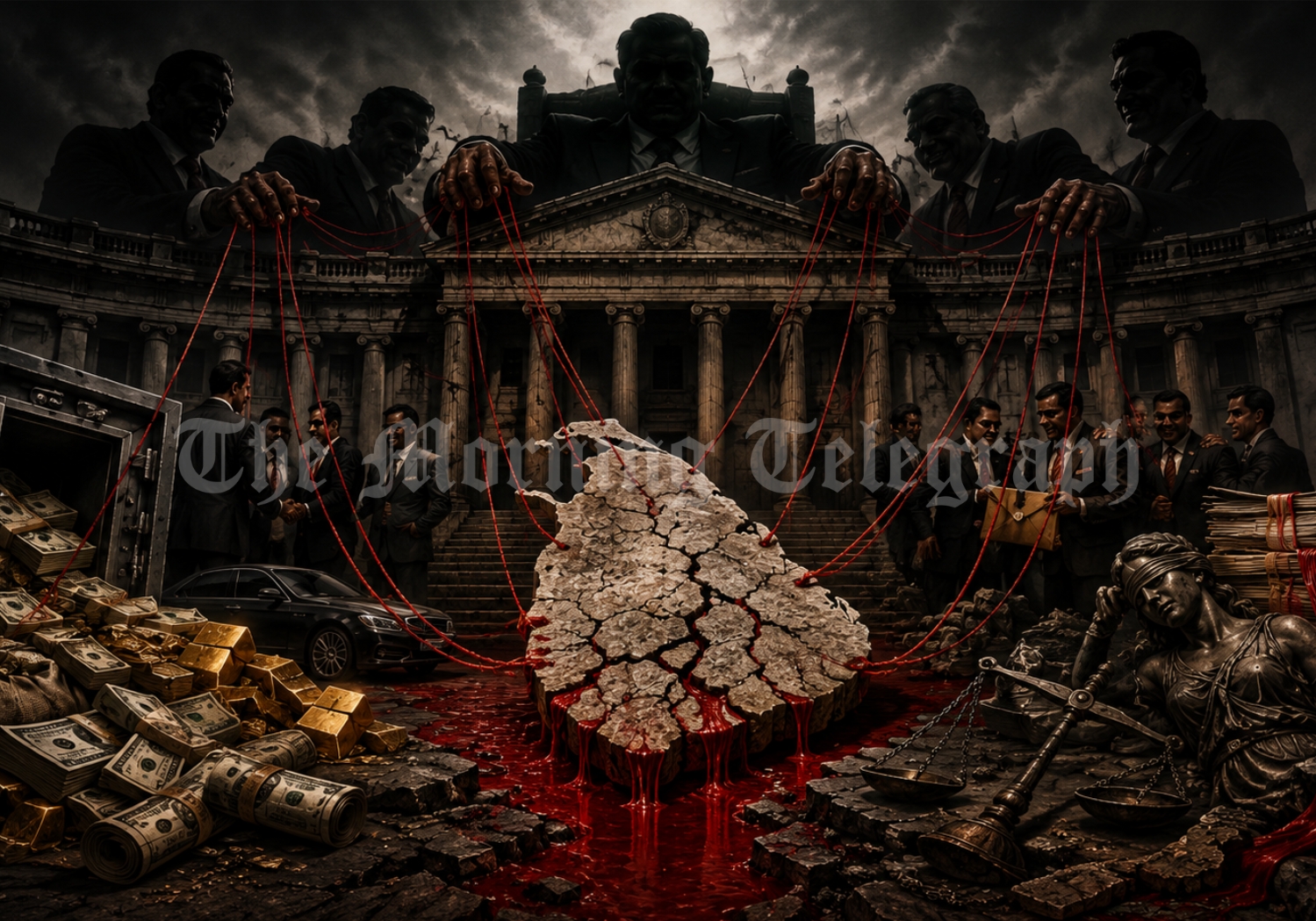
The contemporary landscape of Sri Lankan governance offers a masterclass in bitter irony. On our screens, a grim tableau unfolds: the very figures once whispered to be at the dark epicenter of yesterday’s corrupt machinations now occupy the apex of state decision-making. The systemic rot was perhaps best captured by a departing foreign investor, who bitingly remarked to an official on his way out: “If I had known Sri Lanka was orchestrated by a cabal of five business tycoons, I would have gone straight to them, rather than squandering my time in your office chasing twenty-three separate approvals just to invest my own capital.”
The evidence of this institutional capture is as brazen as it is pervasive. Consider an auditor, allegedly complicit in manipulating State-Owned Enterprise (SOE) valuations during a critical divestiture phase under the Rajapaksa regime; this individual has not been censured, but rather elevated, freshly minted as the Chairman of the Board of Investment (BOI). Elsewhere, a former telecommunications chief, infamous for allegedly stonewalling judicial call-log requests tied to the high-profile murder of a prominent rugby player to shield Rajapaksa loyalists, has miraculously resurfaced. In an administration that loudly brands itself as “squeaky clean,” this figure has been handed the reins to restructure the nation’s bankrupt flag carrier.

The oligarchic stranglehold does not stop there. The nation’s wealthiest tycoon, once a consummate cog in the Rajapaksa political machine, continues to rewrite state contract clauses with impunity to guarantee his conglomerates exclusive government deals. Today, his influence has metastasized further; he now actively shapes national tax policy to directly benefit the very firms he owns.
The human cost of this kleptocracy is stark and devastating. A rural paddy farmer nets a meager Rs. 50,000 per acre, a pittance expected to sustain a household for four grueling months. Meanwhile, the country’s premier rice miller aggressively expands an empire of luxury real estate and commands an ultra-premium fleet of high-end continental vehicles. Despite the fact that Sri Lanka yields sufficient domestic rice crops, the state continues to bleed record foreign exchange on rice imports to feed artificial scarcity. When pressed on this grotesque disparity, the agriculture minister, who a mere eighteen months ago publicly lamented his inability to make ends meet, dismissed inquiries about his newly acquired mansions as “nobody’s business.”
Financial opacity has reached catastrophic proportions. Nearly USD 1 billion has allegedly vanished through official banking channels via telegraphic transfers (TTs), with absolutely no paper trail of the commodities supposedly imported. Simultaneously, Rs. 13.5 billion evaporated from a listed commercial bank. The institutional incest surrounding the incident is breathtaking: the bank’s compliance officer is married to a member of the Central Bank’s Monetary Board, and her daughter is romantically linked to the commercial bank’s chairman. To cement the farce, the investigation into this massive fraud was handed to an audit firm in which another board member held direct commercial interests.
Layered atop this economic pillaging is the rise of charismatic pastors and self-proclaimed prophets, whose unexplained fortunes reach into the highest echelons of state office—wealth conveniently attributed to untraceable, receiptless “donations.”
It is little wonder that a nation which spent Rs. 1 million a minute to conclude a civil war in 2009 now finds itself fundamentally incapable of maintaining three months of usable foreign reserves. Something is profoundly, structurally broken. The parasitic elite did not flee when the political guard changed. They merely changed seats, continuing to feed off the carcass of a bankrupt nation.