
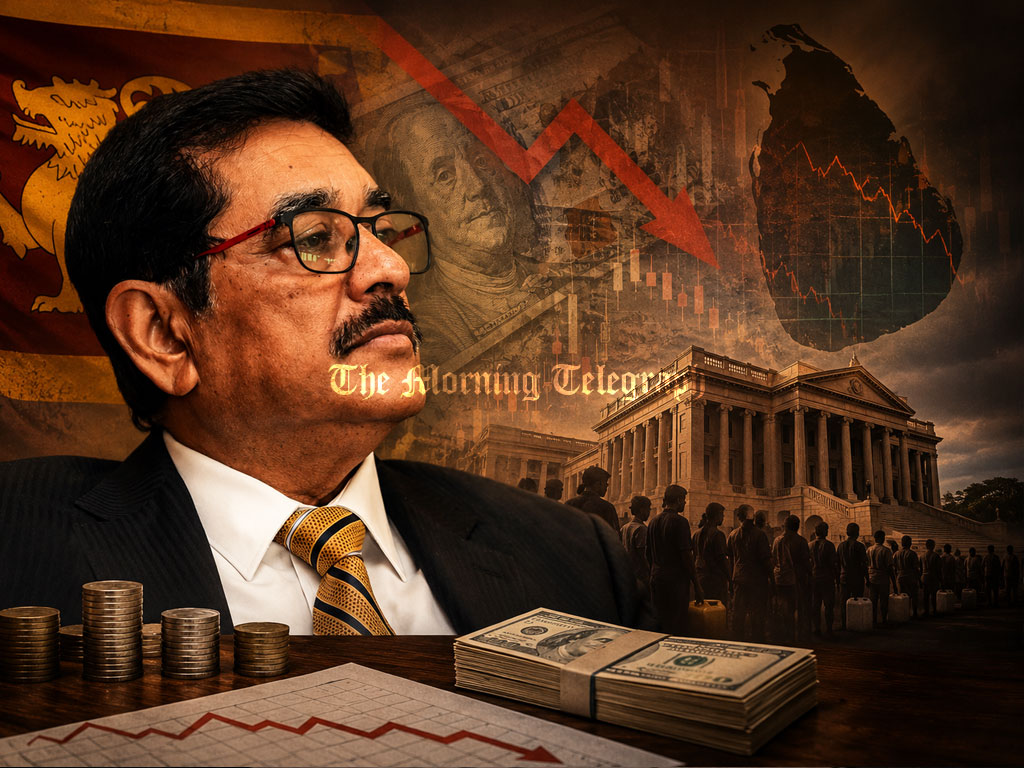
Central Bank Governor Nandalal Weerasinghe reveals how hidden financial realities and policy failures deepened the Sri Lanka economic crisis.
Central Bank Governor Dr. Nandalal Weerasinghe has revealed key administrative failures that, he says, contributed to the Sri Lanka economic crisis and the country’s financial collapse.
Speaking during a discussion on an online channel, the Governor said the true financial position had not been properly communicated to key decision-makers. He claimed that, when he took office, even the then-President had been kept in the dark about the country’s actual financial condition.
Dr. Weerasinghe recalled the severe situation he encountered when he assumed office as Central Bank Governor on April 8, 2022.
At that point, Sri Lanka’s usable foreign reserves had fallen to an extremely low level of approximately US$25 million. Meanwhile, the country faced debt instalments worth US$6 billion that had to be paid within the following month.

Sri Lanka Economic Crisis Worsened by Hidden Reality
“The previous Central Bank Governors and Finance Ministers had not reported the true state of the country to the President or Parliament. They repeatedly claimed that they could repay debts without any problems. But by concealing the true situation, the country’s economy was placed in grave danger,” the Governor stated.
Dr. Weerasinghe also responded to opposition allegations over his decision to temporarily suspend foreign debt repayments.
He maintained that the decision represented the only available option to prevent a complete economic collapse.
“We informed the creditors and made this decision. If we hadn’t done so, the country would have faced a ‘Hard Default’ and could have been completely isolated from the international financial system. That decision was made with Cabinet approval and Parliament was informed,” he emphasized.
The Governor argued that continuing to repay debts while hiding the country’s true financial position had created further damage. According to him, previous authorities used funds that Sri Lanka needed to import essential food and fuel.
He said correcting those mistakes and adopting more transparent practices helped the country reach its current level of stability.
Dr. Weerasinghe’s remarks place renewed attention on the decisions made before the Sri Lanka economic crisis reached its most severe point. His account highlights the consequences of concealing financial realities, delaying corrective action and continuing debt payments while foreign reserves were rapidly disappearing.
The Governor maintained that greater transparency and corrective economic measures helped move the country away from the conditions that threatened a complete collapse of its financial system.

Great gentleman. An asset to the Country.