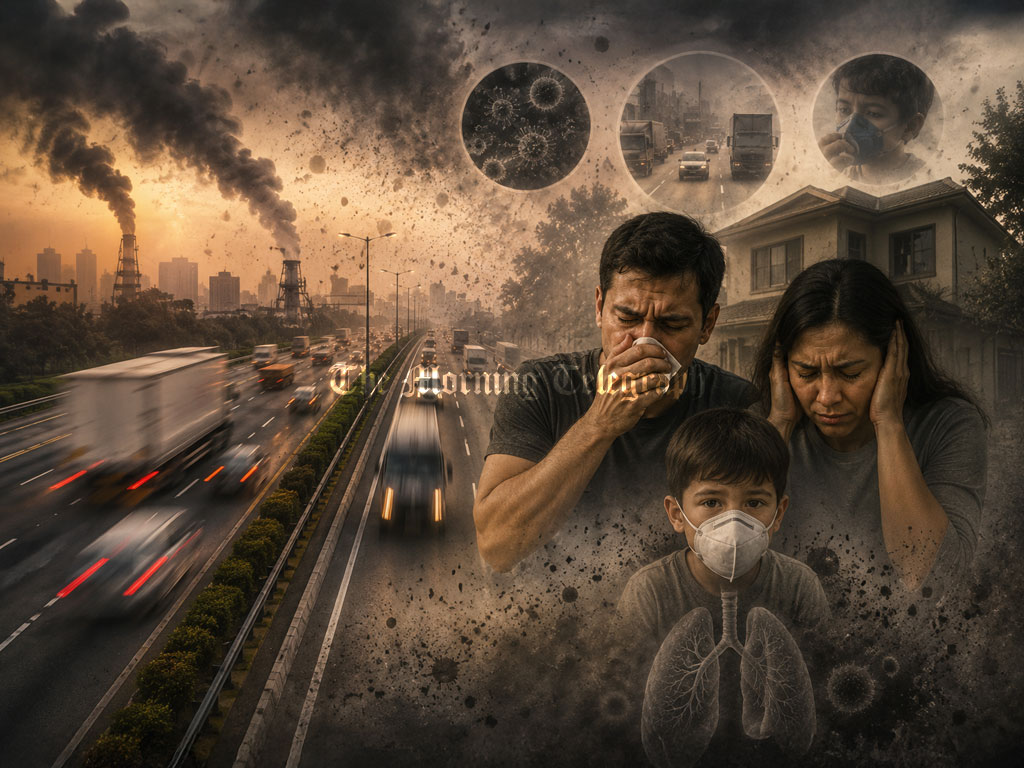
Living near highways can expose families to air pollution, noise, dust and long-term health risks affecting the lungs, heart and children.
Living near highways has become increasingly common as countries around the world, including Sri Lanka, rapidly expand their road networks. Highways have brought major benefits to economic development, transport efficiency and travel times.
These road systems make journeys between cities easier and speed up the movement of goods. They have also strengthened tourism, commerce and economic activity.
However, not every step of development brings only benefits to human life. People living very close to highways face numerous invisible health and environmental risks every day.
Thousands of vehicles travel past their homes throughout the day and night. These vehicles produce smoke, dust, excessive noise, vibration and various toxic chemicals. For nearby residents, these pollutants become an unavoidable part of daily life.

Many people become indifferent to these conditions because they consider them normal. However, medical and environmental research shows that constant exposure over many years can contribute to serious chronic health problems.
Young children, pregnant women, elderly people and those already suffering from respiratory or heart diseases face particularly high risks from these adverse effects.
Living Near Highways and the Threat of Air Pollution
Every vehicle travelling along a highway burns fuel and releases harmful pollutants into the air. Diesel-powered lorries, container trucks and buses can be significant sources of pollution.
These pollutants include fine particles known as PM2.5 and PM10, nitrogen oxides, sulfur dioxide, carbon monoxide and volatile organic compounds. Although many of these pollutants are invisible, they can cause serious damage to the human body.
Microscopic particles can travel beyond the nose and throat and reach deep areas of the lungs. Research has also shown that some ultrafine particles can enter the bloodstream and affect internal systems throughout the body.
Respiratory Diseases Can Develop Over Time
Respiratory illnesses are among the major health concerns associated with long-term exposure to polluted air near busy roads.
At first, residents may experience relatively minor symptoms. These can include frequent coughing, throat irritation, nasal congestion and breathing difficulties.
However, after years of exposure, more serious respiratory conditions can develop. These include asthma, chronic bronchitis and chronic obstructive pulmonary disease, commonly known as COPD.
For people who already have asthma, polluted air can quickly worsen symptoms. They may experience greater breathing difficulty at night, need inhalers more frequently or require hospital treatment.
The danger can become particularly serious when people continue to breathe polluted air without recognising that their environment may be contributing to worsening symptoms.
Children Face Greater Risks From Traffic Pollution
Young children in families living near highways may be especially vulnerable. One reason is that their lungs and respiratory systems are still developing.
Children also breathe faster than adults. Therefore, relative to their body size, they can inhale a larger amount of polluted air.
As a result, children may experience frequent colds, fevers, coughing, lung infections and asthma-related conditions.
Another important concern involves brain development. Scientific research has examined links between long-term exposure to air pollution and children’s cognitive and neurological development.
Reported concerns include reduced attention span, learning difficulties and changes in behavioural patterns. These risks make environmental quality especially important when families choose where to raise children.
Elderly People and Chronic Disease Patients
As people grow older, particularly after the age of 60, the body’s natural resilience can weaken. Elderly residents living close to heavily travelled highways may therefore face greater health challenges.
The problem can become more serious for people already suffering from asthma, COPD, heart disease, high blood pressure or diabetes. Air pollution can make these chronic conditions more difficult to manage.
Frequent hospital visits, increased dependence on medication and a general decline in quality of life can follow.
For families caring for elderly relatives, the surrounding environment should therefore be considered alongside medical treatment and lifestyle management.
The Hidden Connection With Heart Disease
Many people associate traffic pollution mainly with lung disease. However, air pollution can also affect the cardiovascular system.
When ultrafine pollutant particles enter the bloodstream, they can contribute to inflammation in blood vessels. This process can affect the normal functioning of the cardiovascular system.
Over time, these changes can contribute to the thickening and narrowing of blood vessels, blood clotting and reduced blood flow to the heart.
As a result, long-term exposure to air pollution can increase the risk of serious conditions, including heart attacks, strokes and hypertension.
The danger is particularly important because the effects may develop gradually. A person may not immediately connect cardiovascular problems with years of exposure to traffic pollution.
Noise Pollution Affects More Than the Ears
A person living near a busy highway may hear the continuous roar of thousands of vehicles every day.
At night, heavy lorries, containers and speeding vehicles can raise environmental noise to high decibel levels. The noise may continue even when families are trying to sleep.
Over time, many residents believe they have become accustomed to the sound. However, the brain and nervous system can continue responding to repeated noise exposure.
Constant noise pollution can contribute to poor sleep quality, frequent waking during the night and tiredness after waking in the morning.
Residents may also experience irritability, mental stress and difficulty concentrating. Over the long term, persistent noise exposure can also contribute to worsening heart disease and high blood pressure.
A quiet home environment is therefore more than a matter of comfort. It can also play an important role in physical and mental wellbeing.
Pregnancy and the Development of Unborn Children
Clean air is important for the health of pregnant women and the development of unborn children.
However, pregnant women living near highways may inhale vehicle fumes and toxic particles every day. This exposure can affect the mother’s health and may also influence fetal development through the placenta.
International research has examined associations between traffic-related air pollution and adverse pregnancy outcomes. Reported concerns include low birth weight and preterm birth, while research has also examined possible links with developmental problems.
Therefore, reducing unnecessary exposure to heavily polluted environments during pregnancy is an important precaution.
Families should pay particular attention to ventilation, indoor air quality and exposure to areas with heavy traffic whenever possible.
Scientific Concerns Over Long-Term Cancer Risk
Diesel exhaust has also raised serious concerns because it contains carcinogenic substances.
Research indicates that prolonged exposure to polluted air and toxic vehicle emissions can increase the relative risk of lung cancer and potentially contribute to other cancer risks.
This does not mean that every person living beside a highway will develop cancer.
However, long-term exposure to traffic-related air pollution is a health risk that should not be ignored. The cumulative nature of exposure makes preventive action particularly important.
Fine Dust Does Not Stay Outside the House
Families living near highways often notice a fine layer of black dust collecting on windows, furniture, clothing and floors.
This pollution can include microscopic particles, carbon deposits and material produced through tyre and brake wear.
When these particles enter homes, residents can continue breathing them even while indoors.
Repeated exposure can irritate mucous membranes and contribute to allergies, itchy eyes, nasal discharge and skin irritation.
Young children face an additional concern because they frequently play and crawl on floors. Their hands can come into direct contact with contaminated dust, increasing the possibility of ingestion or inhalation.
Regular and appropriate cleaning is therefore important. Families should avoid cleaning methods that simply return settled dust to the air.
Plants, Crops and the Natural Environment Also Suffer
Traffic pollution does not affect humans alone.
Dust and chemicals released by vehicles can settle on the leaves of plants growing beside roads. Heavy deposits can interfere with the normal functioning of leaf surfaces and affect photosynthesis.
As a result, plant growth may slow, while home gardens and crops can experience reduced productivity.
Air and noise pollution can also affect small animals and insects living near major roads. Birds, squirrels, bees and other species may face disruption to their habitats and normal behaviour.
Over time, these pressures can contribute to a decline in the biodiversity of the surrounding area.
Highways Can Fragment Wildlife Habitats
The construction of highway systems can divide forests and natural habitats.
When animals attempt to cross these roads, they face fast-moving vehicles. Serious collisions involving animals are frequently reported in areas where roads cut through habitats.
Domestic animals such as cattle, dogs and cats are also at risk. Wild animals, including monkeys, squirrels, hares and rabbits, can also die in vehicle collisions.
These incidents do not endanger animals alone. A driver travelling at high speed may lose control while attempting to avoid an animal, creating a serious danger for passengers and other road users.
Therefore, families living close to highways should take particular care to prevent domestic animals from roaming freely onto major roads.
Social and Economic Costs for Families
The consequences of living near highways can extend beyond health and environmental concerns.
Families facing repeated health problems may have to spend more on medical treatment and medication. Frequent hospital visits can also create additional transport and care costs.
Illness can force adults to take time away from work. Meanwhile, children’s education may suffer through repeated absences from school.
These pressures can place an additional burden on household finances.
In some areas, constant noise and a polluted environment can also reduce the comfort of the home itself. As a result, the family’s overall quality of life may decline despite the convenience of living near a major transport route.
Land Near Highways: Valuable Asset or Hidden Cost?
In Sri Lanka, land near highways, particularly around interchanges, can attract strong demand.
When authorities announce plans for a new interchange, land prices in the surrounding area can rise rapidly. Many buyers therefore consider such properties among the most valuable investments for the future.
The reasons are understandable. Highway access provides faster connections to major cities, creates opportunities for commercial activity and can increase expectations of future land appreciation.
However, many buyers focus almost entirely on the financial market value of the property.
Far fewer people consider the health value of the environment where their families will live.
A house or piece of land is not merely a financial investment. It is the environment where a family may spend decades of its life. Therefore, money alone cannot determine its true value.
Before purchasing land, buyers usually investigate the number of perches, road width, water supply, electricity connections and legal deeds.
However, they may not examine air pollution, noise levels, daily traffic density, the distance between the home and the road, or the availability of natural green cover.
For families with young children, pregnant women, elderly people or members with chronic respiratory diseases, these factors can be extremely important.
The health costs created by years of polluted air and noise may eventually exceed the financial gains from rising land prices.
This does not mean that every property near a highway is unsuitable for residential use.
Homes located at a sufficient distance from the main road may face lower exposure. Dense vegetation and appropriate building design can also help reduce some environmental pressures.
Therefore, property buyers should not ask only, “Is it near the highway?”
They should also ask, “How far away is it?”, “How safe is the surrounding environment?” and “Can our family live comfortably and healthily here over the long term?”
Money can be earned again. Health that gradually deteriorates over many years can be far more difficult to restore.
For that reason, choosing an environment suitable for healthy living is just as important as selecting land with strong financial value.
Simple Protective Steps for Living Near Highways
If moving away is not possible, families can take practical measures to reduce their exposure to pollution and noise.
Create green barriers: Plant dense trees and shrubs around the home, particularly along boundaries facing the road. Green belts can help reduce some dust movement and provide a buffer from road activity.
Use dust filters: Fine dust filter meshes on windows and ventilation openings can help reduce the amount of particulate matter entering the home.
Clean carefully: Avoid repeatedly dry-wiping accumulated dust. Instead, use a damp cloth or a suitable vacuum cleaner so settled particles do not simply return to the indoor air.
Protect children: Young children should not play in open spaces immediately beside a highway. Families should also pay attention to dust accumulating on floors and play areas.
Seek medical advice: Anyone who develops persistent respiratory discomfort should seek appropriate medical advice. Where necessary, regular health checks, including lung function testing, may be useful.
Act as a community: Residents can support local environmental programmes and the development of green public spaces. Communities can also request relevant road authorities to consider sound barriers or green belts where appropriate.
Development Must Also Protect Human Life
Highways are essential infrastructure for a modern developing country.
They support economic activity, make transportation more efficient and connect people, businesses and communities. Their contribution to development is significant.
However, while enjoying these benefits, society must also pay attention to the health and quality of life of people living beside major road networks.
Respiratory disease, cardiovascular risks, noise pollution, chronic stress, possible effects on children’s development and damage to ecosystems should not be dismissed.
These are long-term risks that can accumulate gradually and often silently.
Families living near highways should therefore pay close attention to their health and take practical protective measures wherever possible.
Governments, road authorities, planners and communities also have a role in reducing exposure through responsible planning, environmental safeguards and appropriate protective infrastructure.
The complete meaning of development cannot be measured only by the number of roads and buildings a country constructs. True development must also protect the health, safety and quality of life of the people who live around that infrastructure.
SOURCE:- SL LEADER