Anti-Terror Bill concerns grow as UN rights officials warn Sri Lanka of risks to free speech, assembly, media freedom and detention safeguards.
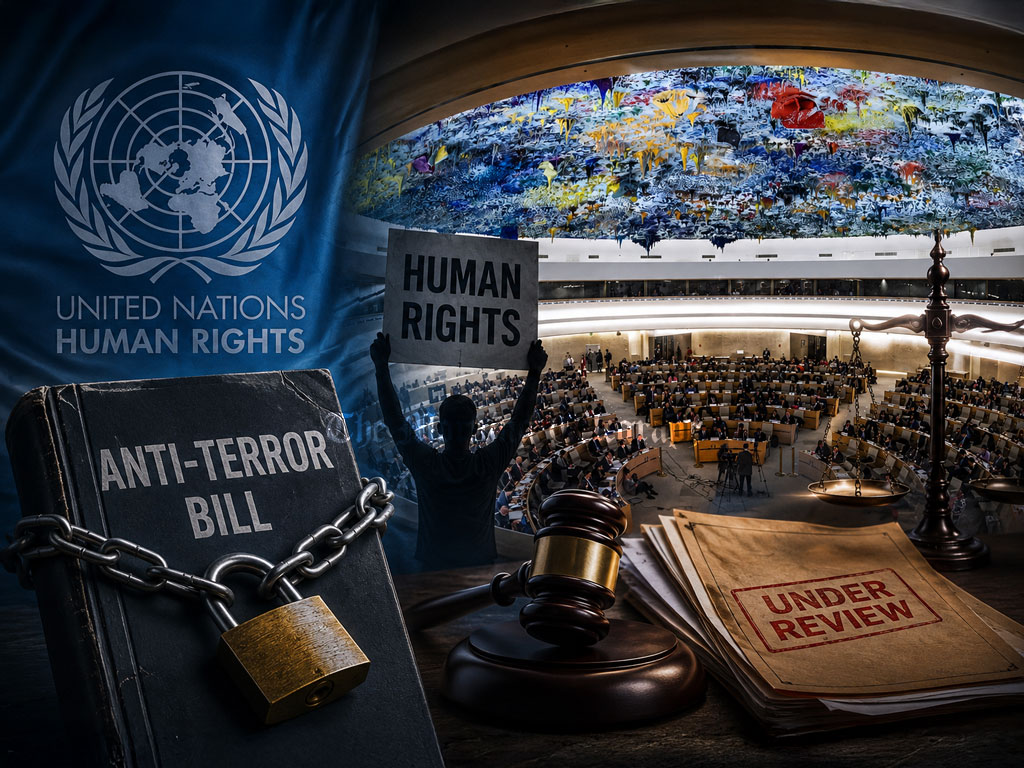
Anti-Terror Bill concerns have intensified after the UN Human Rights Office warned Sri Lanka that the proposed law could worsen problems already seen under the existing Act.
The Office of the United Nations High Commissioner for Human Rights has informed the Sri Lankan government that the new Prevention of Terrorism Bill may create serious human rights risks.
It said the bill’s definition of “terrorism” remains too broad and vague. As a result, it could severely restrict fundamental democratic rights, including freedom of expression, freedom of assembly and media freedom.

Anti-Terror Bill Faces Rights Concerns
The UN Human Rights Office also raised concern over possible prolonged detention without adequate judicial oversight. It warned that such powers could create space for torture and disappearances.
However, the Office noted that positive amendments should remain in the bill. These include removing provisions that allow confessions made in police custody to be admitted as evidence.
The UN Human Rights Office said the government must ensure that arbitrary arrests and human rights violations seen under the old Act are not repeated.
It also urged the government to hold open discussions with civil society and other stakeholders. The Office said Sri Lanka’s counter-terrorism legal framework must comply with international human rights law.
Reports further indicate that the government is now reviewing the bill after criticism from several parties.