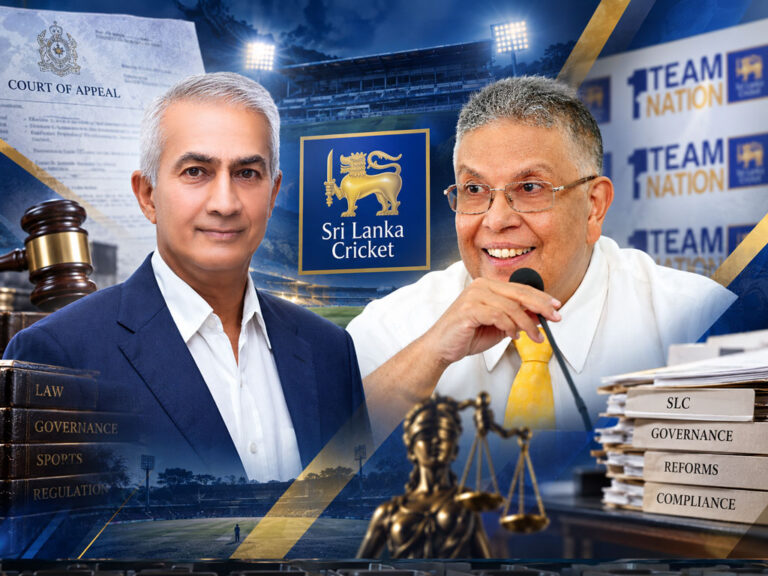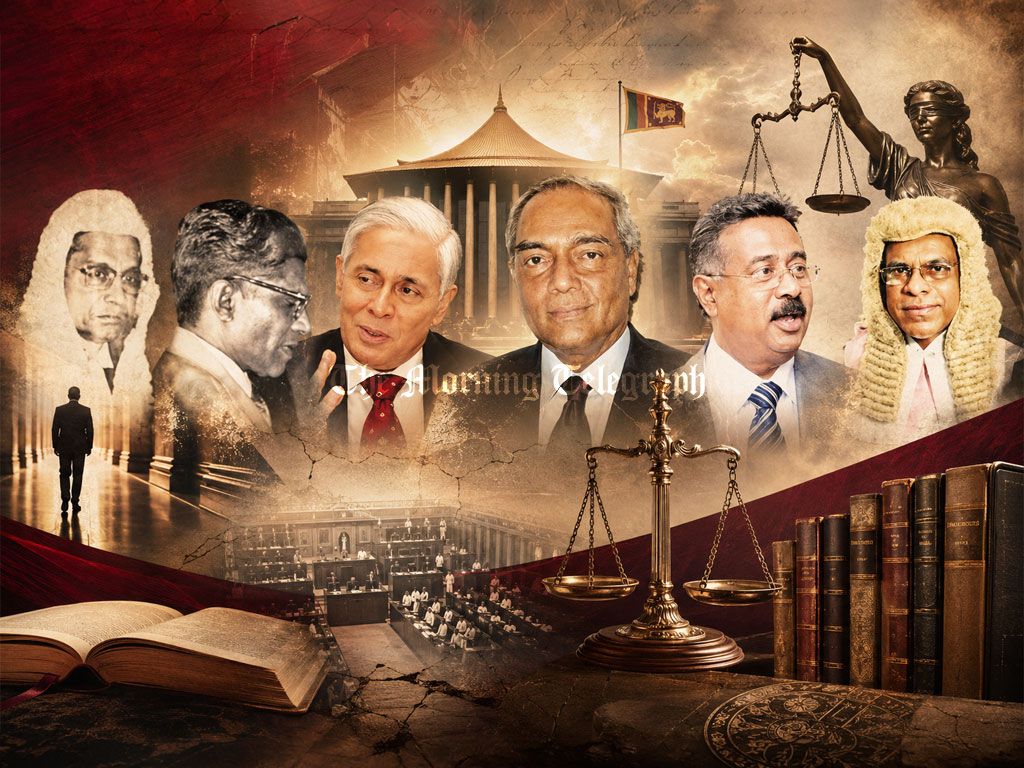
Chief Justice appointment history shows how Sri Lankan presidents used the judiciary, and why Surasena’s retirement now tests Anura.
Chief Justice appointment decisions in Sri Lanka have never been merely ceremonial. From Arthur Wijewardene to Preethi Padman Surasena, they have often reflected power, revenge, reform and the uneasy line between political mandate and judicial independence.
“Felix Dias, who served as Minister of Justice in Sirimavo’s United Front government, harboured an extraordinary grudge against the UNP…” Sri Lanka Latest News.
That is what a veteran left-wing politician said recently.
“What was the reason for that grudge?”
It is a story that few people know.

From Arthur Wijewardene to Felix Dias
Felix Dias’ father, Senior Felix Reginald Dias Bandaranaike, served as a Supreme Court judge. The Dias Bandaranaike family stood among Sri Lanka’s most distinguished legal families. At independence, Felix Dias Bandaranaike was the most senior judge of the Supreme Court. He was fully qualified to become Chief Justice.
However, the country’s first Prime Minister, D.S. Senanayake, did not appoint him. Instead, D.S. selected Arthur Wijewardene, then Attorney General, as independent Sri Lanka’s first local Chief Justice.
Felix Dias Bandaranaike felt deeply disappointed. His son, Junior Felix Dias, felt that disappointment even more strongly. He believed D.S. had done a grave injustice to his father. As a result, Felix Dias developed a lasting hostility towards D.S. Senanayake’s UNP.
That was how D.S., from Woodland Mansion in Colombo, decided appointments to the posts of Chief Justice and other judges.
Then came Felix Dias’ turn. He served as Minister of Justice in the 1970-77 government. Sirimavo Bandaranaike’s brother, Barnes Ratwatte, was serving in a lower court. At the Prime Minister’s request, Felix Dias appointed his own relative, Barnes Ratwatte, as a Supreme Court judge.
Politics Enters the Judiciary
J.R.’s autobiography described the judiciary during Sirimavo’s administration in harsh terms:
“The United Front government further worsened the situation by striving to appoint politically partisan judges to the highest positions in the judiciary. One of them had been an SLFP Member of Parliament and a provincial lawyer in the early 1960s. Such appointments, together with the obvious political bias of certain judges, drew criticism from opposition MPs and the general public. Public discontent manifested itself in unusual ways. On many occasions, during cricket or football matches, when an umpire or referee made a questionable decision or one that favoured the home side, frustrated spectators would shout out the names of these judges…”
J.R.’s Autobiography, Page 110.
“Ado…”
That was how spectators shouted the names of judges at cricket matches in those days.
J.R. came to power accusing Sirimavo and Felix Dias of destroying the judiciary. After becoming President, he appointed his friend, President’s Counsel Neville Samarakoon, as Chief Justice. It marked the first time in Sri Lanka’s history that an outsider from private legal practice became Chief Justice. From Ward Place, J.R. reshaped the judiciary to suit the mandate of 1977.
When Chandrika came to power in 1994, G.P.S. de Silva was Chief Justice. He had earned the position on merit after serving as President of the Court of Appeal and as the senior-most Supreme Court judge. President Premadasa had appointed him.
Chandrika, Sarath Silva and the 1994 Mandate
When G.P.S. de Silva retired in 1999, Justice Mark Fernando stood next in seniority for the post of Chief Justice. However, Chandrika did not favour him. Her Minister of Justice, G.L. Peiris, publicly said the judiciary was acting against the mandate Chandrika and the People’s Alliance had received in 1994.
He argued that judges appointed during the UNP’s 17-year rule were obstructing the government’s progress.
At the time, Chandrika had entrusted Attorney General Sarath N. Silva with leading the political campaign to investigate corruption and violence under the previous UNP administration. Sarath Silva also led the Presidential Commissions probing corruption and violence during that era.
When G.P.S. de Silva’s tenure ended, Chandrika appointed Sarath Silva as Chief Justice to implement her government’s agenda.
When Mahinda Rajapaksa became President in 2005, Sarath Silva remained Chief Justice. After him, Mahinda appointed Ashoka de Silva, who was next in seniority. Later, he appointed Shirani Bandaranayake as Chief Justice.
However, Shirani Bandaranayake ruled against Basil Rajapaksa’s Divi Neguma project. Then impeachment proceedings followed. The government removed her as Chief Justice and appointed Mohan Peiris, whom Mahinda had already made legal adviser to the Cabinet.
Mahinda had also previously appointed Mohan Peiris as Attorney General while he was in private legal practice. At that time, he was not serving in the Attorney General’s Department.
Chief Justice Appointment Under Anura
When the Maithripala Sirisena-Ranil Wickremesinghe government came to power in 2015, it immediately pressured Mohan Peiris to resign as Chief Justice. The new administration viewed him as an obstacle to its mandate to prosecute corrupt figures. He resigned.
When Gotabaya Rajapaksa became President in 2019, Jayantha Jayasuriya was Chief Justice. Maithripala Sirisena and Ranil Wickremesinghe had appointed him. He had not served earlier as either a Supreme Court judge or a Court of Appeal judge. He had served as Attorney General under the Sirisena-Wickremesinghe administration.
They appointed him Chief Justice by overlooking more senior judges. Nevertheless, Gotabaya did not replace him.
When Anura Kumara Dissanayake became President in 2025, Jayantha Jayasuriya still held the office. After his retirement, Anura appointed Murdu Fernando, one of the Supreme Court’s most senior judges. When she retired, Anura appointed another senior Supreme Court judge, Preethi Padman Surasena.
That Chief Justice appointment returned attention to the question of seniority, independence and political mandate.
While serving as a High Court judge, Justice Preethi Padman Surasena became known as fearless. He sentenced those convicted in the acid attack on former Auditor General Lalith Ambanwela to prison terms ranging from 10 to 70 years.
Preethi Padman Surasena’s Landmark Rulings
After President Maithripala Sirisena appointed him to the Court of Appeal, Sirisena attempted what many described as a constitutional coup. He tried to remove Prime Minister Ranil Wickremesinghe and appoint Mahinda Rajapaksa as Prime Minister.
Justice Padman Surasena ruled against that move. His order preventing Mahinda, then the country’s most popular political leader, from serving as Prime Minister became a landmark judgment.
Before President Sirisena left office, Justice Preethi Padman Surasena issued an interim order preventing the Cabinet from gifting Sirisena the Paget Road official residence.
After ruling in 2018 that Ranil Wickremesinghe’s removal as Prime Minister was unconstitutional, Justice Surasena delivered another major ruling in 2023. President Ranil Wickremesinghe had claimed there were no funds to hold local government elections. Justice Surasena ruled that the Secretary to the Ministry of Finance must release the funds allocated for the election and proceed with it.
Chief Justice Preethi Padman Surasena is therefore a judge who has delivered rulings against two Presidents and one Prime Minister.
In 2024, the people brought Anura to power with a mandate to catch the corrupt. Chief Justice Preethi Padman Surasena is the ideal Chief Justice to implement that mandate.
However, he is due to retire at the end of this year.
“What will Anura’s decision be?”
While protecting both the effort to prosecute the corrupt and the independence of the judiciary, Anura must now hear one warning: “tread carefully, don’t break the branch by placing your foot carelessly.”