Copenhagen liveable city ranking leads the 2026 index as Asia gains in healthcare while Middle East stability concerns deepen.
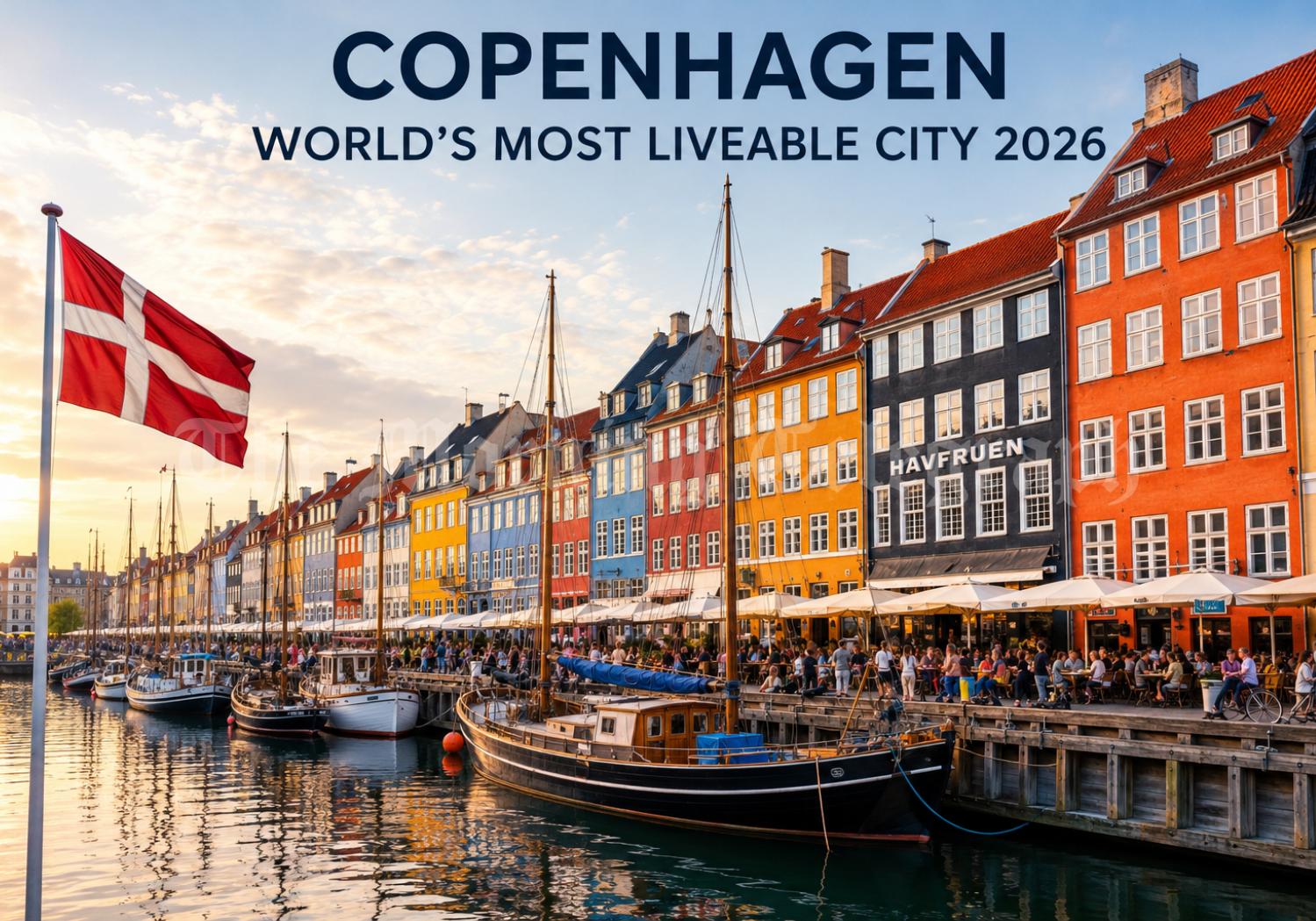
The Copenhagen liveable city ranking has once again placed the Danish capital at the top of the Economist Intelligence Unit Global Liveability Index for 2026.
The newly released index shows a changing global picture for urban quality of life. It reflects stronger healthcare standards in parts of Asia, while instability continues to drag down scores across the Middle East.
For the second consecutive year, Copenhagen secured first place as the world’s most liveable city. The city earned an overall score of 98 out of 100. It also received perfect marks for stability, education, and infrastructure.
Its continued success rests on a strong mix of public services, cultural life, reliable planning, and efficient city management. Together, those strengths helped Copenhagen defend its position at the top.

Copenhagen Liveable City Ranking Leads Global Index
Vienna followed closely in second place. The Austrian capital maintained its historically strong standing after previously topping the index for three consecutive years.
Australian cities also performed strongly in the upper tier. Melbourne climbed to third place, while Sydney reached fourth. Adelaide also remained inside the top ten, holding eighth place.
Switzerland secured two spots among the world’s best-ranked cities. Zurich placed fifth, while Geneva took sixth.
Osaka remained the highest-ranking Asian city, finishing seventh. Meanwhile, Vancouver represented North America in ninth place, and Tokyo completed the top ten.
The report also found that the global average liveability score remained unchanged at 76.1 out of 100. Although several cities improved, losses in other regions cancelled out those gains.
Asia Gains As Global Scores Hold Steady
Asia recorded the most notable regional improvement in the 2026 index. The report linked this rise mainly to stronger healthcare scores in Chinese cities.
Those gains followed expanded national funding schemes and long-term care insurance systems. As a result, Asia now claims nine of the top twenty positions globally.
However, Western Europe still remains the strongest region overall. Its average score slipped slightly to 91.7, but the region continued to dominate the top end of the index.
In North America, New York City emerged as one of the biggest upward movers. It climbed to 66th place after a clear improvement in its stability score.
That progress reflected lower crime rates and reduced perceived risks from civil unrest or terrorist disruption. Meanwhile, Honolulu remained the highest-ranked city in the United States, even though it slipped slightly to 25th place.
Middle East Instability Hits Rankings
Geopolitical instability sharply affected rankings in other parts of the world. The Gulf region and the wider Middle East saw some of the clearest declines.
Muscat dropped 14 places, while Kuwait City fell 12 places. The report linked both declines to rising regional tensions.
At the bottom of the global index, Damascus remained the least liveable city among the 173 cities surveyed. Tripoli, Dhaka, Karachi, and Algiers also ranked near the lowest tier.
Their poor scores reflected continuing challenges linked to infrastructure, safety, and wider urban pressure. The 2026 index therefore shows a divided global picture: cities with strong services and stability continue to rise, while conflict and weak infrastructure keep others trapped near the bottom.