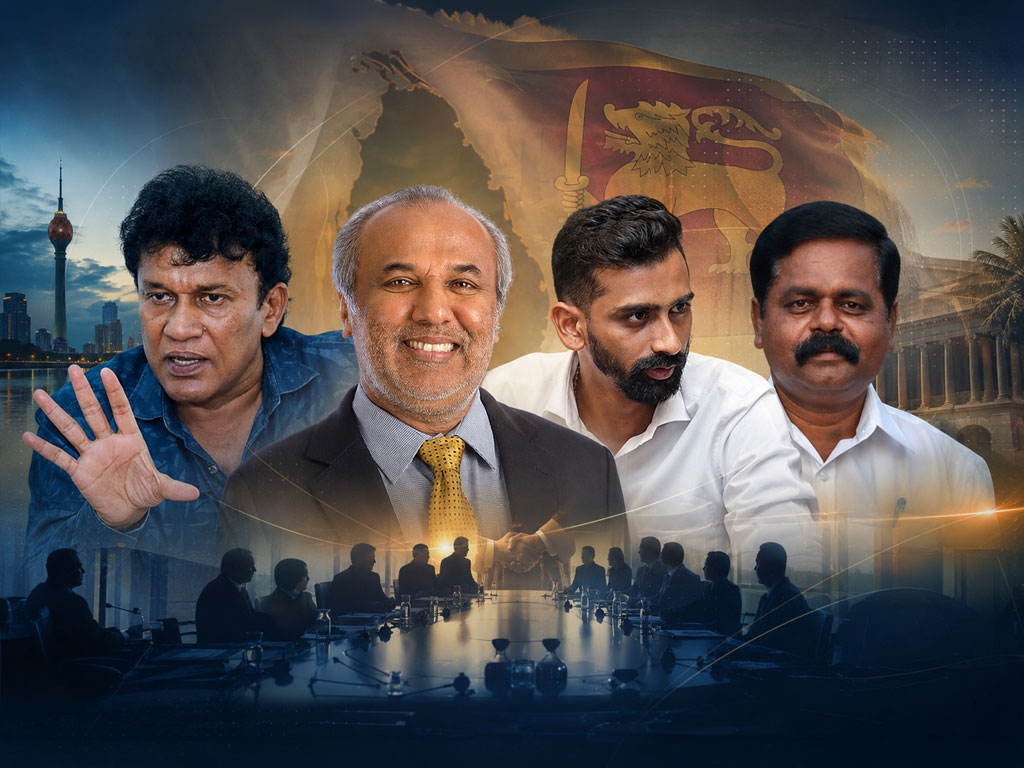
The Sri Lanka minority parties meeting will bring six Tamil and Muslim political groups together in Colombo to discuss rights and strategy.
The Sri Lanka minority parties meeting will bring six major Tamil and Muslim political groups together in Colombo tomorrow to discuss common goals and future strategy.
The meeting is scheduled for July 13 at 1:00 PM at the Renuka Hotel in Colombo.
The office of Tamil Progressive Alliance leader and Parliamentarian Mano Ganeshan announced the gathering through an official media release.
Organisers say the talks will focus on the current political situation and the challenges facing minority communities across Sri Lanka.

Sri Lanka Minority Parties Meeting Brings Six Groups Together
The six parties expected to participate are the All Ceylon Makkal Congress led by Rishad Bathiudeen, the Ceylon Workers’ Congress led by Jeevan Thondaman and the Democratic Tamil National Alliance.
The Ilankai Tamil Arasu Kachchi faction led by Sivagnanam Sridharan will also attend.
The Sri Lanka Muslim Congress led by Rauff Hakeem and the Tamil Progressive Alliance led by Mano Ganeshan will complete the group.
Together, these parties represent a large section of Tamil and Muslim-speaking voters in the North, East, plantation districts and urban areas, including Colombo.
The main objective is to reach common ground on the political, constitutional and social challenges affecting minority communities.
Minority Rights and Joint Strategy Take Centre Stage
The discussions are expected to focus heavily on protecting minority rights during the government’s political and constitutional reform process.
The parties also aim to identify a common approach to issues shared by Tamil and Muslim communities.
Another key objective is to decide whether the parties should continue operating separately at national level or work together through a coordinated political platform.
Organisers expect the meeting to explore a new strategy for collective action and a stronger unified voice on minority concerns.
The talks come at a crucial political moment, with several communities seeking clearer guarantees on representation, rights and future constitutional arrangements.
The outcome could determine whether these six parties move towards a broader united front or continue pursuing separate political agendas.
SOURCE:- THE LEADER