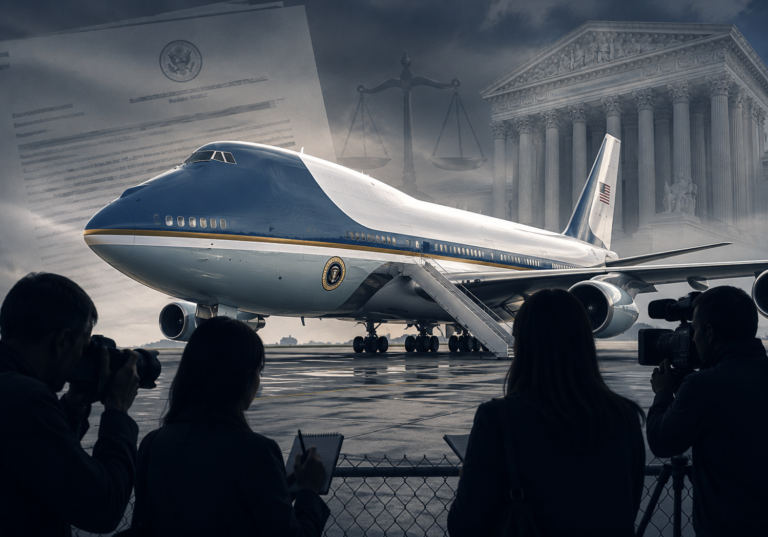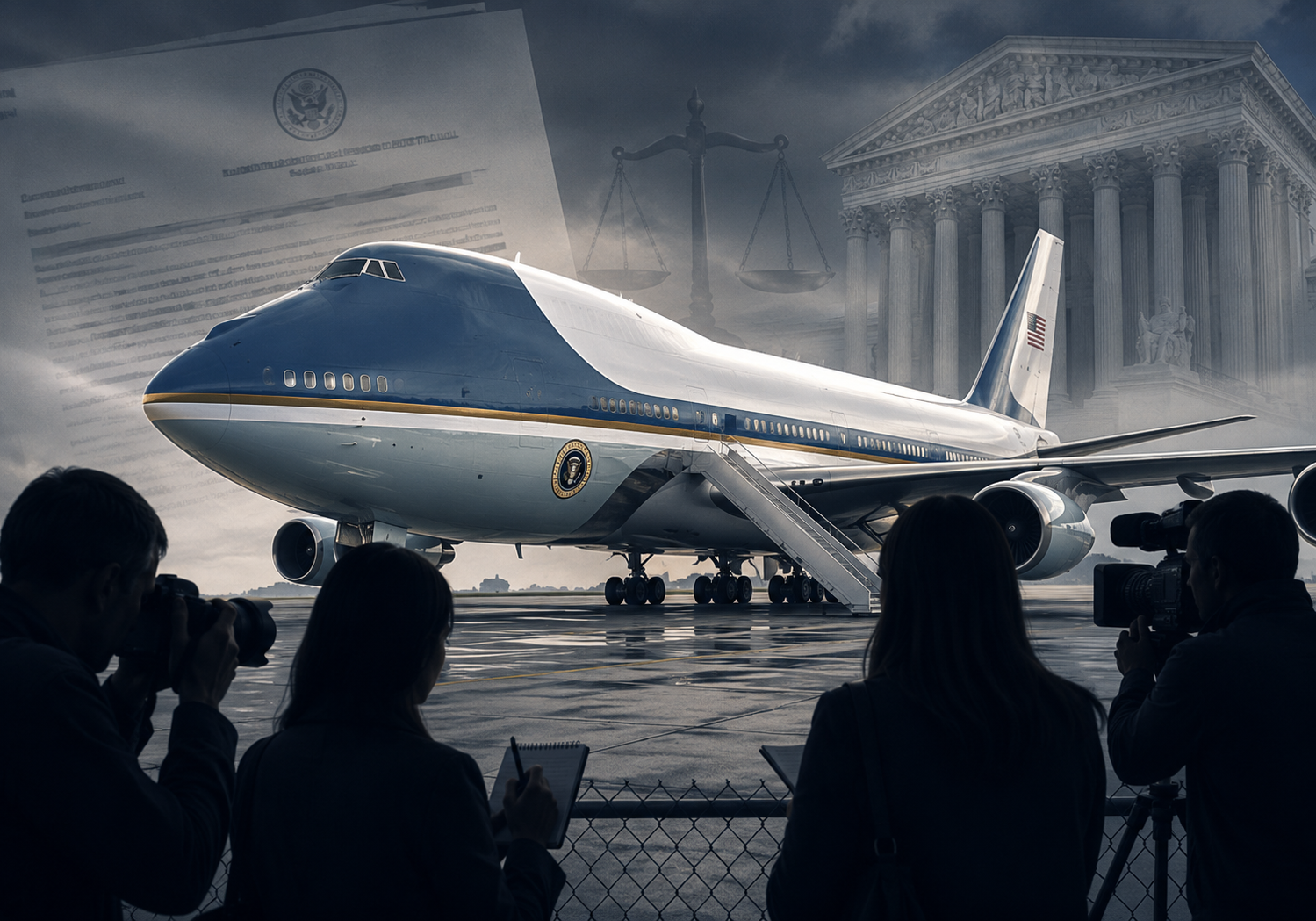
Four New York Times journalists have been ordered to testify before a federal grand jury after reporting on alleged security weaknesses involving President Donald Trump’s newly converted Air Force One aircraft, triggering fresh concerns about press freedom and the protection of confidential sources.
The Trump administration has subpoenaed four journalists from The New York Times as part of a federal investigation into the suspected disclosure of classified information concerning the president’s new Air Force One aircraft.
The reporters have been identified as Julian E. Barnes, Eric Lipton, Tyler Pager and Eric Schmitt. They were ordered to appear before a federal grand jury in Manhattan, with federal agents reportedly delivering some of the subpoenas directly to the journalists’ homes.

The journalists have not been charged with any crime. The US Department of Justice maintains that they are not targets of the investigation, but potential witnesses in an inquiry aimed at identifying government officials who may have disclosed classified national-security information.
However, The New York Times and several press-freedom organisations say the subpoenas could intimidate reporters, discourage whistleblowers and weaken the ability of journalists to investigate powerful institutions.
Air Force One Report Triggered Investigation
The subpoenas followed reports examining the security capabilities of a Boeing 747-8 aircraft under the milatary designation of VC-25B Bridge was donated by Qatar and converted for use as Air Force One.
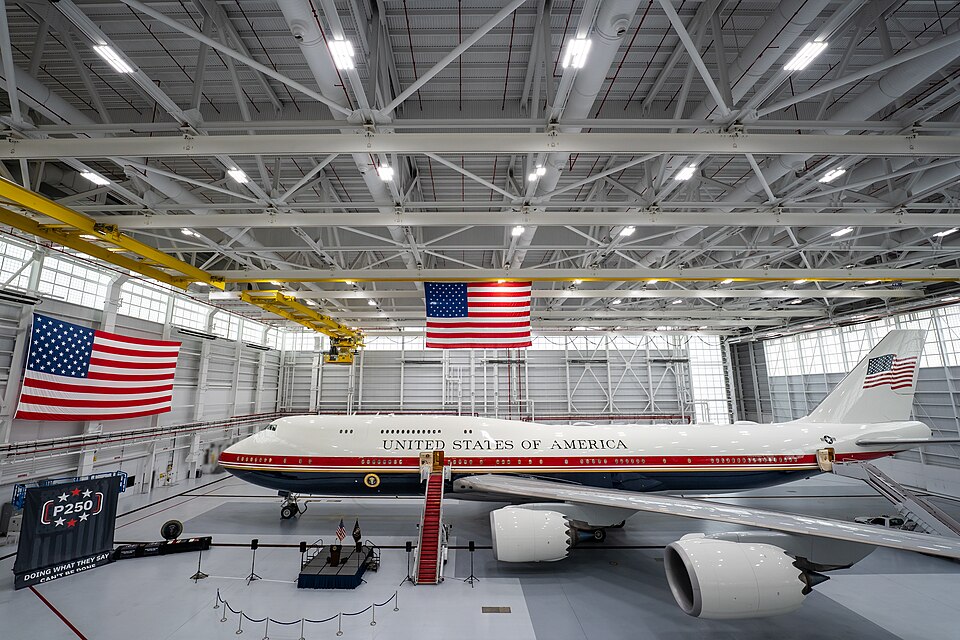
Credits: U.S. Air Force / Wikimedia Commons, Public Domain
The Times reported that the new plane may not contain all the classified defensive, communications and survival systems installed on the older presidential aircraft.
Among the concerns raised were allegations that the aircraft lacked some advanced antimissile protection and other systems considered important for safely transporting a US president during a military or national-security emergency.
According to the Times’ reporting, US Secret Service officials had security concerns about the newer aircraft and requested that Trump travel on the older plane for part of the journey.
The White House denied that the switch resulted from any security weakness.
FBI Asked Newspaper to Withhold Report
Before the story was published, the Federal Bureau of Investigation reportedly urged The New York Times not to release it, citing national-security concerns.
The FBI also sought information about the newspaper’s confidential sources. However, the Times refused to identify those sources and proceeded with publication.
The subsequent grand jury subpoenas now raise the possibility that the journalists could be questioned about how they obtained the information and whether government officials disclosed protected or classified material.
A federal grand jury operates in secrecy and is used by prosecutors to gather evidence, question witnesses and determine whether criminal charges should be brought.
Receiving a subpoena does not mean that a person has been accused of wrongdoing. However, journalists and media-rights advocates are concerned that compelling reporters to testify could expose confidential sources or discourage officials from providing information about matters of public interest.
New York Times Condemns Subpoenas
The New York Times has strongly criticised the administration’s actions, describing them as an attempt to intimidate journalists and interfere with independent reporting.
Press-freedom groups have also condemned the subpoenas.
The National Press Club, Freedom of the Press Foundation and White House Correspondents’ Association were among organisations expressing concern about the potential consequences for investigative journalism.
They warn that sources may become unwilling to speak to reporters if they believe journalists could later be compelled to reveal their identities before a grand jury.
Justice Department Defends Investigation
The Justice Department says the reporters themselves are not being investigated for publishing the information.
Instead, prosecutors are reportedly examining whether government personnel unlawfully disclosed classified details about the aircraft’s security capabilities.
Although the First Amendment provides broad protection for freedom of the press, US law does not grant journalists an absolute right to refuse testimony in every federal criminal investigation.
Courts may therefore have to decide whether the government’s national-security interests outweigh the reporters’ arguments for protecting their sources and newsgathering process.
Case Could Become Major Press-Freedom Battle
The legal dispute could develop into one of the most significant confrontations between the Trump administration and the American media.
Media organisations, meanwhile, argue that aggressive leak investigations and subpoenas targeting reporters could undermine one of the central functions of a democratic press: exposing information that officials would prefer to keep hidden.
For now, the four journalists remain witnesses rather than criminal suspects.