The Argentina Falklands banner displayed after the England semi-final could attract FIFA scrutiny, although no punishment is confirmed.
The Argentina Falklands banner controversy has overshadowed the defending champions’ dramatic passage into the 2026 FIFA World Cup final after their victory over England.
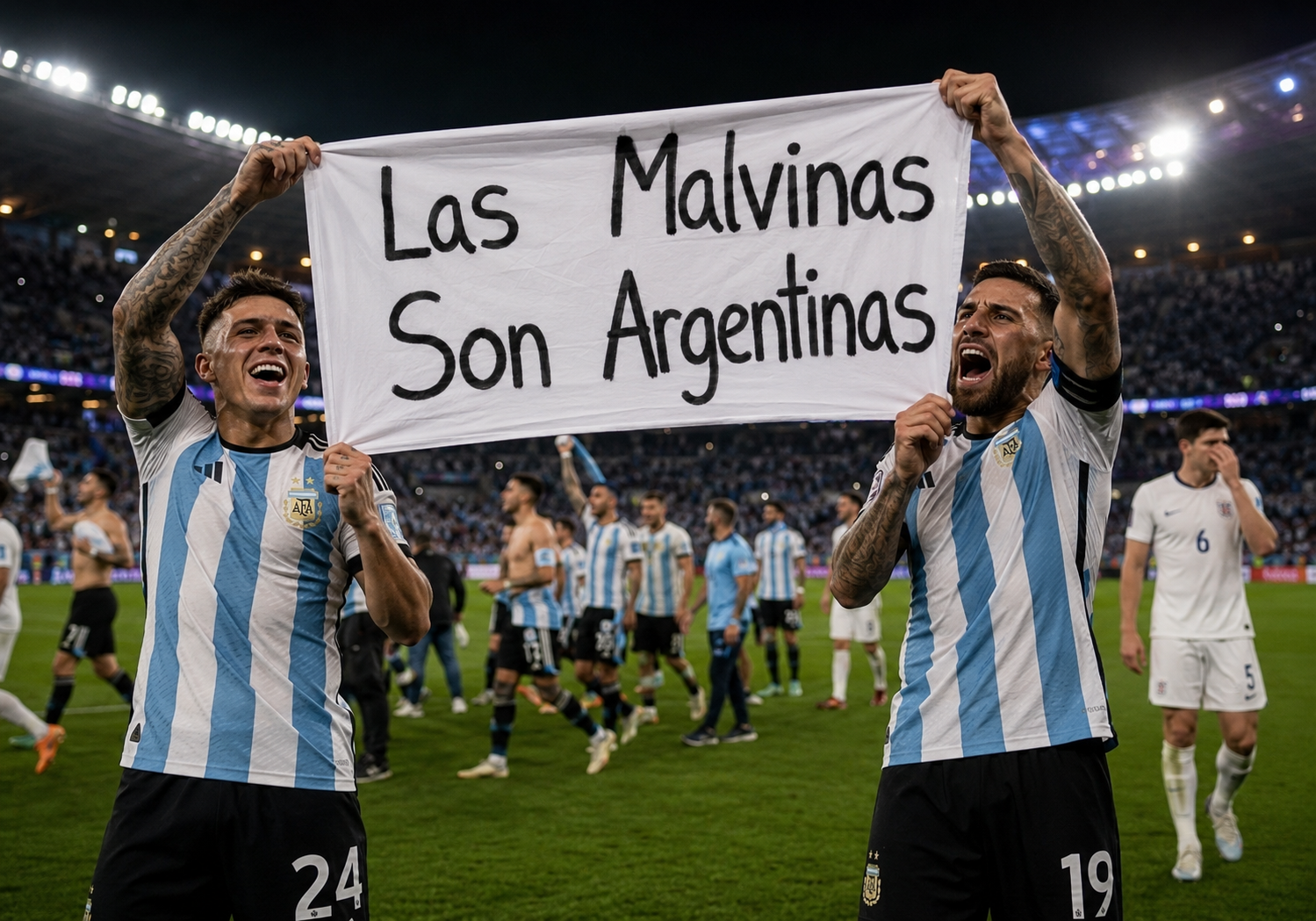
Argentina defeated England 2–1 in Atlanta after producing a late comeback to secure a place in Sunday’s final against Spain. However, attention quickly shifted from the result when Lisandro Martínez and Giovani Lo Celso displayed a politically charged banner during the celebrations.

The banner carried the words: “Las Malvinas Son Argentinas”, which means “The Falklands are Argentine.”
Supporters reportedly passed the banner to the players from the stands during the on-field celebrations. Images and video then spread rapidly across social media, reviving one of the most sensitive political disputes involving Argentina and the United Kingdom.
Argentina Falklands Banner Could Draw FIFA Scrutiny
The Argentina Falklands banner could attract scrutiny from FIFA because the governing body generally prohibits political expressions inside World Cup stadiums.
FIFA stadium regulations restrict banners, signs and other materials that carry political, ideological or potentially provocative messages. Its disciplinary rules also cover political statements made by players and national associations during official competitions.
However, as of Thursday, July 16, FIFA had not publicly announced an investigation, charge or punishment connected to the incident.
Therefore, reports suggesting that Argentina have already received a sanction, or could be removed from the final, remain unsupported.
Any possible action would more likely involve a warning, fine or disciplinary proceedings against the Argentine Football Association or the players involved. FIFA would first need to decide whether the display breached tournament regulations.
Argentina are scheduled to face Spain in the World Cup final on Sunday, July 19. At present, there is no credible indication that the controversy will prevent Argentina from taking part in that match.
Officials Had Tried to Stop Political Displays
The incident has drawn added attention because authorities had already identified Falklands-related political banners as a concern before the semi-final.
Reuters reported before the match that Argentina’s security minister said supporters would not be allowed to carry flags into the stadium asserting sovereignty over the islands. FIFA rules prohibit political expressions on items brought into tournament venues.
Despite those precautions, the banner reached the pitch and the two Argentina players displayed it after the final whistle.
Officials had treated the match as a high-risk fixture because of the historic football rivalry between Argentina and England. The continuing diplomatic dispute over the islands also increased the sensitivity surrounding the encounter.
Before the semi-final, an Argentine Falklands War veterans’ federation urged supporters to focus on football instead of using the match to advance political sovereignty claims.
The organisation said the dispute should be pursued through diplomacy and peaceful means.
Why the Falklands Dispute Remains Sensitive
The Falkland Islands are a British overseas territory in the South Atlantic. Argentina refers to them as Las Malvinas and continues to claim sovereignty over the territory.
Argentina invaded the islands in April 1982, triggering a 74-day war with Britain. The conflict ended after Argentine forces surrendered in June that year.
The fighting killed 649 Argentine military personnel and 255 British servicemen. Britain retained control of the islands, although successive Argentine governments have continued to pursue their sovereignty claim.
Island residents voted overwhelmingly in a 2013 referendum to remain a British overseas territory.
For many Argentines, however, the Malvinas claim remains closely tied to national identity, remembrance and territorial sovereignty. As a result, football matches against England often carry political and historical significance beyond the sport.
Banner Shifts Attention From Argentina Comeback
Argentina reached the final after recovering from a one-goal deficit against England.
Anthony Gordon put England ahead before Enzo Fernández scored a late equaliser. Lautaro Martínez then headed home a cross from Lionel Messi in stoppage time to complete Argentina’s comeback.
The victory sent Lionel Scaloni’s team into a second consecutive World Cup final. Argentina will now attempt to defend the title they won in Qatar in 2022.
However, the post-match display has moved some international attention away from the result and towards possible FIFA action.
Until FIFA releases an official statement, the position remains clear at this stage: Argentina may face scrutiny over the banner, but no formal punishment has been confirmed.