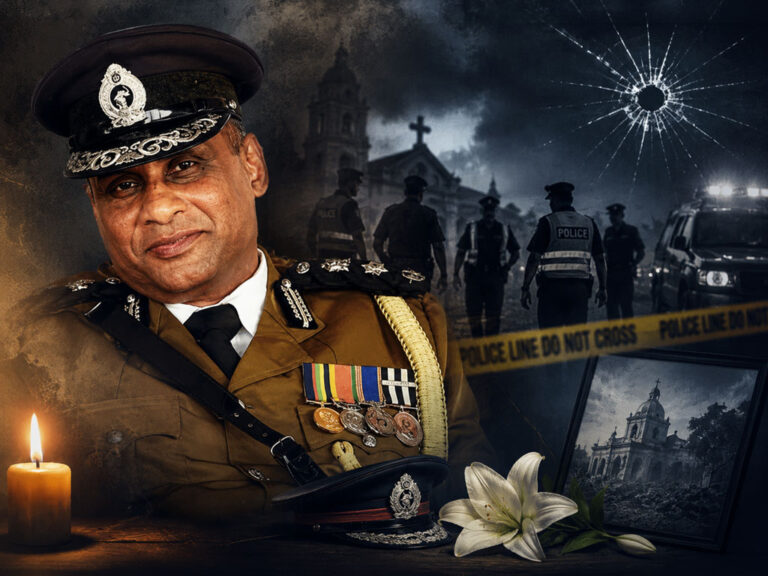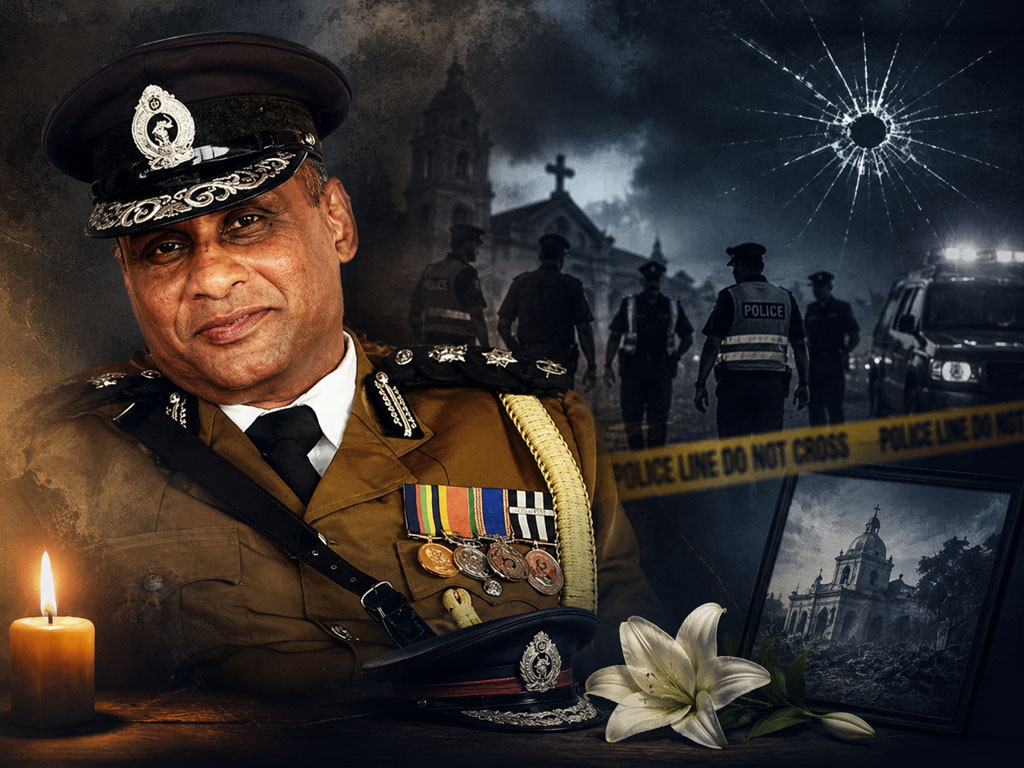
The C.D. Wickramaratne death is under investigation as debate continues over his police career and testimony on the Easter Sunday attacks.
The C.D. Wickramaratne death has prompted a police investigation while renewed national debate continues over the former Police Chief’s career and the Easter Sunday probe.
Former Inspector General of Police Chandana Deepal Wickramaratne, Sri Lanka’s 35th IGP, died at the age of 63 after sustaining a gunshot injury at his residence.
Initial reports indicate that investigators are treating the incident as a suspected suicide. However, authorities say inquiries remain ongoing, and any final conclusion will depend on the official investigation.
Wickramaratne joined the Sri Lanka Police in 1986. He served for more than three decades in operational, administrative and senior command positions.
Before reaching the highest office in the Police Department, he served as Senior Deputy Inspector General of Police for the Southern Province.
Following the Easter Sunday terrorist attacks in April 2019, authorities placed then-IGP Pujith Jayasundara on compulsory leave. Wickramaratne subsequently became Acting Inspector General of Police.
He was confirmed as Sri Lanka’s 35th IGP in November 2020 and remained in office until retiring on 25 November 2023.

Long Police Career Included Administrative Disputes
Wickramaratne was never convicted of a criminal offence during his career. Public reports also did not indicate that he faced criminal charges involving bribery or corruption.
Official biographical records describe a lengthy police career covering operational work, administration and national leadership.
However, his tenure coincided with several legal disputes over decisions taken while he headed the Police Department.
These included Fundamental Rights petitions challenging transfers, disciplinary measures and promotions within the police service.
One prominent case involved backdated promotions granted to several Senior Superintendents of Police in 2020.
The Supreme Court ruled that the approvals violated the fundamental rights of other officers and suspended the promotions. Courts treated the dispute as an administrative and constitutional matter, not a criminal case.
Wickramaratne also appeared before courts in cases involving police administration.
In addition, he gave evidence before the Presidential Commission of Inquiry and the Parliamentary Select Committee that examined the 2019 Easter Sunday terrorist attacks.
He appeared as a witness in those proceedings, not as an accused person.
Critics also questioned several transfers involving senior Criminal Investigation Department officers during his administration.
Those transfers included former CID Director Shani Abeysekara. Critics argued that the administrative decisions disrupted or slowed sensitive investigations.
Wickramaratne maintained that police operations followed established institutional procedures.
Service Extensions Generated Political Debate
Wickramaratne’s leadership also became politically significant after the authorities extended his service beyond the normal retirement age several times.
Those extensions triggered political and constitutional debate. However, they did not lead to criminal charges against him.
Recent developments in the Easter Sunday investigation brought his testimony back into public discussion before the C.D. Wickramaratne death.
Court filings presented by the CID in 2026 indicate that statements from Wickramaratne and former CID Director Nishantha Soysa formed part of continuing investigations.
Those inquiries examine intelligence-sharing and coordination among agencies before and after the 2019 bombings.
According to material submitted before court, investigators alleged shortcomings in coordination between police investigators and intelligence agencies.
Court documents also refer to allegations concerning former State Intelligence Service Director Major General Suresh Sallay.
Sallay has denied those allegations. His lawyers maintain that the claims against him are politically motivated.
The matter remains before the courts, and judges have not reached a final determination.
Legal experts continue to stress that allegations recorded in investigative material or court filings do not establish criminal responsibility.
Every individual retains the presumption of innocence unless a competent court reaches a final judgment based on evidence.
Easter Sunday Questions Remain Unresolved
The C.D. Wickramaratne death closes a chapter on a policing career spanning more than 37 years.
However, inquiries into his death and investigations concerning the Easter Sunday attacks are separate processes. Both remain under the authority of investigators and the courts.
His career covered one of the most consequential periods in the history of Sri Lankan law enforcement.
It included the aftermath of the Easter attacks, intense scrutiny of intelligence failures, disputes over police administration and continuing questions about institutional accountability.
As the investigation into his death proceeds, authorities must establish the circumstances through evidence rather than speculation.
Meanwhile, many legal and institutional questions connected to the Easter Sunday attacks remain unresolved before the courts and investigative agencies.