X-Press Pearl compensation battle tests Sri Lanka’s $1 billion ruling, maritime liability rules and the future of environmental justice.
The X-Press Pearl compensation battle has become far more than a dispute over a billion-dollar environmental award. It tests how far a national court can impose accountability when domestic environmental rights collide with global maritime liability rules.
Sri Lanka’s Supreme Court ordered the X-Press Pearl Group, including the vessel’s owner, operators and local agent, to pay an initial US$1 billion following the 2021 disaster. The Court relied on the Polluter Pays Principle and retained jurisdiction through continuing judicial supervision.
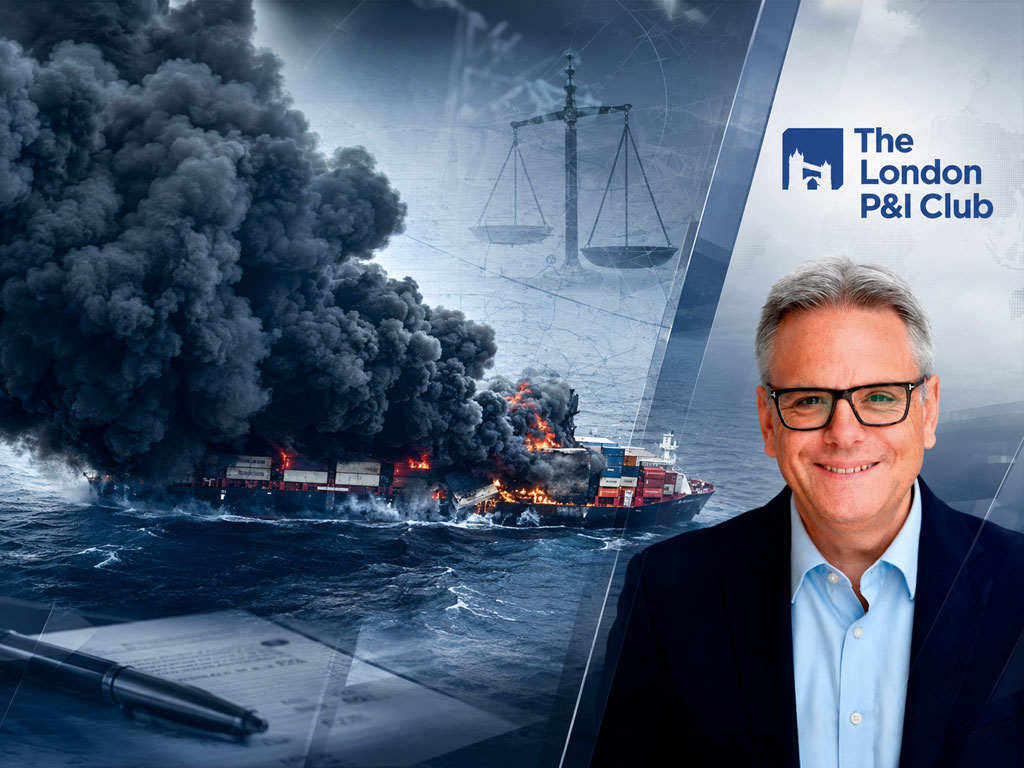
For insurers and shipowners, the consequences extend beyond Sri Lanka. X-Press Feeders has argued that complying with the ruling could create a “dangerous precedent” because international shipping depends on liability-limitation regimes. The London P&I Club has also criticised the judgment as deeply troubling for global shipping.
The case has therefore become a confrontation between environmental accountability and the legal architecture of international maritime commerce.
Get Breaking News First
on WhatsApp

How the X-Press Pearl Disaster Unfolded
The Singapore-flagged MV X-Press Pearl caught fire while anchored off Colombo on May 20, 2021, and sank on June 2.
It carried 1,486 containers, including 81 containing dangerous goods. The cargo included 25 tonnes of nitric acid. UNEP reported 348 tonnes of oil, while independent estimates placed the number of plastic pellets at up to 70 to 75 billion.
Before reaching Sri Lanka, the vessel sought permission at ports in Qatar and India to discharge a leaking container containing nitric acid. Those requests were not accommodated. This differs from saying the vessel itself had been refused entry.
Sri Lanka’s Supreme Court later found that the owner, operators and local agent failed to provide timely, truthful and comprehensive information about the vessel’s condition. The Court held that this deprived authorities of critical response time.
A Marine Environment Protection Authority expert panel later estimated damage at approximately US$6.4 billion. That remained an interim assessment, not a final determination.
The disaster devastated coastal ecosystems and fishing communities. Billions of nurdles washed ashore, while hundreds of marine animals were found dead afterwards.
Why Maritime Liability Rules Matter
The legal conflict over X-Press Pearl compensation centres partly on rules limiting shipowners’ liability.
Sri Lanka is not a party to the 1976 Convention on Limitation of Liability for Maritime Claims or its 1996 Protocol. Yet Sri Lanka filed its principal compensation action in Singapore in April 2023, almost 23 months after the disaster.
A parliamentary committee questioned the delay and the decision to litigate abroad. In 2025, the Supreme Court ruled that the Attorney General’s decision to sue in Singapore instead of Sri Lanka’s High Court exercising admiralty jurisdiction was unreasonable, irrational and arbitrary.
The shipowner and insurer reject claims that maritime limitation rules merely allow companies to avoid responsibility. Their position is that international liability conventions provide predictability essential to shipping, insurance and global trade.
Critics argue that rigid liability limits can become unjust when environmental destruction vastly exceeds recoverable compensation.
Claims that organisations such as ITOPF or Oil Spill Response Limited deliberately concealed damage are not established facts. ITOPF says it was mobilised to provide technical advice on pollution response. Such allegations require evidence.
Supreme Court Verdict Changes the Legal Landscape
On July 24, 2025, Sri Lanka’s Supreme Court delivered a 361-page judgment holding the X-Press Pearl Group responsible for the preventable marine disaster.
The Court ordered an initial US$1 billion payment to the Treasury within one year in instalments. The first instalment was due by September 23, 2025.
It also created a compensation commission and a marine and coastal restoration committee. The Court retained jurisdiction under a continuing mandamus structure to monitor implementation.
The judgment also examined failures by Sri Lankan institutions. It criticised the Attorney General’s handling of the foreign litigation and ordered further investigations. The CID was directed to investigate matters arising from the Singapore decision, while CIABOC was instructed to investigate bribery and corruption allegations connected to the disaster.
The London P&I Club and X-Press Feeders challenged the ruling. The Club argued that it departed from established maritime law and due-process principles. X-Press Feeders later said further payments could set a dangerous precedent unless compensation was proportionate and consistent with international conventions.
As of early 2026, the Supreme Court was still reviewing compliance, while Sri Lankan authorities had obtained travel restrictions against directors of the local agent.
Global Implications of the X-Press Pearl Compensation Battle
The wider debate also extends to plastic-pellet regulation.
Sri Lanka has pushed for stronger international controls following the spill. The International Maritime Organization approved voluntary recommendations in 2024 and, in April 2026, agreed to develop a mandatory code governing plastic pellets under MARPOL Annex III and/or SOLAS.
Plastic pellets have not, however, simply been classified as hazardous materials under the IMDG Code.
The X-Press Pearl compensation dispute therefore carries international significance without requiring unsupported claims about an organised “insurance mafia.”
It raises a fundamental question: when environmental harm is catastrophic, should traditional maritime liability limits dominate, or should courts give greater weight to polluter-pays principles and environmental rights?
Sri Lanka’s judgment offers one answer. International shipping interests strongly contest it.
How the order is enforced, including through any overseas legal process, could influence future disputes over marine pollution, sovereign jurisdiction and environmental justice.
For Sri Lanka, the case is not only about recovering money. It is about whether a coastal state can use its courts to demand accountability when the environmental consequences fall overwhelmingly on its people.