By Roy Denish.
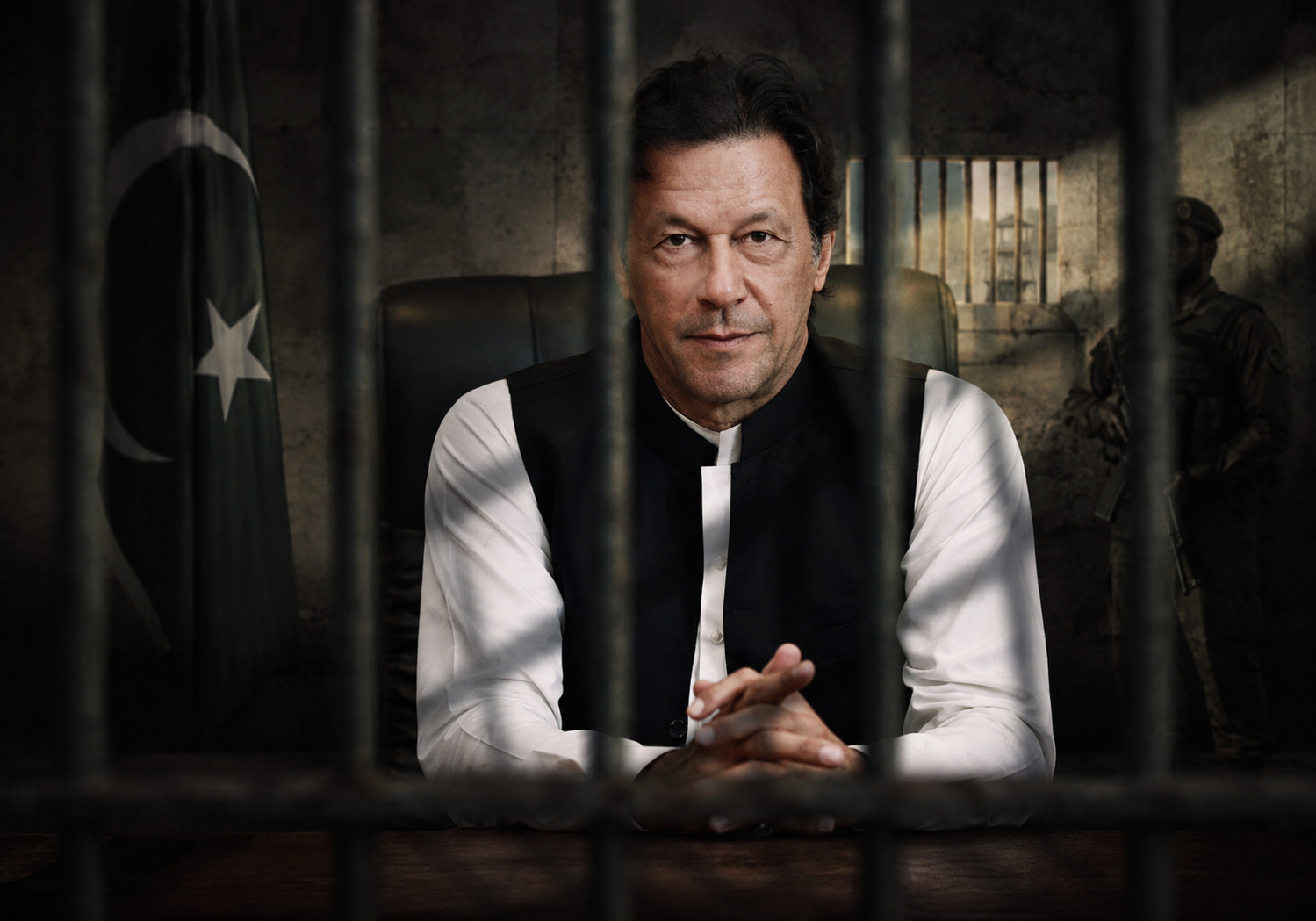
Imran Khan imprisonment deepens Pakistan’s political crisis as legal battles, military tensions and concerns over his jail conditions escalate.
The Imran Khan imprisonment has become a defining fault line in Pakistan’s political crisis. The cricket legend delivered the country’s only World Cup triumph in 1992 before pursuing political power for decades. His journey has now shifted from populist rise to a stark example of how the state protects itself when politics turns confrontational.
Held in Rawalpindi’s high-security Adiala Jail, Khan remains the central figure around whom Pakistani politics revolves. His detention is no longer simply a legal matter. It has become the focal point of a wider institutional confrontation that has weakened democratic structures, strained the judiciary, and intensified economic and political instability.

Imran Khan imprisonment and the legal battle
To understand why Khan remains behind bars under nearly 200 criminal charges, the courtroom does not provide the full picture. The cases range from allegations over state gift valuations in the Toshakhana proceedings to secret diplomatic communications in the cipher trial and claims involving land fraud.
Khan’s supporters see the cases as a legal mechanism designed to keep him contained. In their view, his deeper political offence was challenging the unwritten balance shaping Pakistani statecraft.
For decades, governments in Islamabad have operated within a sensitive relationship between elected civilian leaders and the military establishment. Khan entered office in 2018 with implicit military support. However, that relationship collapsed after parliament removed him through a vote of no confidence in April 2022.
Instead of withdrawing into conventional opposition, Khan took his dispute directly to the public. He openly named senior military figures and mobilised supporters against what he called institutional interference. That triggered an extraordinary confrontation with the country’s most powerful establishment.
The crisis deepened during national elections held while Khan remained in prison. His party lost its electoral symbol, senior figures faced imprisonment, and mass arrests fractured its organisational structure. Even so, Khan-aligned independents secured the single largest bloc of parliamentary seats.
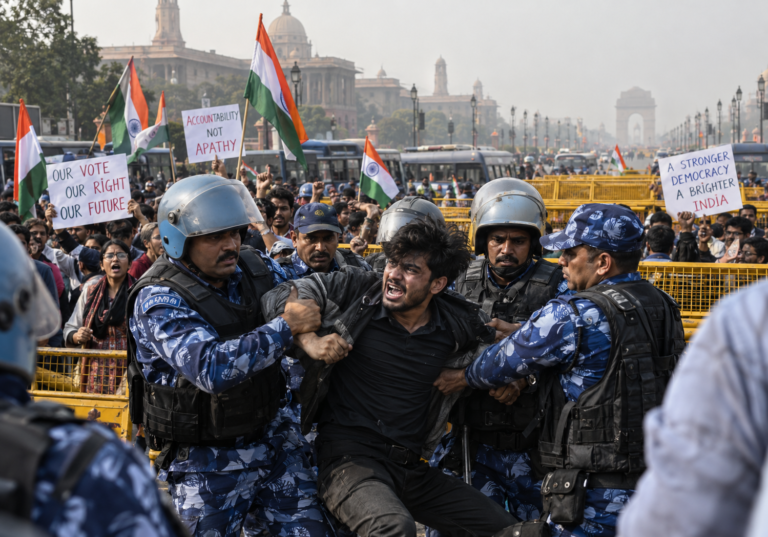
Traditional political rivals later formed a coalition government. Many Khan supporters viewed that outcome as an effort to bypass the popular mandate. As a result, public distrust intensified. Street demonstrations, blocked transport routes, aggressive policing, and repeated restrictions on public gatherings became familiar features of politics.
Political paralysis spreads through Pakistan
The confrontation has also damaged routine governance. As the state concentrates on political survival, economic recovery remains constrained by uncertainty, inflation, and growing public alienation.
Meanwhile, the judiciary has found itself drawn into repeated clashes over civil rights, detention conditions, and access to medical treatment. Courts have issued orders seeking to restore rights or grant detainees medical access. Authorities, however, have at times responded with additional warrants or administrative delays that prevent those rulings from taking immediate effect.
The personal cost became clearer in a recent CNN interview with Khan’s London-based sons, Kasim and Sulaiman Khan. Speaking as their father completed three years of continuous incarceration, they described a widening wall of isolation around the former prime minister.
The brothers said family members, personal doctors, and legal counsel had been denied access to Khan for as long as seven months. They said this left relatives with little reliable information about his physical condition.
They also raised concerns over interrupted court-mandated phone contact and reports of vision impairment. For the family, those restrictions have intensified fears about Khan’s health. The allegations also raised concerns about secrecy and treatment of prominent political detainees.
Kasim and Sulaiman also described bureaucratic barriers affecting their efforts to travel to Pakistan. They rejected government explanations involving expired overseas identity documents, arguing that the administrative obstacles were evasive.
No compromise over political struggle
When asked whether Khan might accept a political settlement or exile in exchange for freedom, both sons rejected the possibility. They said their father sees his struggle as a moral responsibility to the millions who supported him at the ballot box.
They said Khan would not accept an arrangement abandoning imprisoned supporters or weakening his political platform.
Ultimately, the Imran Khan imprisonment reflects a recurring problem in Pakistan’s political history. Jailing a leader with a large popular following does not necessarily dismantle the movement built around that person. Instead, prolonged detention can strengthen resistance and transform the prisoner into a symbol of opposition.
As long as the state relies on lawfare and administrative containment to settle political disputes, Pakistan’s search for stability will remain difficult. Democratic legitimacy, institutional confidence, and economic recovery are unlikely to strengthen while the country’s central political conflict remains unresolved.