By Dwayne Ferreira
A severe Everest helicopter collision leaves one person dead and two injured as authorities investigate an accident near the Himalayan base camp.
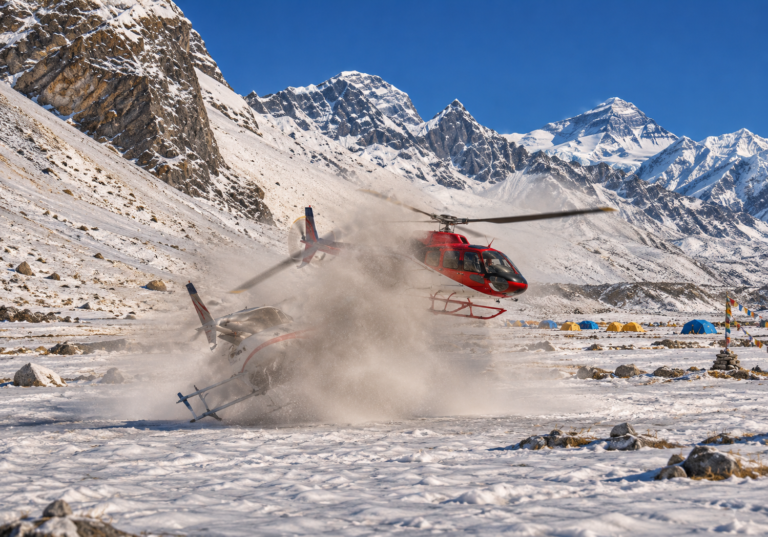
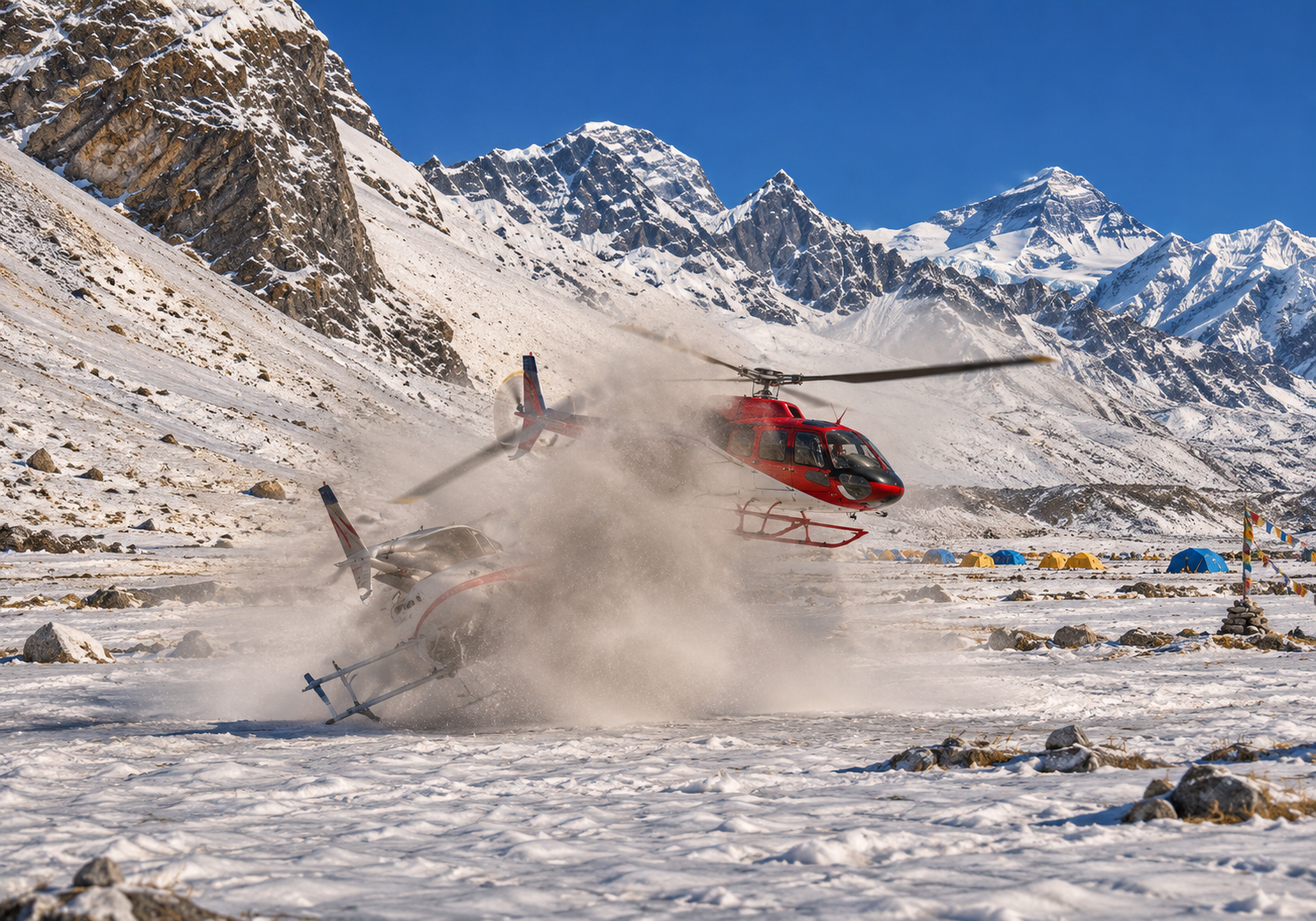
KATHMANDU – One person was killed and two others injured when two helicopters collided while attempting to land near Mount Everest Base Camp on Tuesday, 3 November, prompting renewed scrutiny of helicopter operations in Nepal’s heavily visited Himalayan region.
The aircraft were operating in an area frequently used to transport trekkers and support tourism activities at high altitude.
Authorities confirmed that an Indian national died in the collision, while a New Zealand national was among those injured.
The accident occurred as the helicopters were preparing to land in the Everest region.

Difficult Operating Conditions
Helicopters provide an important means of transport in Nepal’s mountainous areas, where challenging terrain and limited road access can make conventional travel difficult.
They are also used for emergency evacuations, mountain rescue operations and passenger transport.
Flying at high altitude presents particular operational challenges.
Reduced air density affects helicopter performance, while rapidly changing weather, mountainous terrain and restricted landing areas can increase the complexity of operations.
The precise circumstances of Tuesday’s collision remain subject to investigation. Those general operating challenges should not be taken as evidence of what caused the accident.
Tourism and Helicopter Safety
Nepal’s Everest region attracts large numbers of international visitors, particularly during established trekking and climbing seasons.
Helicopter services play an increasingly visible role in supporting tourism, transporting passengers and conducting emergency evacuations.
Fishtail Air said one of the aircraft involved had been carrying passengers rescued from the Everest region.
The incident has renewed discussion about traffic management and operational oversight in areas where multiple helicopters may operate near restricted landing sites.
Local reporting has also highlighted longstanding tensions between helicopter operators and mountain communities over the volume of aircraft movements in the region.
Investigation and Accountability
Aviation authorities will need to establish the sequence of events leading to the collision, including the aircraft movements and communications involved.
Any determination of responsibility must depend on the findings of the relevant investigation.
For international travellers, the accident highlights the importance of established operational standards in demanding aviation environments.
Nepal’s aviation sector remains closely linked to its tourism industry, making the outcome of the investigation relevant to operators, regulators and visitors.