Suresh Sallay writ petition faces fresh objections over intervenient applications as the Court of Appeal prepares to revisit the case on August 25.
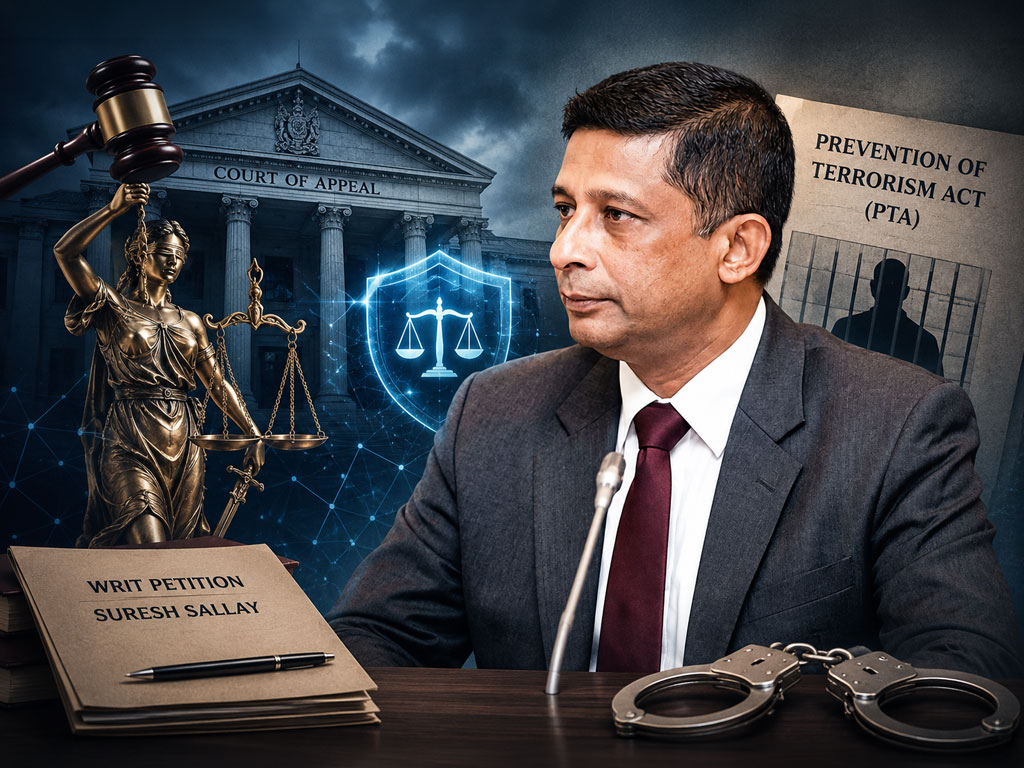
The Suresh Sallay writ petition challenging his arrest and detention under the Prevention of Terrorism Act has entered another legal phase as objections emerge over intervenient applications filed in the Court of Appeal.
Retired Major General Suresh Sallay, the former head of the State Intelligence Service, is challenging his detention in connection with investigations into the 2019 Easter Sunday terrorist attacks. The Court of Appeal has already fixed the matter for further consideration on August 25, 2026.
The case is before a bench comprising Court of Appeal President Justice Rohantha Abeysuriya and Justice Priyantha Fernando.
Get
Breaking News
First
on WhatsApp
Follow The Morning Telegraph for instant alerts, top stories and exclusive updates delivered straight to your phone.

Attorney General Raises Objections in Suresh Sallay Writ Petition
According to the submissions outlined in the supplied court account, Deputy Solicitor General Suharshi Herath, appearing for the Attorney General, raised preliminary objections concerning intervenient petitions connected to Sallay’s application.
The objection centres on whether parties can seek intervention before the court has first issued notice for a full hearing of the principal writ petition.
The intervenient applications have reportedly been filed by Venerable Thiniyawala Palitha Thero, Venerable Wepatha Ira Hemaloka Thero and the Archdiocese of Colombo.
The Attorney General’s position, according to the court submissions, is that intervenient applicants cannot use separate applications to seek relief substantially similar to that requested by the original petitioner without following the proper procedural path.
The Court of Appeal had previously directed that Sallay’s petition be recalled on August 25 for further support, confirmation of facts and additional submissions.
Sallay’s Lawyers Question Investigative Independence
President’s Counsel Sanjeeva Jayawardena, appearing for Sallay, also raised concerns over the independence of the investigation.
According to the supplied account, he argued that political and religious pressure should not influence criminal investigations and referred to international protections against discrimination.
One legal reference in the original material requires correction. The ICCPR’s broad equality and non-discrimination guarantee is contained in Article 26, while Article 2(1) also prohibits discrimination in securing Covenant rights. Article 3 concerns equal rights of men and women, not general religious or national discrimination.
Jayawardena further submitted that the investigation against Sallay stemmed in part from allegations made by Asad Maulana in a Channel 4 broadcast.
The petitioner’s position is that investigators have not placed sufficient direct evidence before court connecting Sallay to the alleged conduct.
That remains an argument advanced on Sallay’s behalf rather than a judicial finding.
Intervenient Petitioners Defend Presumption of Innocence
Attorney Bhoopathi Kahatuduwa, appearing for Venerable Thiniyawala Palitha Thero, and Attorney Ashok Baran, appearing for Venerable Wepatha Ira Hemaloka Thero, argued that their intervention was intended to protect the constitutional principle that a person remains innocent until proven guilty.
However, the Attorney General maintained that the procedural validity of those applications must first be resolved.
The Suresh Sallay writ petition therefore now involves two parallel questions: whether his PTA arrest and detention can withstand judicial scrutiny, and whether the intervenient applications should be entertained at this stage.
The Court of Appeal is expected to revisit the case on August 25, when further submissions and clarification of the legal issues are due.