Sri Lanka sextortion scam targets social media users through fake profiles, recorded video calls and threats to expose intimate content.
A Sri Lanka sextortion scam involving fake social-media profiles, intimate video calls and threats to expose private material is again targeting users across the country.
The Sri Lanka Computer Emergency Readiness Team has warned of a rise in extortion attempts through Facebook Messenger, Instagram and WhatsApp. Several victims have lodged complaints in recent weeks.
According to reports based on SLCERT’s preliminary findings, those behind the operation may be part of an organised group operating from India.
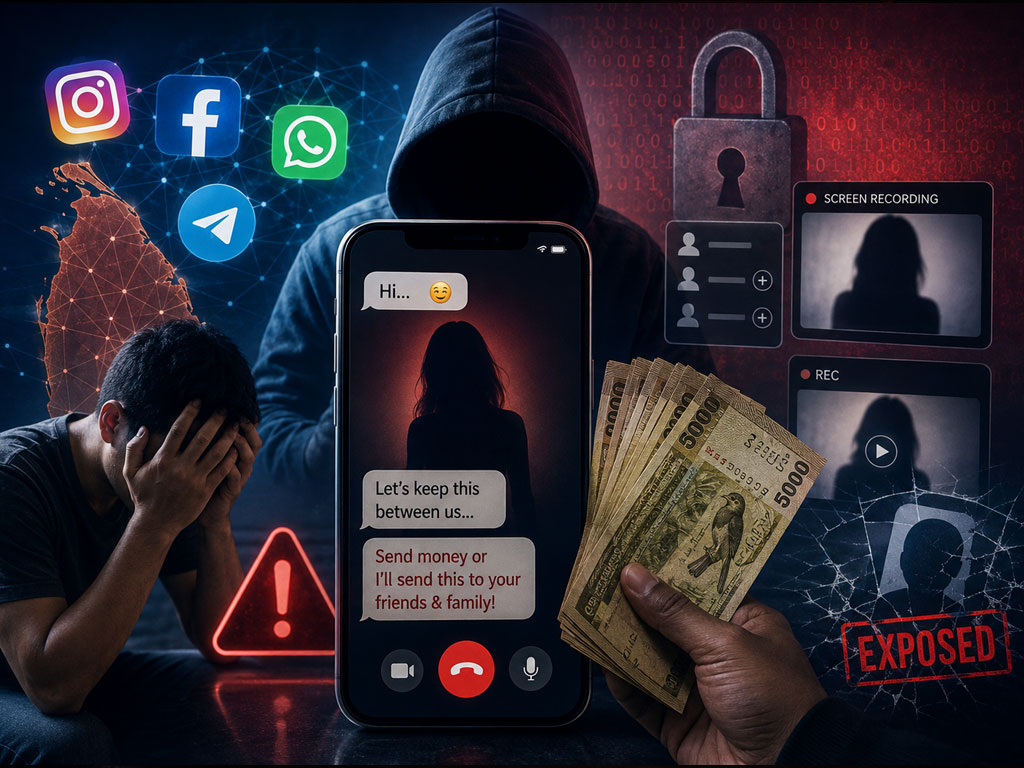
The scam typically begins with an apparently harmless social-media interaction. It can later escalate into demands for money backed by threats to distribute intimate photographs, recordings or private conversations.
Get
Breaking News
First
on WhatsApp
Follow The Morning Telegraph for instant alerts, top stories and exclusive updates delivered straight to your phone.

How the Sri Lanka Sextortion Scam Works
Investigators have identified a calculated sequence used to increase pressure on victims.
First, scammers identify a target through platforms such as Instagram or Facebook. Before contacting that person directly, they may add relatives, siblings and close friends to their own accounts.
This gives the scammers a ready-made list of people they can later threaten to contact.
Next, a fake profile, often using an attractive photograph, sends a simple message such as “Hi.”
If the target does not respond immediately, the account may make another approach days later. The objective is to create familiarity and gradually build trust.
The conversation then becomes increasingly private or sexually explicit.
Eventually, the scammers encourage the person to move onto a WhatsApp video call. SLCERT has warned that victims may then be persuaded into exposing themselves on camera while the interaction is secretly recorded.
Once the scammers obtain compromising material, the tone changes.
They threaten to send the recording to family members, friends or other social-media contacts unless the victim transfers money.
Even when no nude footage exists, scammers can use screenshots of intimate conversations to create fear and embarrassment.
What Victims Should Do Immediately
The first rule is do not pay the extortion demand.
Payment does not guarantee that the material will disappear. Instead, it can signal that the victim is willing or able to pay, potentially resulting in further demands.
Victims should preserve evidence before blocking the scammers. Save screenshots of messages, threatening communications and account profiles. Keep telephone numbers, usernames, profile links and any payment details supplied by the extortionists.
After preserving evidence, stop communicating with the account. Report it through the relevant platform and block further contact.
Users should also review their privacy settings. Making accounts private can limit the information available to scammers.
Two-factor authentication should be enabled wherever possible. Friend lists and personal information should also be restricted to trusted contacts.
Sri Lanka Police advises the public not to share sensitive personal photographs, credentials or other private information with unknown people online. It also recommends verifying unfamiliar contacts and avoiding suspicious links.
Where to Report Sextortion in Sri Lanka
Victims seeking technical assistance can contact Sri Lanka CERT on hotline 101. Its current general contact number is +94 11 269 1692.
Importantly, SLCERT now says incidents involving Facebook, WhatsApp, Telegram, Instagram and personal financial scams should not be sent to its general email address. Instead, those cases should be filed through its official incident-reporting portal.
Sri Lanka Police also directs victims of online fraud to the Computer Crime Investigation Division.
The currently published numbers are:
- Deputy Director: 011-2300638
- Personal Assistant: 011-2381375
- Officer-in-Charge: 011-2381058
Where children or women are affected, complaints can also be made to the Police Bureau for the Investigation of Abuse of Children and Women through 109 or 011-2444444. The Bureau maintains a 24-hour public complaints mechanism.
For cases involving children, Sri Lanka’s National Child Protection Authority operates the 1929 Child Helpline around the clock. The confidential service is available free through telecom providers in Sinhala, Tamil and English.
Tools Can Help Stop Intimate Images Spreading
Victims also have options for limiting the online circulation of intimate material.
If the photograph or video was taken when the person depicted was under 18, NCMEC’s Take It Down service can generate a digital fingerprint, known as a hash, without the image leaving the person’s device.
Participating platforms can then use that hash to detect and restrict matching material. The service can be used internationally and remains available even if the victim is now an adult, provided they were under 18 when the content was created.
Adults can use StopNCII.org when they are depicted in intimate material created when they were 18 or older.
The system creates a digital fingerprint on the user’s device. The image or video itself does not leave the device. Participating companies receive the hash so they can identify matching material on their platforms.
The renewed Sri Lanka sextortion scam warning demonstrates how quickly a casual social-media message can become a sophisticated blackmail operation.
The safest response is to treat unsolicited intimate conversations with caution, never assume an online profile is genuine, preserve evidence if blackmail begins and report the incident immediately rather than paying the person behind it.