
President’s Fund audit reveals Rs. 40.7 million in political medical aid, unrecovered payments and major financial control failures.
A President’s Fund audit has raised serious questions over millions of rupees in medical assistance, unrecovered payments and financial management involving the publicly funded institution.
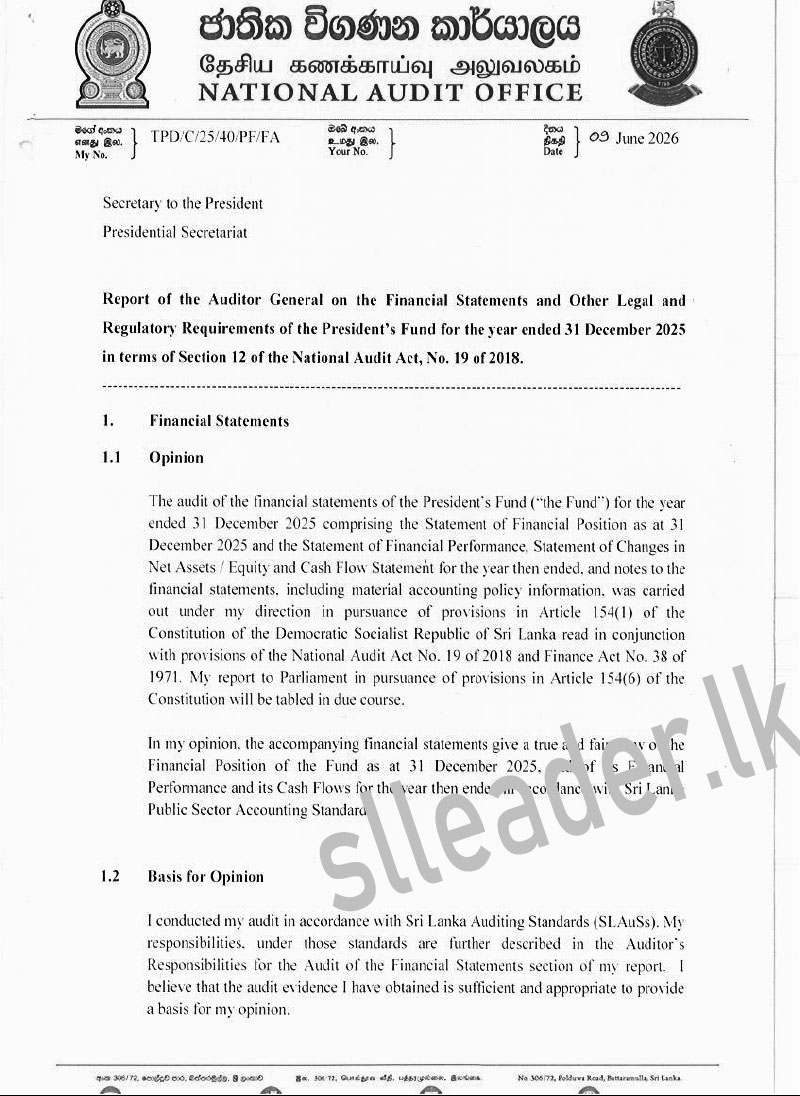
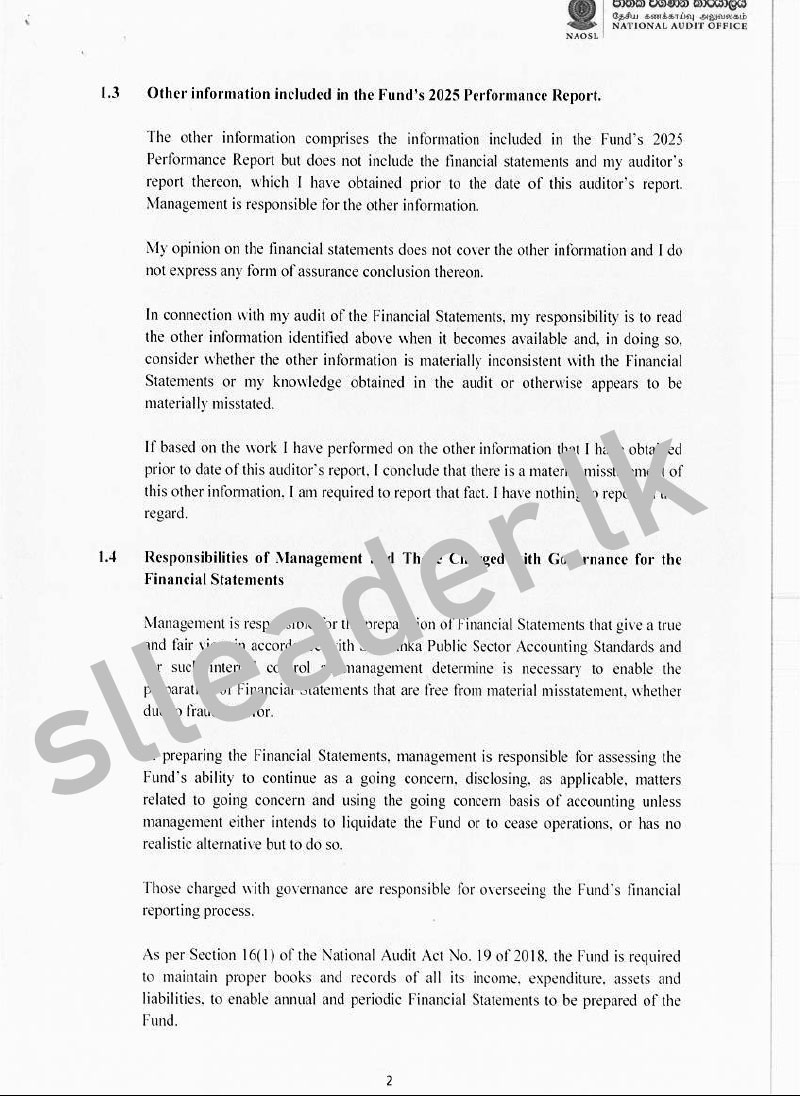
The Auditor General’s report for the year ending December 31, 2025, details a series of financial and administrative irregularities concerning the President’s Fund.
The audit was conducted under Section 12 of the National Audit Act No. 19 of 2018.
The Fund was established to provide assistance, including support for people facing urgent medical needs. However, the audit findings have renewed scrutiny over how public money was allocated and managed.
Get
Breaking News
First
on WhatsApp
Follow The Morning Telegraph for instant alerts, top stories and exclusive updates delivered straight to your phone.

President’s Fund Audit Flags Rs. 40.7 Million in Medical Aid
One of the most striking findings concerns medical assistance granted between 2012 and 2014.
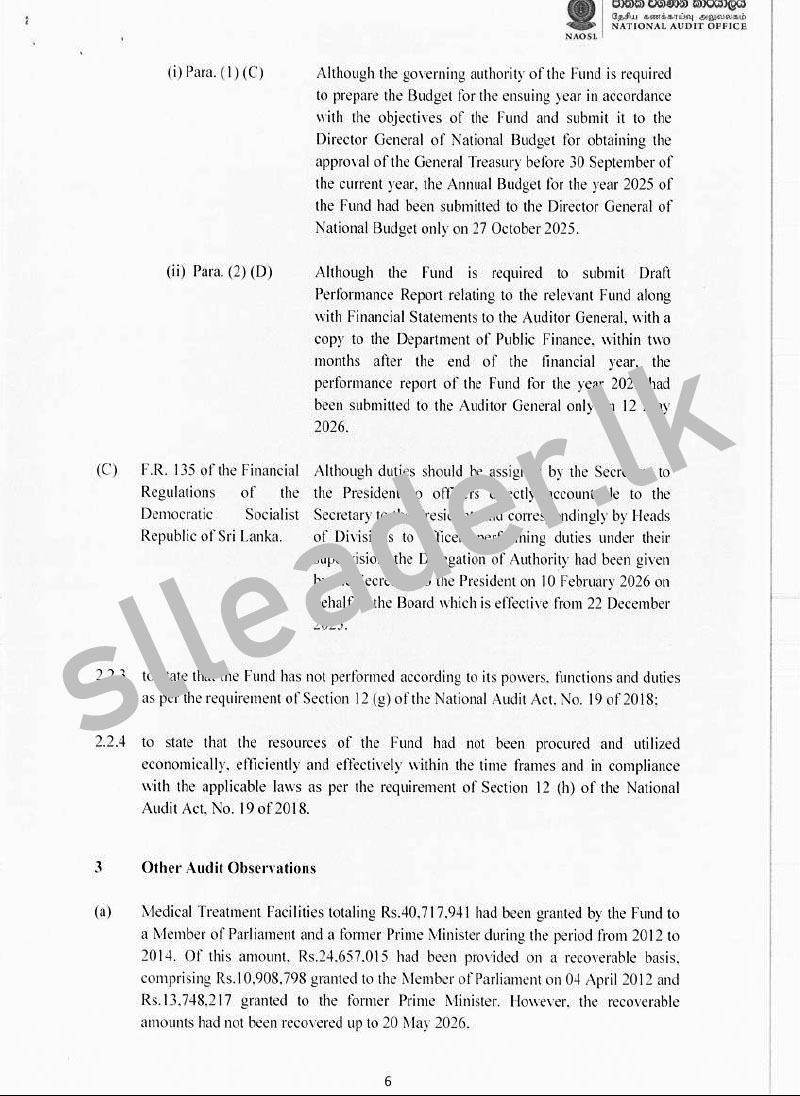
According to the report cited in the source material, one Member of Parliament and a former Prime Minister together received Rs. 40,717,941 in medical assistance from the President’s Fund.
Of that total, Rs. 24,657,015 was reportedly granted on a “recoverable basis.”
The figures show that Rs. 10,908,798 provided to the Member of Parliament remained unrecovered. Another Rs. 13,748,217 granted to the former Prime Minister had also not been recovered.
Those amounts remained outstanding as of May 20, 2026, according to the audit information cited.
The findings raise significant questions about why money designated as recoverable remained outstanding for years.
The report, however, does not identify either recipient in the material provided for this article.
The issue is particularly sensitive because the President’s Fund provides medical assistance to members of the public who may struggle to meet treatment costs.
Rs. 73.6 Million in Approved Medical Assistance Unpaid
The audit also identified a substantial amount of approved medical assistance that remained unpaid to ordinary beneficiaries.
During 2025, the Fund reportedly failed to pay Rs. 73,637,450 that had already been approved for medical treatment.
According to the audit findings cited, this unpaid amount was also not reflected or disclosed in the Fund’s financial statements.
That omission raises further concerns over the accuracy and completeness of the Fund’s financial reporting.
The contrast between unrecovered assistance previously granted to political figures and unpaid assistance approved for members of the public is one of the central issues highlighted by the findings.
The President’s Fund audit also identified several alleged failures to comply with statutory requirements and government financial regulations.
Audit Details Multiple Legal and Financial Control Failures
The report refers to provisions of the President’s Fund Act No. 7 of 1978 and State Financial Regulations governing the administration of the Fund.
It states that resources had not always been obtained and used economically, efficiently and effectively in accordance with applicable rules and required timeframes.
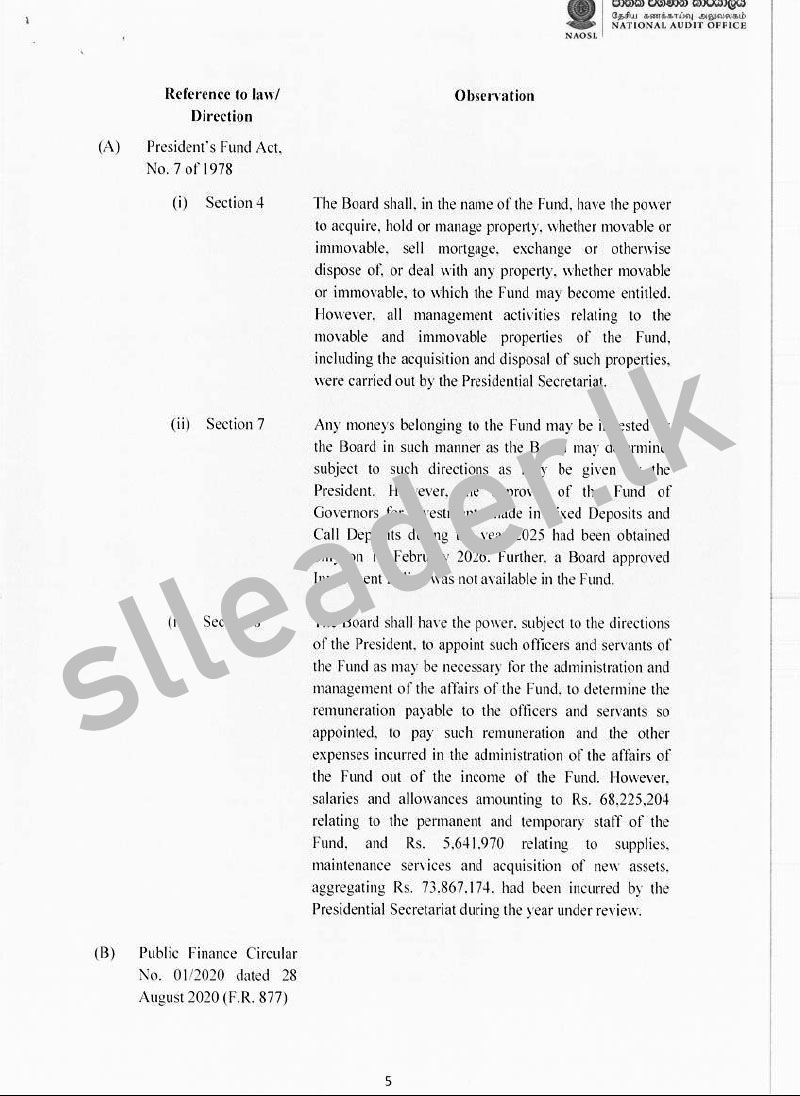
Under Sections 4 and 8 of the Act, responsibility for managing the Fund’s property and appointing and paying its officials rests with its governing authority.
However, the audit found that the Presidential Secretariat incurred Rs. 73,867,174 in expenditure connected with Fund staff.
This included Rs. 68,225,204 in salaries and Rs. 5,641,970 for maintenance relating to permanent and temporary staff.
The audit also raised an issue under Section 7 of the Act.
It found that the Fund had no investment policy approved by its Board of Governors.
During 2025, money belonging to the Fund was placed in fixed and call deposits without the required prior approval, according to the report.
Approval was subsequently obtained only on February 10, 2026.
Financial Regulation 135 was another area highlighted by auditors.
The delegation of responsibilities should have been formally established. However, the Presidential Secretary issued the delegation on February 10, 2026, while making it retrospectively effective from December 22, 2025.
Financial Statements and Budget Submitted Late
The audit also identified delays under State Finance Circular No. 01/2020.
The Fund’s performance report and financial statements should have been submitted within two months after the financial year ended.
Instead, the documents were submitted only on May 12, 2026.
The Fund’s 2025 budget was also submitted to the Director General of National Budget on October 27, 2025, significantly later in the financial year.
Together, these findings raise broader concerns about financial discipline, accountability and governance at an institution responsible for managing public resources.
The findings are particularly important because the President’s Fund provides assistance to people facing serious financial and medical hardship.
Questions Over Earlier Audits and Accountability
The findings have also revived questions over how the President’s Fund was monitored under previous administrations.
The Fund has been subject to audit requirements under the law. However, the source article argues that previous audit findings did not always receive sufficient public or parliamentary attention.
It further alleges that political influence contributed in earlier periods to delays in releasing reports, presenting findings to Parliament or pursuing action over irregularities.
Those broader allegations are not established as findings of the 2025 audit in the material provided and would require separate verification.
However, the National Audit Act No. 19 of 2018 provides the legal framework under which the latest audit was undertaken.
The current findings now provide greater public visibility into past payments, outstanding recoveries and administrative weaknesses surrounding the Fund.
The President’s Fund audit therefore goes beyond the question of who received particular medical payments.
It raises broader questions about whether public money was adequately protected, whether recoverable assistance was pursued and whether approved support reached intended beneficiaries on time.
The disclosure of these figures creates an opportunity for authorities to establish accountability, recover any money lawfully due to the Fund and strengthen financial controls.
For an institution financed with public resources and intended to assist people facing serious hardship, transparent administration and equal application of financial rules remain essential.



SOURCE:- SRI LANKA LEADER