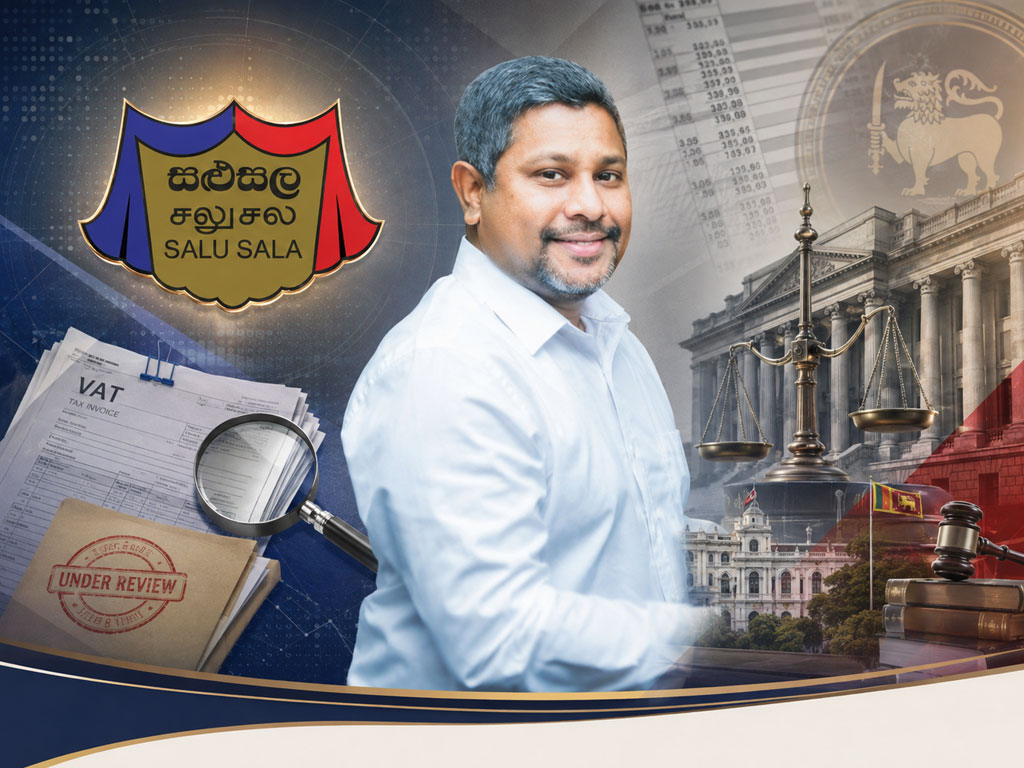
Lanka Salusala VAT case over Rs. 45 million in unpaid taxes sees Chairman Dinuk Ashley Wijesinghe released on Rs. 500,000 surety bail.
The Lanka Salusala VAT case involving Rs. 45 million in unpaid Value Added Tax has reached court, raising serious questions over financial management at the state-owned institution.
The case concerns VAT allegedly owed to the government over six years, from 2017 to 2023. Authorities allege Lanka Salusala Limited failed to remit the tax despite collecting revenue through its operations.
Colombo Additional Magistrate Oshadha Migara Maharachchi ordered Lanka Salusala Chairman Dinuk Ashley Wijesinghe released on surety bail of Rs. 500,000 during proceedings in the case.

Lanka Salusala VAT Case Follows Inland Revenue Probe
The Commissioner of Inland Revenue filed the case against the Salusala Chairman following an investigation into the outstanding tax payments.
Attorney Dinesh Perera, appearing for the Inland Revenue Department, told court that officials had repeatedly notified the institution in writing to settle the relevant taxes.
However, according to the submissions, the Salusala Board of Directors repeatedly failed to make the payments.
The case has therefore focused attention on how a state institution accumulated Rs. 45 million in VAT arrears over an extended period despite repeated notices from tax authorities.
Treasury Funds Considered to Settle VAT Arrears
The defence told court that discussions were underway with the Treasury regarding payment of the outstanding amount.
Counsel also stated that authorities planned to submit a Cabinet paper seeking funds to settle the arrears.
That position raises two key questions.
First, what happened to the VAT collected through transactions? VAT represents money collected from consumers or transactions and subsequently payable to the government. The central question is how the Rs. 45 million remained unpaid.
Second, questions arise over whether Treasury funds should now cover tax arrears attributed to failures within the institution.
Using additional public funds to settle an outstanding public tax liability could therefore place further scrutiny on Lanka Salusala’s financial management.
After hearing submissions from both sides, Magistrate Maharachchi ordered the institution to submit a report on the progress of tax payments by December 17.
The Lanka Salusala VAT case is therefore set to continue, with attention now focused on how the Rs. 45 million liability arose and how the institution intends to settle it.