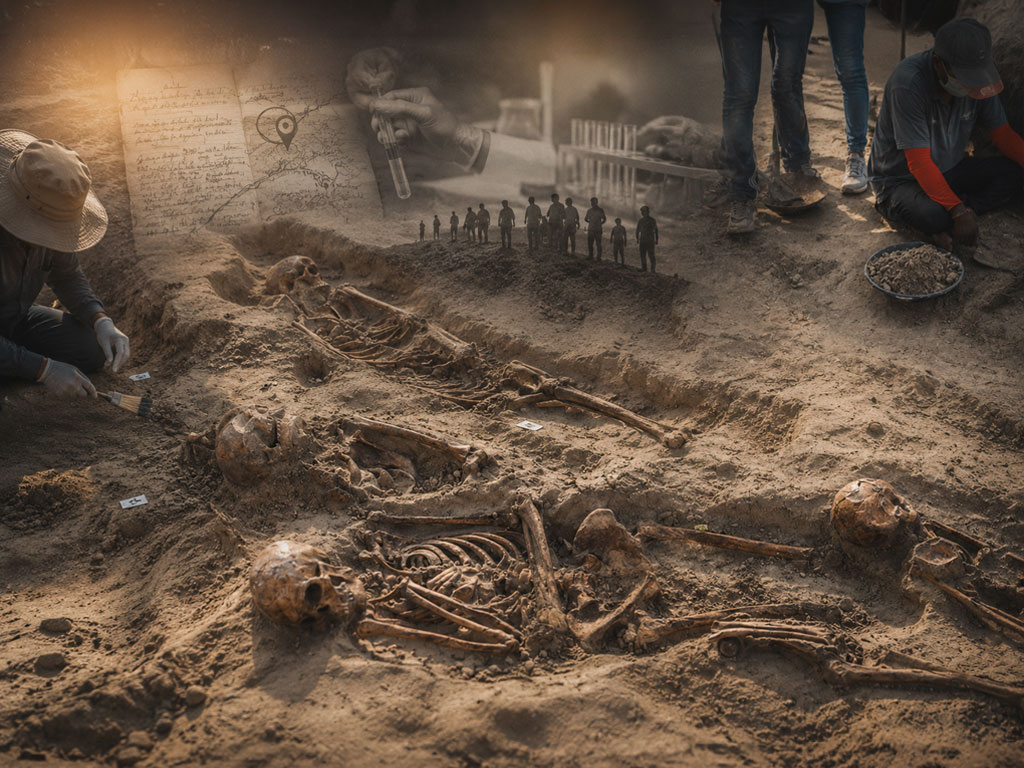
Chemmani mass grave excavations have recovered 583 sets of remains, with forensic, archaeological and carbon-14 tests still pending.
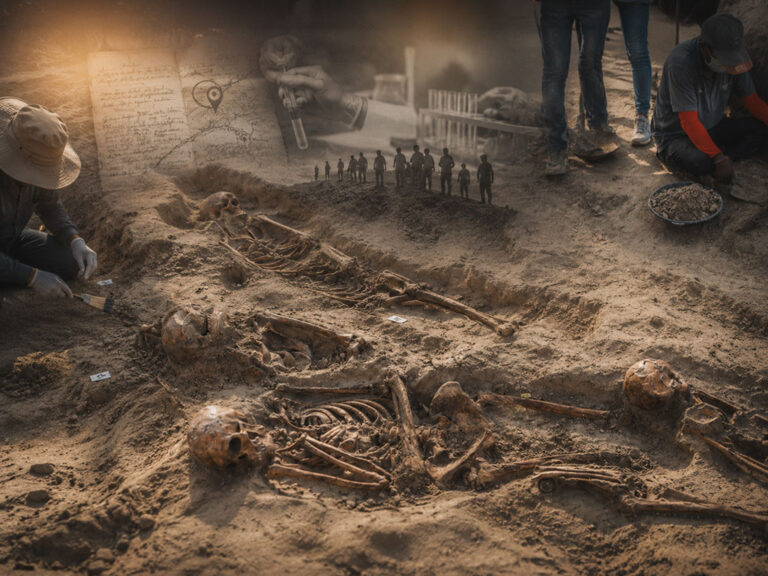
The Chemmani mass grave investigation has reached a critical stage after excavators recovered 583 sets of human remains during 110 days of work across three phases in Jaffna.
The third phase concluded last Wednesday, August 19, after investigators located another set of human remains and fully exhumed ten sets. This brought the total number identified and recovered from the site to 583.
All 583 sets discovered during the excavation have now been exhumed.
The third phase continued for 56 days following court authorisation. The first phase received approval for nine days, while the second lasted 45 days.
Investigators also identified 51 clusters of remains. The discoveries have intensified questions about the scale and nature of the alleged burial site.
However, archaeological, forensic and scientific examinations have not yet established definitive conclusions about the remains.

Chemmani Mass Grave Artefacts Await Archaeological Analysis
Excavators recovered several items during the final day of the latest phase.
These included an atchara koodu, traditionally worn around the waist, coins, three copper rings fused together and a thaayathu, a protective talisman generally worn around the neck.
Authorities handed the artefacts to archaeologist Professor Raj Somadeva for examination.
Somadeva is expected to submit a report on September 30 assessing the likely period from which the objects originate.
His report is also expected to contain a separate section dealing with remains recovered from 14 test pits opened beyond the main burial area.
Those test pits have become particularly important.
Investigators identified eight sets of human remains in five of the 14 locations and subsequently excavated them.
The discoveries have raised the possibility that remains may extend beyond the two principal excavation areas.
As a result, discussions have begun over whether authorities should expand the geographical scope of the investigation and authorise further excavation.
The next major stage will focus on scientific and forensic analysis of what has already been recovered.
Professor Somadeva’s archaeological report is expected to be considered together with another report prepared by Judicial Medical Officer Sellaiah Pranavan.
That report relates to nine sets of remains recovered from principal excavation site 2.
Authorities expect both reports to be submitted and reviewed at an administrative meeting scheduled for October 14.
Carbon-14 Tests and Fourth Excavation Phase Considered
The Criminal Investigation Department has also said carbon-14 testing will be required.
Officials are expected to consider further decisions concerning those tests at the October 14 meeting.
Therefore, the conclusion of the third excavation phase does not mark the end of the Chemmani mass grave investigation.
Major questions remain about the age and identity of the remains, the significance of the recovered artefacts and the possible geographical extent of the burial area.
A fourth excavation phase is also under consideration.
Following the discovery of remains in test pits outside the main burial area, concerns have grown that additional skeletal remains may remain underground nearby.
The Judicial Medical Officer is expected to submit a proposal to court seeking another 28 days for excavation.
If the court approves the request, authorities would then have to forward it to the Ministry of Justice to obtain funding before work could resume.
Funding has already been allocated for examinations of the remains recovered so far. Authorities are expected to begin those investigations as the next stage progresses.
Excavation Nears Krishanthy Kumaraswamy Anniversary
The latest developments carry additional significance because they come only weeks before the 30th anniversary of the murder of schoolgirl Krishanthy Kumaraswamy.
Sri Lankan soldiers raped and murdered Kumaraswamy at Chemmani on September 7, 1996.
Her mother, younger brother and a family friend were also killed after they went searching for her.
The case became one of the most notorious atrocities involving Sri Lankan security forces in Jaffna and eventually contributed to the exposure of allegations surrounding the Chemmani mass graves.
During the subsequent trial, a Sri Lankan Army soldier convicted over involvement in Kumaraswamy’s murder told the court that hundreds of bodies had been buried in the Chemmani area.
Three decades later, the excavation has now recovered 583 sets of human remains.
However, that figure alone cannot establish when the individuals died, who they were or how they came to be buried at the site.
Those answers remain dependent on the archaeological, forensic and scientific examinations still ahead.
The third excavation phase may have ended, but the investigation itself has entered an equally important stage.
The pending reports, carbon-14 testing and possible fourth phase will determine how much more can be established about one of the most consequential burial-site investigations currently underway in Sri Lanka.