Gregory Lake water pollution has raised concern after CEA tests found elevated phosphate, nitrate and BOD levels in Nuwara Eliya’s landmark lake.
Gregory Lake water pollution has triggered serious concern after Central Environmental Authority tests detected unusually high levels of key pollutants in the Nuwara Eliya landmark.
The findings were presented at the Nuwara Eliya District Coordinating Committee meeting.
District Coordinating Committee Chairman and Parliamentarian Manjula Suraweera Arachchi confirmed the findings based on the latest data presented by the Central Environmental Authority.
The results have raised questions about the environmental condition of one of Sri Lanka’s best-known tourist attractions and the potential risks of consuming untreated lake water.

Gregory Lake Water Pollution Shown in Test Results
According to environmental reports, several indicators in water samples collected from Gregory Lake were significantly above the reference levels cited in the report.
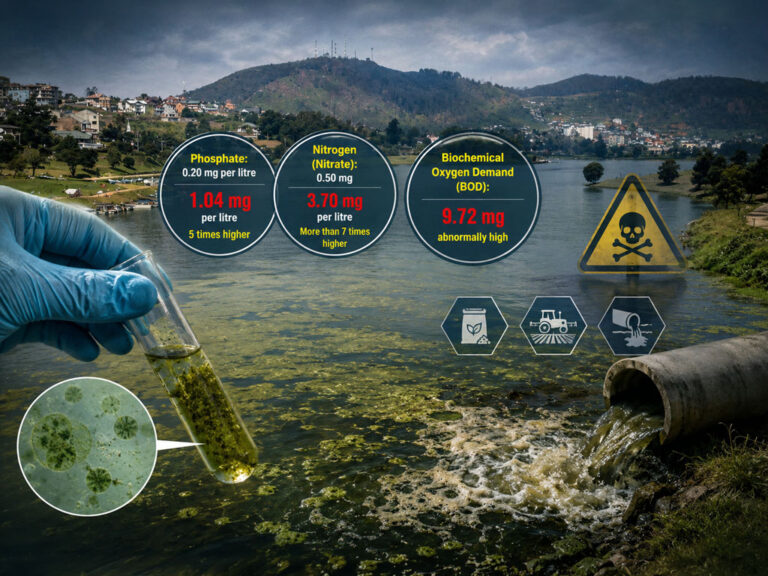
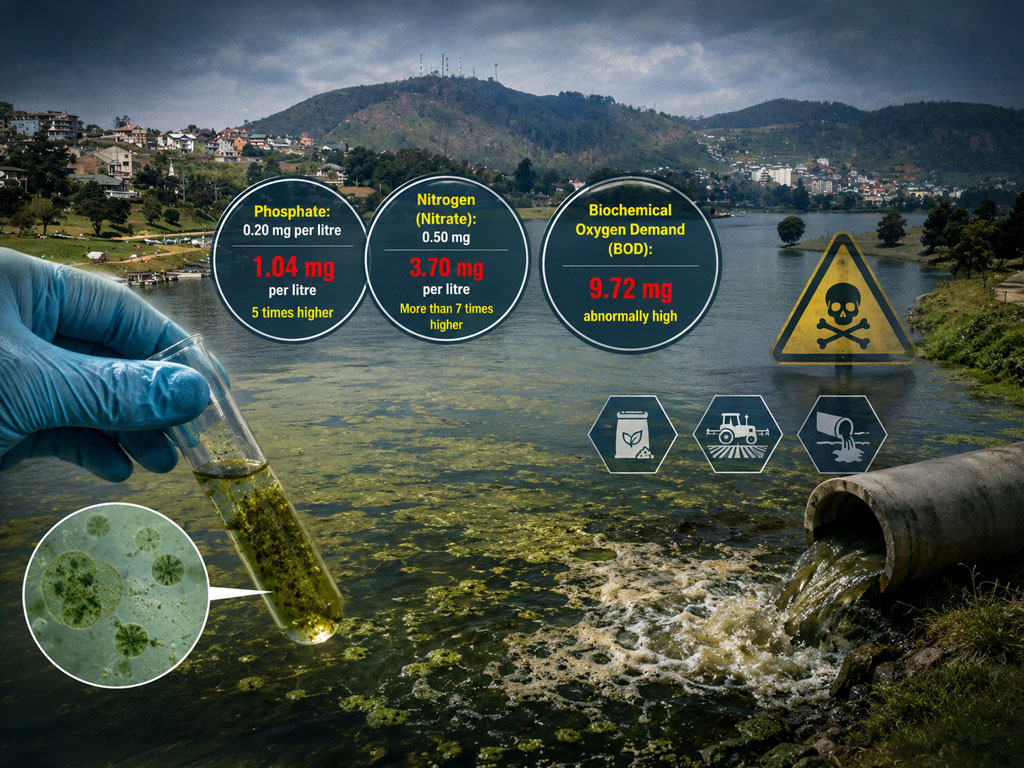
Phosphate concentrations reached 1.04 milligrams per litre.
The report states that the maximum level expected in normal water should be 0.20 milligrams per litre. Gregory Lake therefore recorded more than five times that figure.
Nitrate levels were also substantially elevated.
The cited reference concentration was 0.50 milligrams, while tests at Gregory Lake detected 3.70 milligrams. That represents more than seven times the level cited in the report.
Biochemical Oxygen Demand, commonly known as BOD, also showed signs of heavy organic pollution.
Tests recorded a BOD value of 9.72 milligrams.
High BOD values generally indicate that microorganisms are consuming greater amounts of dissolved oxygen while breaking down organic material in the water.
The source article cites World Health Organization and international environmental guidance in warning against directly drinking water with elevated chemical contamination.
However, the specific health impact of any water sample depends on the substances present, their concentrations and the duration of exposure.
The findings nevertheless reinforce the need to avoid consuming untreated lake water.
Agriculture and Waste Blamed for Deterioration
Gregory Lake dates back to the British colonial period.
It was created in 1873 during the administration of Governor William Gregory and historically received water from several streams and smaller reservoirs.
However, environmental pressures around Nuwara Eliya have increased over recent decades.
The report identifies rapid urbanisation, agricultural chemicals and wastewater as major contributors to the lake’s deterioration.
Farmers cultivating vegetables and tea in the surrounding highlands use insecticides, herbicides and chemical fertilisers.
Rainfall can carry soil, fertiliser residues and other substances from these areas into streams that feed the lake.
Meanwhile, sediment has accumulated within natural waterways and catchment areas.
Wastewater from nearby settlements and commercial hotels is also identified as another source of pollution entering the lake.
Together, these pressures have contributed to a process known as eutrophication.
Eutrophication occurs when excessive nutrients enter a body of water, promoting abnormal plant and algae growth and disrupting the natural aquatic ecosystem.
Joint Plan Launched to Address Gregory Lake Crisis
Authorities have now launched an inter-agency initiative to address the environmental problem.
The Ministry of Environment, Urban Development Authority and Irrigation Department have established a joint technical committee.
Officials are developing an emergency mechanism aimed at reducing pollution and restoring the lake.
Proposed measures include desilting sections of Gregory Lake and controlling agrochemical runoff from surrounding catchment areas.
Authorities also plan to improve the operation of wastewater treatment systems to prevent untreated discharges from entering the lake.
The intervention is intended to provide both immediate and longer-term solutions.
Gregory Lake remains one of Nuwara Eliya’s most prominent attractions and an important part of the area’s environmental landscape.
The latest findings therefore underline the need for tighter pollution controls, better catchment management and consistent monitoring.
Restoring the lake will require coordinated action across agriculture, urban development, wastewater management and environmental regulation.
Until those measures take effect, the latest CEA findings provide a clear warning that Gregory Lake should be treated as an environmentally stressed water body rather than a source of drinking water.