Sri Lanka economic recovery has brought the country close to pre-crisis levels, with stronger revenue, debt restructuring and hopes for ratings gains.
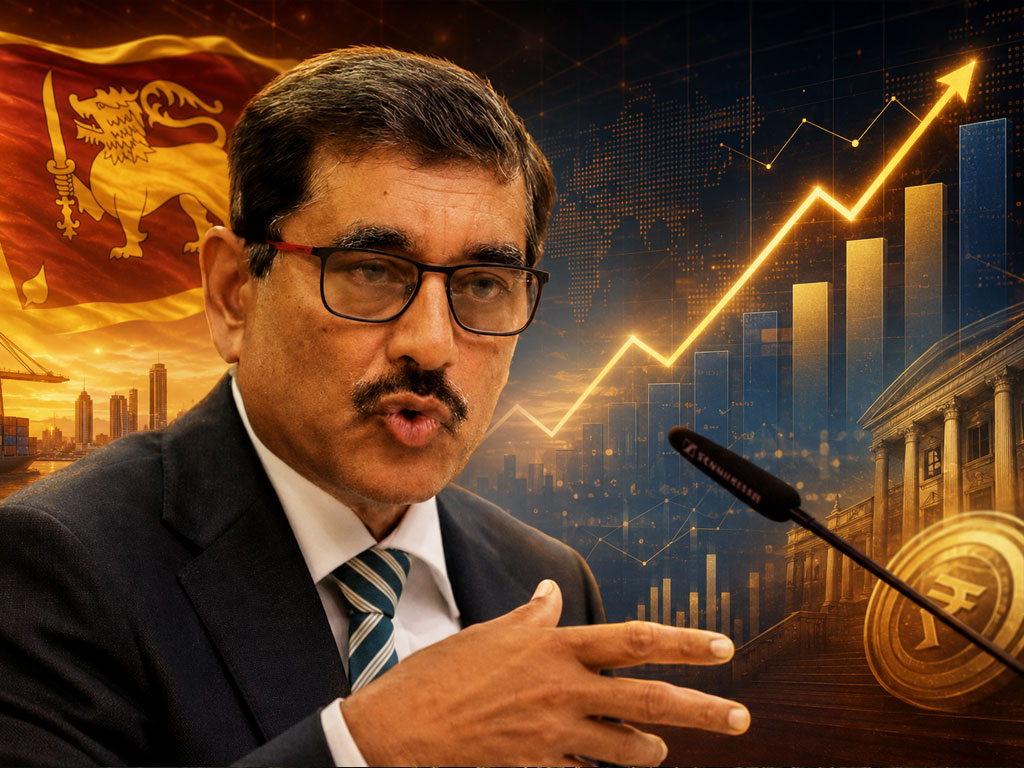
Sri Lanka economic recovery has brought the country close to pre-crisis levels, Central Bank Governor Dr. Nandalal Weerasinghe has said.
He attributed the turnaround to stronger public finances, improvements in budget balances and progress towards restoring debt sustainability.
The Governor made the remarks during a special discussion organised by the Ministry of Foreign Affairs in Colombo for government officials and members of the diplomatic community.
His comments come after Sri Lanka’s severe economic collapse in 2022, when the country faced one of the deepest financial crises in its history.

Sri Lanka Economic Recovery Follows Severe 2022 Crisis
Sri Lanka suffered a major economic setback in 2022 as a severe foreign exchange shortage disrupted supplies of fuel, energy and essential goods.
Inflation climbed sharply, interest rates rose and the rupee depreciated significantly.
Against that background, Sri Lanka temporarily suspended payments on its foreign debt for the first time in its history.
The crisis placed intense pressure on households, businesses and public finances.
However, Weerasinghe said subsequent economic stabilisation programmes focused on rebuilding foreign reserves, reducing inflation, restructuring public debt and strengthening external financial conditions.
“The economy has now largely reached pre-crisis levels. It is a remarkable situation to have recorded such a strong recovery within such a short period of time. Considering the severity of the balance of payments crisis Sri Lanka faced, we could be recognized as one of the fastest countries in the world to recover from such a crisis,” Dr. Weerasinghe said.
The Governor presented the recovery as evidence of the progress made since the height of the crisis.
Government Revenue-to-GDP Ratio Rises Sharply
Fiscal reform has played a central role in the economic turnaround.
According to the Central Bank Governor, the Government’s revenue-to-GDP ratio has increased by approximately 100% during the past three years.
Sri Lanka entered the crisis with government revenue at extremely low levels.
The authorities subsequently introduced measures aimed at increasing revenue collection, controlling expenditure and improving debt sustainability.
Weerasinghe said maintaining fiscal discipline had become a critical part of the country’s stabilisation programme.
Economic authorities now assess that Sri Lanka is moving beyond the initial phase of stabilisation.
However, sustaining that progress will require continued fiscal discipline and consistency in economic reforms.
Any weakening of those measures could make it more difficult to preserve the gains already achieved.
Credit Rating Improvement Becomes Next Target
Authorities are now seeking to use greater macroeconomic stability to improve Sri Lanka’s sovereign credit ratings.
Following the suspension of foreign debt payments, Sri Lanka entered the “Restricted Default” category.
However, progress in debt restructuring has since allowed the country to move beyond that position.
The Governor said discussions are now taking place with the three major international credit rating agencies: Fitch Ratings, S&P Global and Moody’s.
“We are very hopeful that Sri Lanka’s credit ratings will further improve, reflecting the progress achieved,” he said.
A stronger sovereign credit rating could help rebuild confidence among international investors.
It would also support Sri Lanka’s longer-term effort to restore relations with global capital markets.
The progress made in debt restructuring therefore remains closely linked to the country’s wider financial recovery.
Economic Recovery Must Now Deliver Sustainable Growth
Weerasinghe stressed that the next stage of the Sri Lanka economic recovery will depend on converting macroeconomic stability into sustainable economic growth.
That includes attracting investment and building an economy capable of absorbing future domestic and global shocks.
Stability alone will not be enough if it does not eventually translate into stronger productive activity and improved economic resilience.
The Governor also said Sri Lanka’s experience could provide important lessons for international financial institutions and other countries.
He pointed to the country’s path out of a deep balance of payments crisis as an example of how an economy can move back towards stability within a relatively short period.
For Sri Lanka, however, the challenge now is to protect the recovery already achieved.
Maintaining fiscal discipline, completing debt restructuring, strengthening investor confidence and sustaining economic reforms will be crucial if the country is to move from stabilisation towards durable long-term growth.