Norochcholai coal shortage forces lower power generation as Patali Champika Ranawaka warns diesel use could deepen Sri Lanka’s energy crisis.
The Norochcholai coal shortage has triggered fresh warnings of a serious energy crisis, with former Power and Energy Minister Patali Champika Ranawaka raising concerns over falling coal stocks and rising diesel use.
Ranawaka said coal reserves at the Norochcholai coal power plant have now reached their final stage. As a result, authorities have significantly restricted the plant’s electricity generation capacity.

Norochcholai Coal Shortage Cuts Power Generation
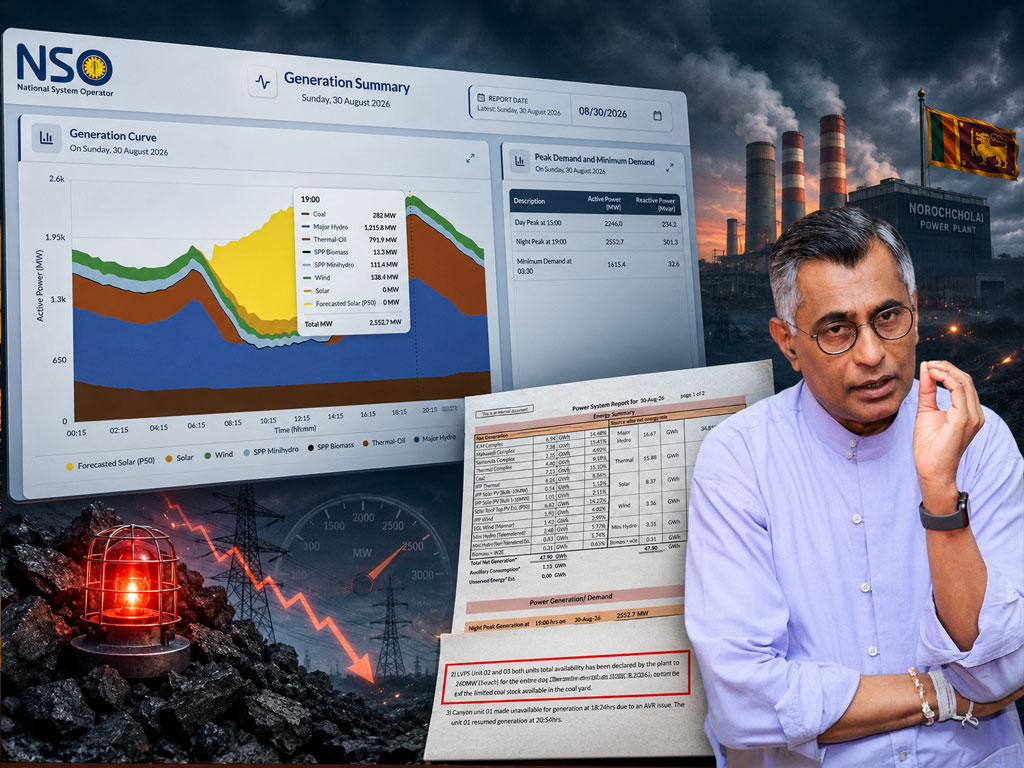
According to the Ceylon Electricity Board’s power system report dated August 30, 2026, the coal shortage forced officials to reduce generation from two units from August 30.
The output of those two units was reduced from 270 megawatts to 130 megawatts.
The Norochcholai plant has a total installed capacity of 900 megawatts. However, during yesterday’s peak demand period, it reportedly supplied only about 282 megawatts to the national electricity system.
The reduced coal generation has forced greater reliance on diesel-powered plants to compensate for the lost electricity capacity.
According to the information presented, this requires approximately 140,000 additional litres of diesel each day.
The financial impact could also be significant.
One unit of electricity generated using diesel reportedly costs around Rs. 120. However, the average selling price of an electricity unit stands at about Rs. 37.
Ranawaka warned that continuing to bridge the generation gap through diesel could therefore create a major financial burden.

Ranawaka Demands Answers Over Energy Crisis
Commenting on what he described as an administrative and financial crisis in the energy sector, Ranawaka called for immediate action and greater transparency.
He stated:
“The energy crisis we pointed out has arrived. Solutions must be pursued as soon as possible. Tell the country the truth. Even the final stocks at the coal plant are now being used, and this is not the way the plant should be operated… How justifiable is it to destroy the tax money (national wealth) collected from the people of this country through milk powder and bread flour in this manner in the face of coal frauds..?”
His warning places renewed attention on the management of coal supplies and the cost of replacing lost Norochcholai generation with diesel.
With the plant operating well below its overall capacity, Ranawaka argues that authorities must urgently explain the situation and find solutions before the financial and energy pressures deepen further.