By Roy Denish.
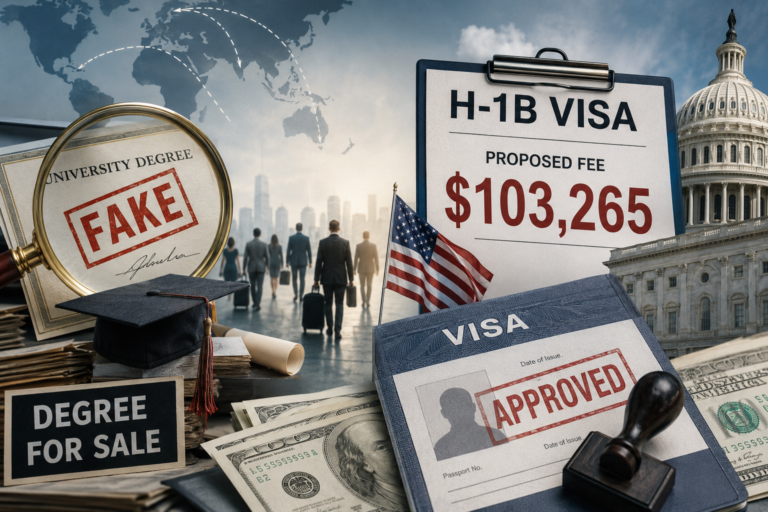
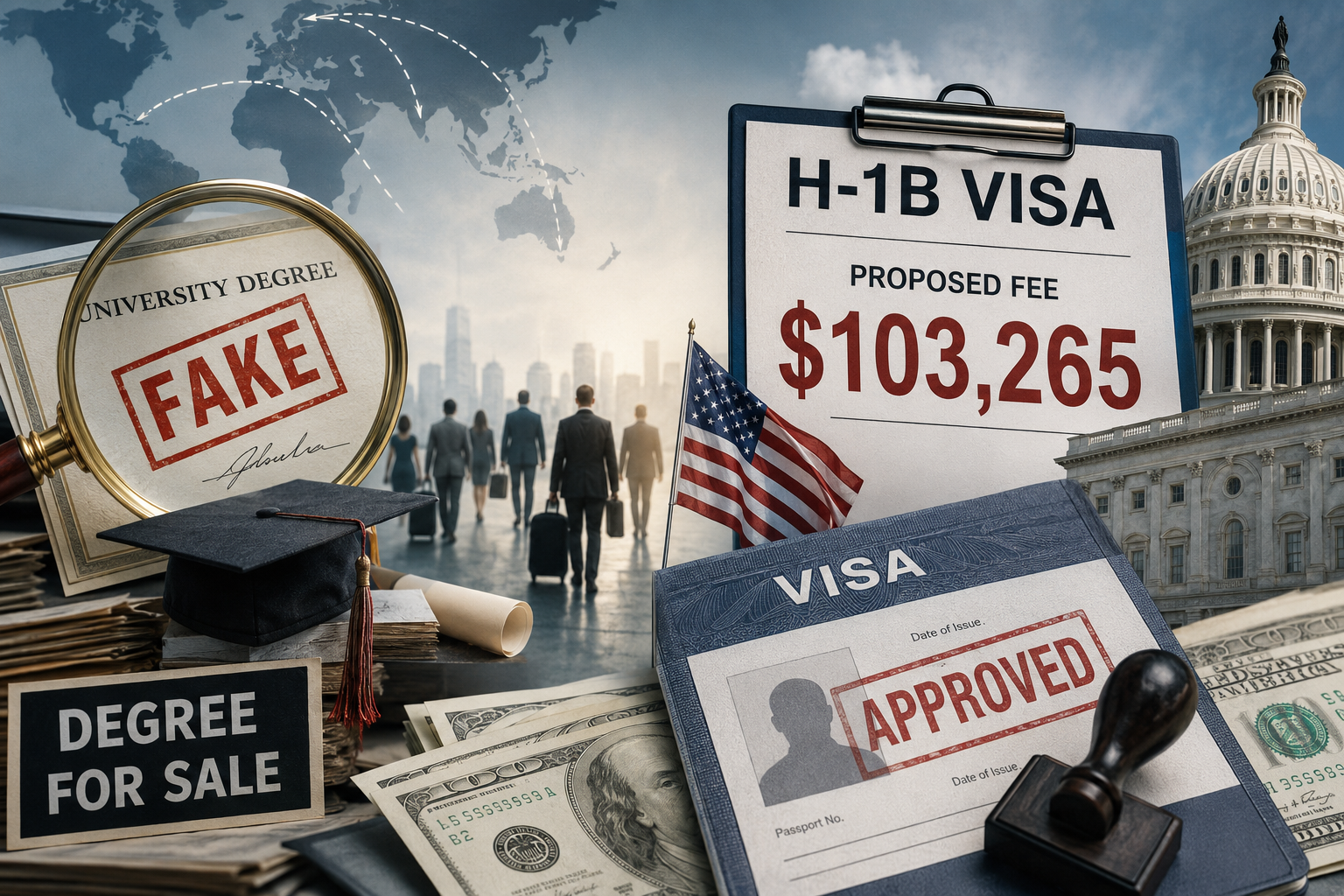
Global workforce mobility faces tighter degree checks and a proposed $103,265 H-1B fee that could reshape international hiring.
Global workforce mobility is entering a new period of pressure as degree fraud crackdowns intensify while U.S. visa costs threaten to reshape international hiring. Regulators are targeting forged qualifications, while legitimate foreign professionals and employers face potentially steep new financial barriers.
The global employment pipeline is under heavier scrutiny as law enforcement agencies investigate underground degree mills and falsified academic credentials. Unaccredited institutions, online document forgers, and rogue university operators have helped turn fake qualifications into a multi-billion-dollar global business.

In India, a Special Investigation Team uncovered one of the region’s largest single-institution degree scandals at Manav Bharti University. Investigators found that more than 36,000 of 41,000 degrees issued over an 11-year period were fraudulent.
The problem extends beyond individual institutions. The Axact investigation in Pakistan also exposed the international reach of degree fraud after the company marketed more than 200,000 fake degrees worldwide to overseas buyers.
Degree Fraud Crackdowns Reshape Global Workforce Mobility
In response, education regulators and international background verification agencies are strengthening their screening procedures. Indian law enforcement continues to prosecute credential fraud under provisions of the Indian Penal Code, treating the possession or sale of forged mark sheets as criminal forgery, cheating, and conspiracy.
At the same time, statutory bodies such as the University Grants Commission regularly update public registries of unauthorized universities. Multinational companies, immigration services, and visa authorities increasingly rely on official portals to verify academic qualifications before hiring or approving applications.
These checks are designed to prevent fraudulent documents from passing formal background screening. However, the tougher environment also means applicants with legitimate qualifications can expect closer scrutiny of universities, certificates, transcripts, and other academic records.
U.S. H-1B Proposal Adds a $103,265 Barrier
Even foreign professionals with valid credentials could face a major new obstacle in the United States. The U.S. Department of Homeland Security has formally proposed a $103,265 fee on all new cap-subject H-1B visa petitions.
Published in the Federal Register, the proposal would require sponsoring employers to pay the six-figure charge for each worker when filing. It would apply to the regular annual cap of 65,000 visas and the additional 20,000 visas available under the U.S. master’s degree exemption.
The proposed fee would affect international applicants overseas and foreign graduates moving from F-1 student status into the U.S. workforce. Existing H-1B holders seeking extensions or job transfers would be excluded. Workers employed by cap-exempt institutions, including universities, would also fall outside the proposed charge.
The measure marks the Trump administration’s second attempt to create a high-cost barrier for foreign professional hiring. An earlier $100,000 fee introduced through a 2025 Presidential Proclamation was blocked by a federal district court in June 2026 after the court found it functioned as an unauthorized tax.
The administration then published a formal Notice of Proposed Rulemaking under federal immigration statutes. Federal agencies estimate the fee could generate nearly $8.8 billion annually for immigration enforcement and operations.
However, global technology groups and business associations argue the proposal could price international talent out of the U.S. market. They are preparing legal challenges as the measure moves through its public comment period.
The convergence of stricter credential verification and rising visa sponsorship costs signals a structural shift in global workforce mobility. Regulators are closing routes based on fraudulent qualifications, while legitimate workers and sponsoring companies face a more expensive and restrictive global hiring landscape.