By Dwayne Ferreira.
Kyiv air raid alerts hit record levels as Russia expands daytime and nighttime drone strikes, disrupting schools, transport and daily life.
KYIV – Residents of Ukraine’s capital are facing an increasingly relentless Russian aerial campaign, with air raid warnings reaching record levels as Moscow shifts towards sustained drone and missile attacks during both the day and night.
The changing pattern has severely disrupted schools, businesses, transport and everyday life in Kyiv, where residents increasingly find themselves moving repeatedly between workplaces, classrooms, homes and bomb shelters.
Kyiv recorded 13 separate air raid alerts on August 27, the highest number reported in a single day since Russia launched its full-scale invasion of Ukraine in February 2022.
The previous daily record was 12 alerts, recorded on March 1, 2022. Air raid warnings were active for more than half of August 27, according to Ukrainian reporting.
The pressure continued into the following day, when Kyiv had already recorded nine alerts by shortly after 10 a.m.

Russia changes attack tactics
Military analysts say Russia appears to be changing the way it conducts long-range attacks.
Earlier in the conflict, large drone and missile attacks were often concentrated overnight. More recently, Russian forces have launched drones throughout daylight hours as well, creating periods in which the threat of attack continues almost continuously.
The Institute for the Study of War has reported that Russian forces have conducted sustained daytime and nighttime drone waves against Ukraine, particularly Kyiv, since late August.
Analysts believe the strategy could be intended not only to penetrate Ukraine’s air defences but also to create continuous disruption.
Repeated alarms force businesses to suspend operations, schools to interrupt lessons and residents to seek shelter, while transport networks can also be affected.
Ukrainian military analyst Oleksandr Musiyenko has warned that Kyiv could increasingly face near-continuous attacks involving both individual drones and larger groups of unmanned aircraft.
Civilian life increasingly disrupted
The psychological and economic pressure is becoming a major part of the impact of the campaign.
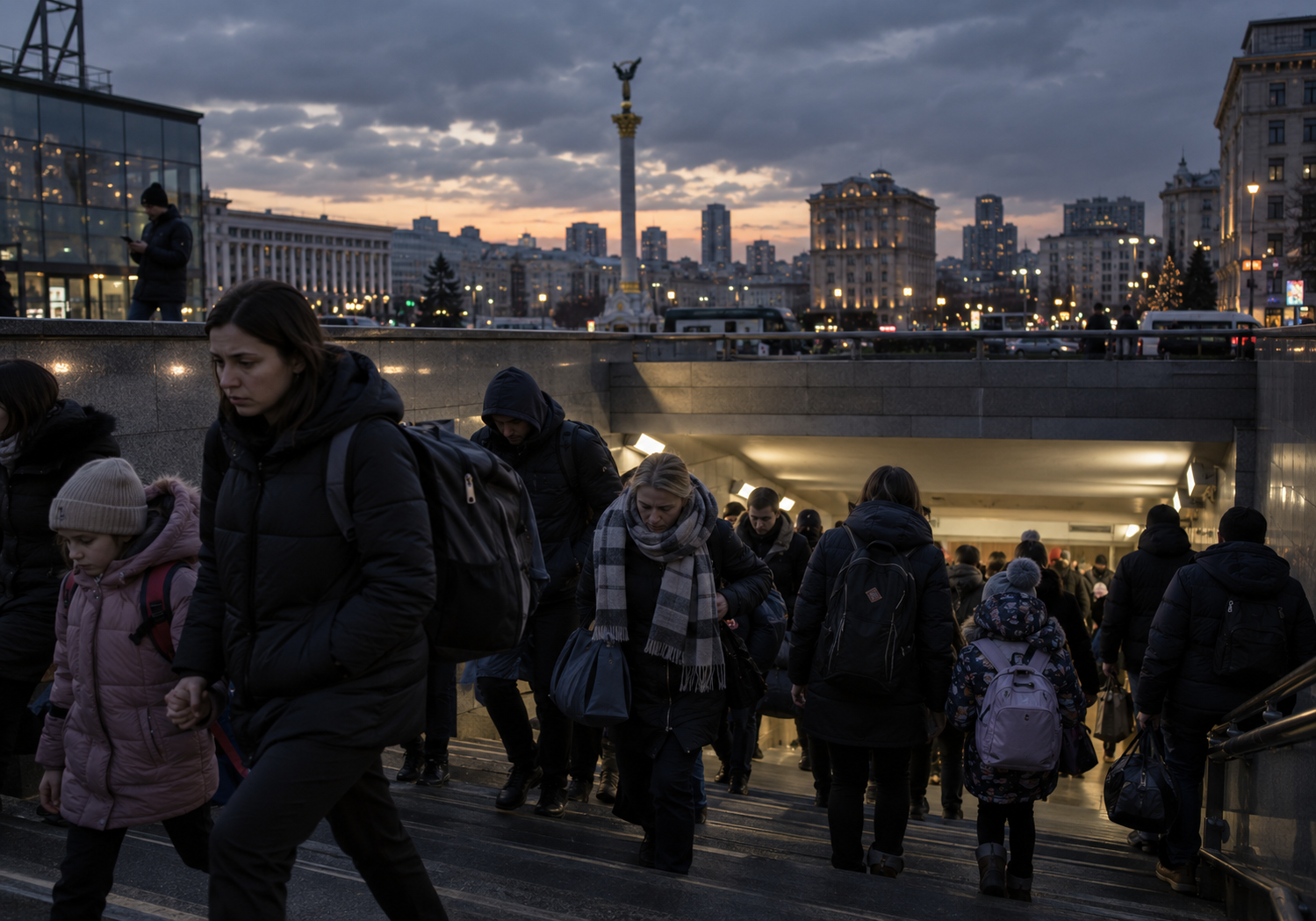
Underground metro stations continue to serve as some of Kyiv’s most important civilian shelters. During one major attack earlier this year, more than 41,000 people took refuge in the city’s metro system, including nearly 4,500 children.
Russia has also increasingly targeted warehouses, industrial facilities and other infrastructure as part of its aerial campaign.
Ukraine has repeatedly appealed to Western governments for additional air-defence systems and interceptor missiles as Moscow increases the frequency and complexity of its attacks.
Russia maintains that its military strikes are directed at targets connected to Ukraine’s armed forces and defence infrastructure. Ukrainian officials, however, say residential buildings and civilian facilities have repeatedly been hit.
With no immediate end to the aerial campaign in sight, Kyiv’s residents are increasingly being forced to adapt to a city where air raid warnings can interrupt almost every part of daily life.