By Roy Denish.
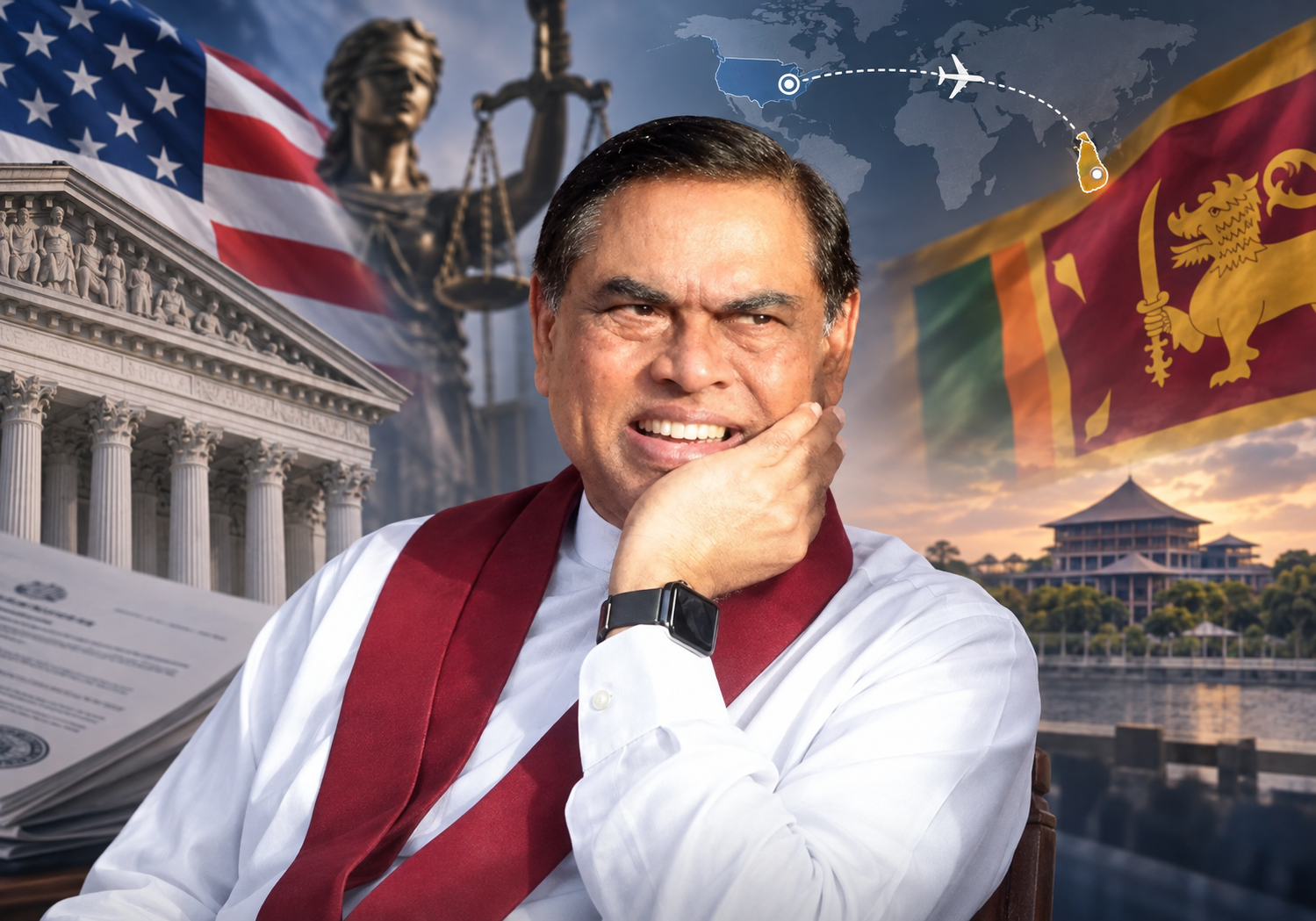
Sri Lanka is finalising Basil Rajapaksa extradition proceedings from the US as courts pursue cases in which arrest warrants have been issued.
The Sri Lankan government is pursuing international legal proceedings aimed at bringing former Minister Basil Rajapaksa back from the United States to face several pending criminal cases before local courts.
Police Headquarters sources have said that authorities are seeking assistance to secure Rajapaksa’s return to Sri Lanka. He is currently believed to be residing in the United States. Law enforcement agencies have also sought INTERPOL assistance following the issuance of arrest warrants after Rajapaksa failed to appear before court.
The Matara Magistrate’s Court previously issued a warrant for his arrest in connection with a case involving the purchase of a 1.5-acre property on Eliyakanda Road in Matara. The case, filed by the Police Financial Crimes Investigation Division (FCID), concerns allegations surrounding the acquisition of the property.

Officials have acknowledged that seeking assistance from the United States would initiate a formal international legal process rather than result in Rajapaksa’s immediate arrest or return. Sri Lankan authorities would be required to submit relevant court orders, details of the alleged offences and supporting documentation through the appropriate diplomatic and judicial channels for consideration under US law.
The legal framework for any extradition request is provided by the bilateral extradition treaty between Sri Lanka and the United States, signed in Washington on September 30, 1999. The treaty entered into force on January 12, 2001.
Under the treaty, extradition proceedings are subject to legal requirements governing extraditable offences and the evidence submitted in support of a request. The treaty also provides for the extradition of nationals, meaning that US citizenship does not, by itself, automatically prevent an extradition request from being considered.
Any request would ultimately be assessed according to the provisions of the treaty and applicable US law.
Based on reporting originally published by The Island.