By Dwayne Ferreira.
From a historic town hall reduced to a burned-out shell to luxury boutiques stripped of merchandise, France faces an enormous repair bill after violent riots swept through several major cities. The full financial cost remains unknown as authorities, businesses and insurers assess the destruction.
PARIS – France is confronting the aftermath of one of its most destructive episodes of civil unrest in recent years, with government buildings gutted by fire, commercial districts ransacked, vehicles torched and public infrastructure damaged following nationwide demonstrations that descended into violence over the weekend.
What began as protests over rising living costs, deteriorating public services and conditions in schools escalated on October 17 into widespread looting, arson and confrontations with police.
By October 18, authorities had reported approximately 2,400 arrests nationwide, while local authorities across France were beginning the difficult task of assessing damage to public property, historic buildings and privately owned businesses.

Although the destruction has been extensive, no verified nationwide estimate of the total financial losses had been established by October 19. Early reports point to substantial damage to commercial premises, municipal buildings, vehicles and public infrastructure, with the final bill likely to include repairs, replacement merchandise, business interruption and municipal clean-up operations.
Historic Limoges City Hall Among the Worst-Hit Buildings
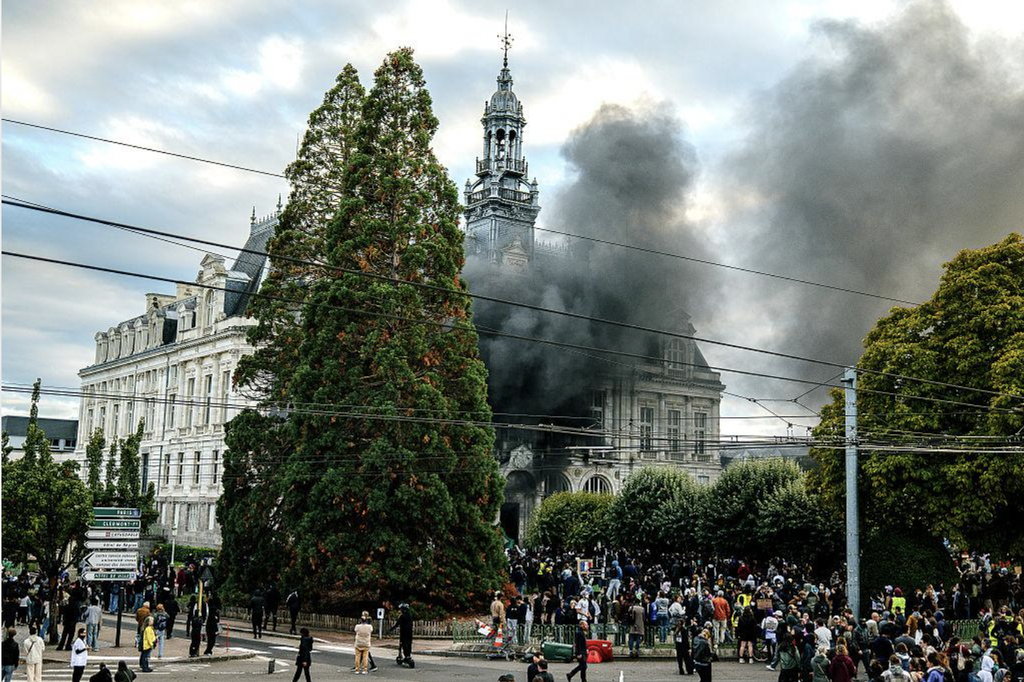
One of the most significant losses occurred in Limoges, central France, where rioters set fire to the city’s historic 19th-century town hall.
Flames engulfed the building, causing its roof to collapse and leaving significant portions of the structure severely damaged. Reports described the building as nearly destroyed, with the fire consuming much of its interior and threatening an important piece of the city’s architectural heritage.
The prefect of Haute-Vienne, Maurice Barate, confirmed that the fire was deliberate.
Unlike damage to modern commercial premises, the destruction of a historic municipal building presents complex restoration challenges. Specialist construction materials, structural engineering assessments, heritage conservation and the replacement of historic architectural features could substantially increase the rebuilding cost.
The authorities had not yet announced a definitive restoration budget or timetable.
Paris: Luxury Stores, Supermarkets and Commercial Streets Ransacked
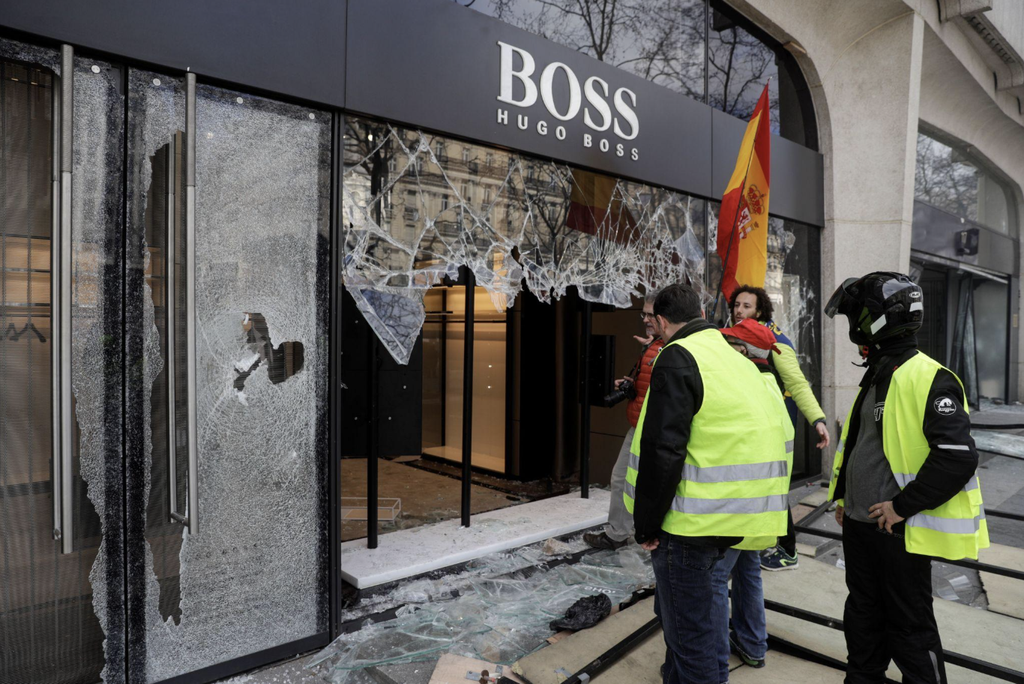
Paris suffered widespread commercial damage, particularly across central shopping districts and streets on the Right Bank.
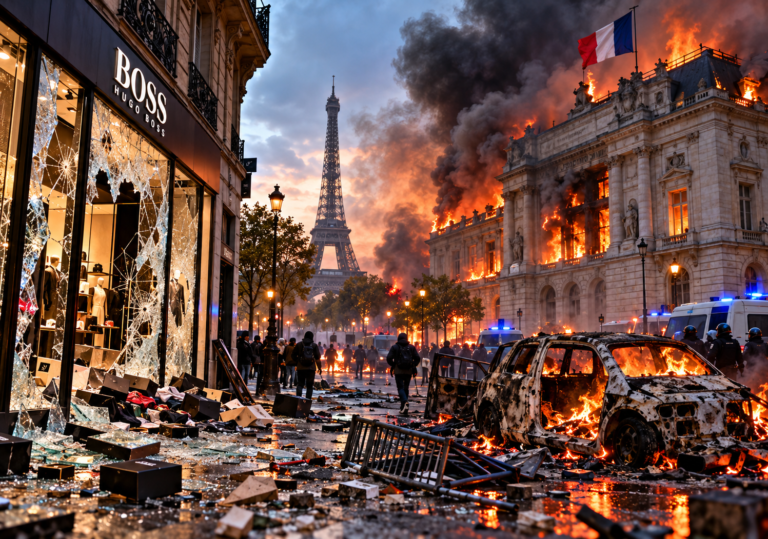
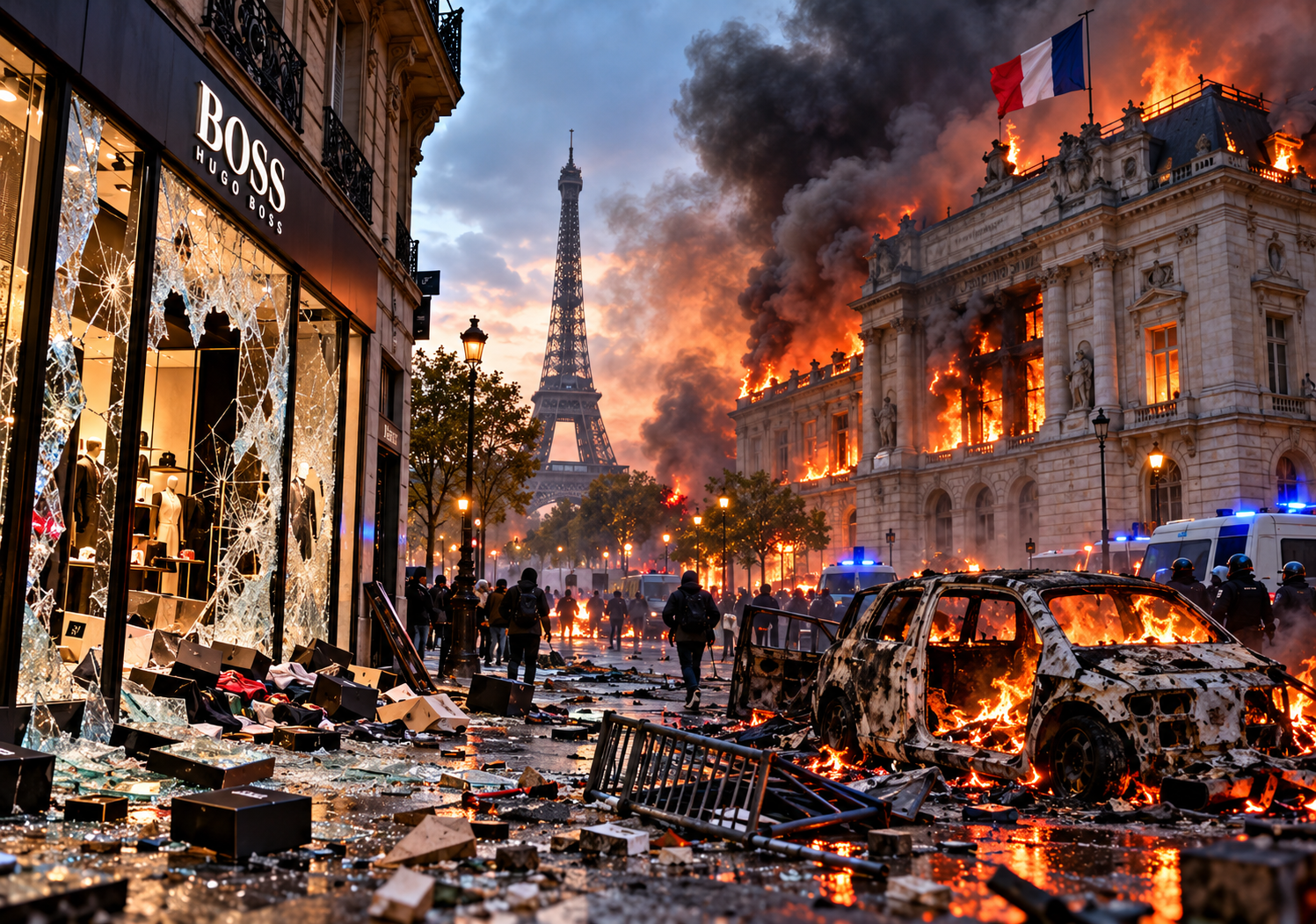
According to Le Monde, groups smashed shop windows, broke through metal security shutters and removed merchandise from retailers, while cars, construction vehicles, rubbish bins and bicycles were set ablaze.
Among the businesses identified in reports were Kenzo, Salomon, Arc’teryx and Céline, whose premises were attacked or looted. Supermarkets and smaller businesses were also targeted.
Other affected retailers included Nike, Sephora and Burger King, with damage documented around Les Halles and the Paris Opera area. An Arts et Métiers post office on Rue Papin was also looted.
The damage extended beyond stolen merchandise. Owners faced shattered display windows, destroyed security shutters, damaged interiors, missing stock and disruption to normal trading.
For smaller independently operated businesses, the financial consequences could be particularly severe. Even when insurance covers physical damage, traders can face delayed reopening, lost income and costs that exceed their policy limits.
Paris municipal workers, contractors and business owners began repairing storefronts and removing debris on October 18, but some premises were left needing more substantial reconstruction.
Marseille: City Hall Breached and Shopping Streets Damaged
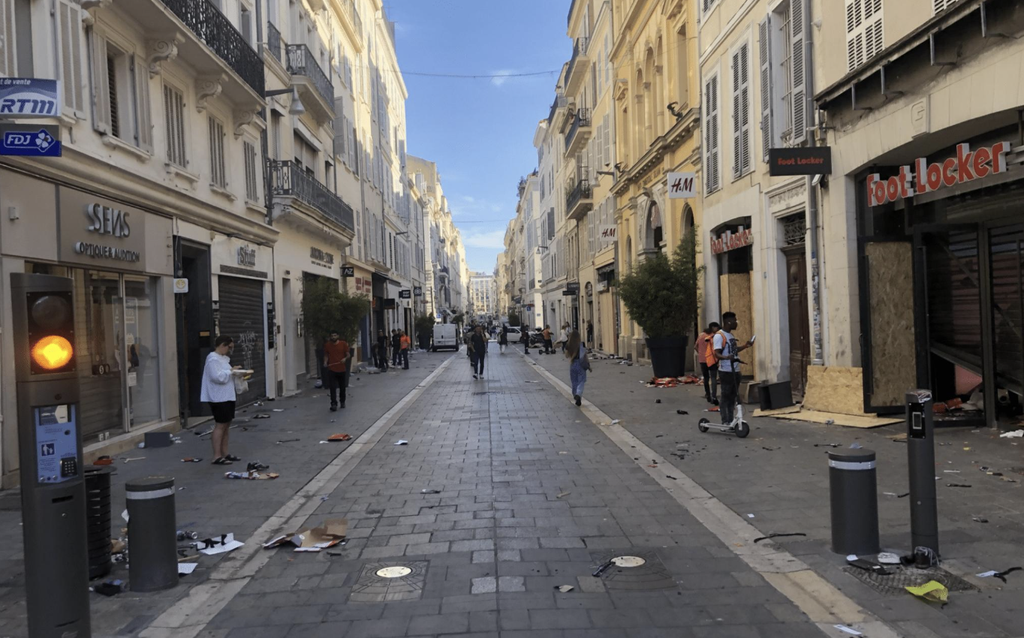
In Marseille, France’s second-largest city, rioters forced their way into City Hall, damaging the interior and toppling a statue of Marianne, the symbolic representation of the French Republic.
A police station was also attacked during the unrest.
Elsewhere, Rue Saint-Ferréol, one of Marseille’s principal commercial streets, was left littered with broken glass, merchandise packaging and debris following attacks on shops.
Municipal cleaning teams were deployed to clear the streets, while the city established assistance arrangements for affected businesses.
The destruction of municipal property and attacks on police facilities added public-sector repair costs to the losses already being suffered by private retailers.
Lyon: Tourist Office Set on Fire
In Lyon, rioters set fire to the tourist office at Place Bellecour, leaving the building damaged by flames and smoke.
Firefighters attended the scene, while neighbouring businesses suffered vandalism and looting.
The attack affected a prominent visitor-information facility in one of the city’s central public squares, demonstrating that the destruction was not limited to retail premises.
Cleanup operations began the following day, with local residents and volunteers joining municipal workers to remove debris and assist affected neighbourhoods.
More Than 2,000 Businesses Affected as Damage Runs Into Hundreds of Millions of Euros
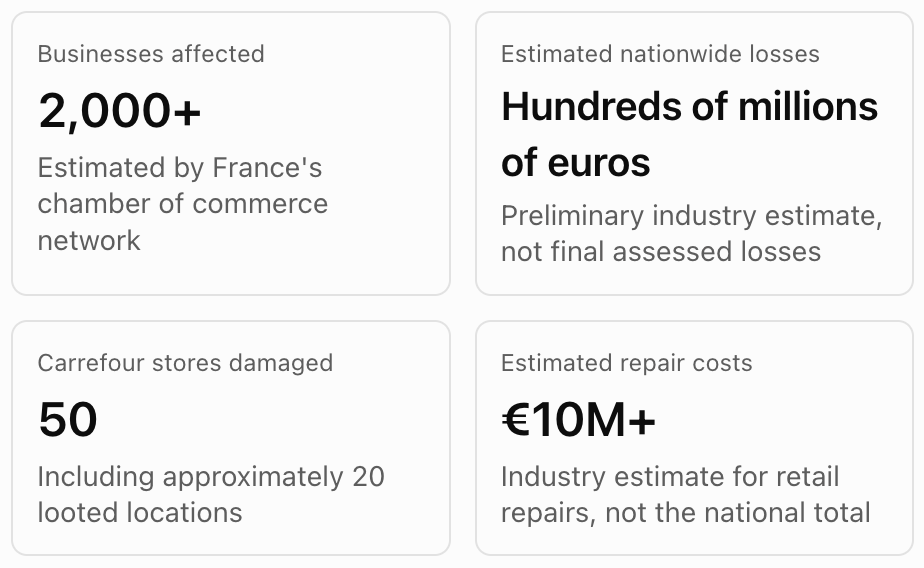
A clearer picture of the financial destruction emerged on Monday, October 19, when Alain Di Crescenzo, president of France’s national network of Chambers of Commerce and Industry, estimated that more than 2,000 commercial establishments had been affected.
Speaking to French broadcaster RTL, he placed the potential losses in the hundreds of millions of euros.
An initial count completed on Sunday evening had identified approximately 1,500 affected establishments, but several cities had yet to submit complete assessments.
The latest estimates suggest that the riots have inflicted economic damage extending well beyond the most visible burned-out buildings and looted luxury stores.
Carrefour chief executive Alexandre Bompard separately reported that 50 of the retailer’s locations had suffered damage, with approximately 20 being looted. The losses associated with the company’s affected stores were estimated in the tens of millions of euros.
Bompard warned that the destruction would have repercussions for employees, including workers potentially facing temporary unemployment while their premises were repaired.
The economic impact will also reach suppliers, delivery operators, security providers and other businesses dependent on the affected commercial districts.
Vehicles, Police Facilities and Street Infrastructure Damaged
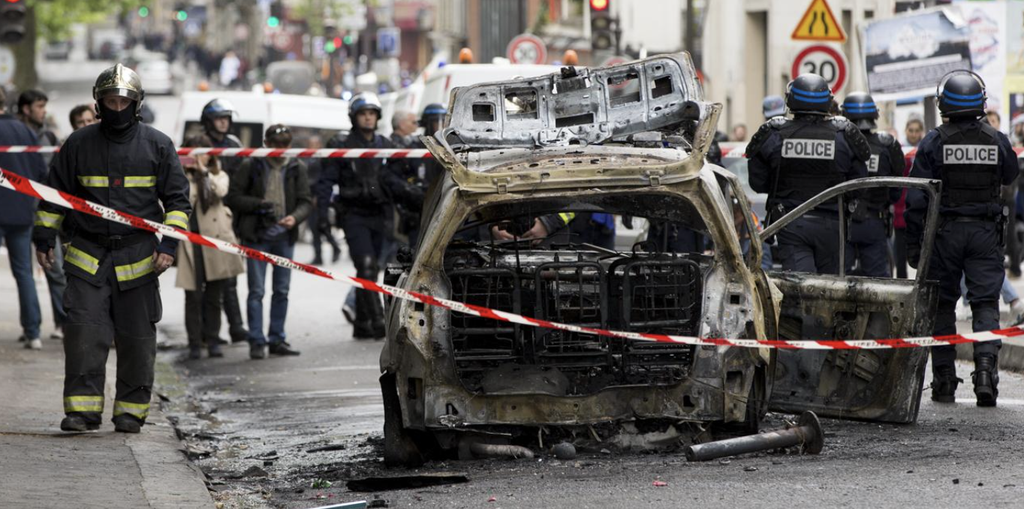
The damage was not confined to buildings.
Across Paris and other affected cities, burned-out vehicles, damaged barricades, shattered paving stones and destroyed street furniture were among the visible consequences of the unrest.
Reports documented damage to cars, trucks, construction vehicles, police vehicles, bicycles, rubbish bins and other public assets.
In Bordeaux, rioters entered the residence of the local prefect, while attacks on public buildings and police facilities were also reported elsewhere.
Repairing roads, replacing street furniture, restoring damaged public facilities and removing hazardous debris will add to the financial burden on municipal authorities.
The Human Cost and the Burden of Rebuilding
The violence also carried a significant human cost.
French authorities reported that one protester died after suffering a cardiac arrest during demonstrations in Paris. By Sunday, nearly 1,000 police officers had reportedly been injured nationwide, according to Interior Minister Laurent Nuñez.
Hundreds of thousands of people had participated in largely peaceful demonstrations, and the actions of those responsible for arson and looting should not be confused with the wider protest movement.
The government has promised assistance for affected businesses, while President Emmanuel Macron has condemned the attacks and stressed the distinction between legitimate public grievances and criminal destruction.
Economy Minister Roland Lescure has pledged support for businesses that suffered losses and said those responsible for the destruction should be held accountable.
But the reconstruction process raises several difficult questions: How quickly will insurance claims be settled? How much public funding will be required? And how many small businesses will survive prolonged closures?
Historic buildings such as Limoges City Hall may require years of specialist restoration, while retailers must replace merchandise, repair premises and rebuild customer confidence.
France Faces a Repair Bill Still Being Calculated
The nationwide losses are now estimated by business representatives to be in the hundreds of millions of euros, although that figure remains preliminary.
The final cost could change considerably once insurance assessments, municipal repair estimates, heritage restoration budgets and lost commercial revenue are brought together.
For ordinary French citizens, the consequences extend beyond the immediate destruction. Public funds directed towards reconstruction may compete with other spending priorities at a time when deteriorating services and financial hardship were among the grievances that originally prompted the demonstrations.
France therefore faces a dual challenge: restoring damaged cities and businesses while responding to the underlying social and economic concerns that drew hundreds of thousands of people onto the streets.
The fires may have been extinguished and the streets cleaned, but the full financial and social consequences of the October 17 riots are only beginning to emerge.
Sources:
- Reuters — Macron urges calm as France counts cost of unrest — October 18, 2026.
- EFE — More than 2,000 businesses affected, with losses estimated in the hundreds of millions — October 19, 2026.
- Le Monde — Detailed reporting on damaged buildings and looted commercial districts — October 18, 2026.
- Euronews — Video of the destruction and cleanup in Paris, Lyon and Marseille — October 18, 2026.
- Euronews — Businesses assess losses following nationwide looting — October 18, 2026.
- Associated Press — French government responds to riots and destruction — October 19, 2026.