By Dwayne Ferreira.
Egypt pledges support for Saudi Arabia against escalating Houthi attacks as fighting in Yemen raises fears for regional security and oil supplies.
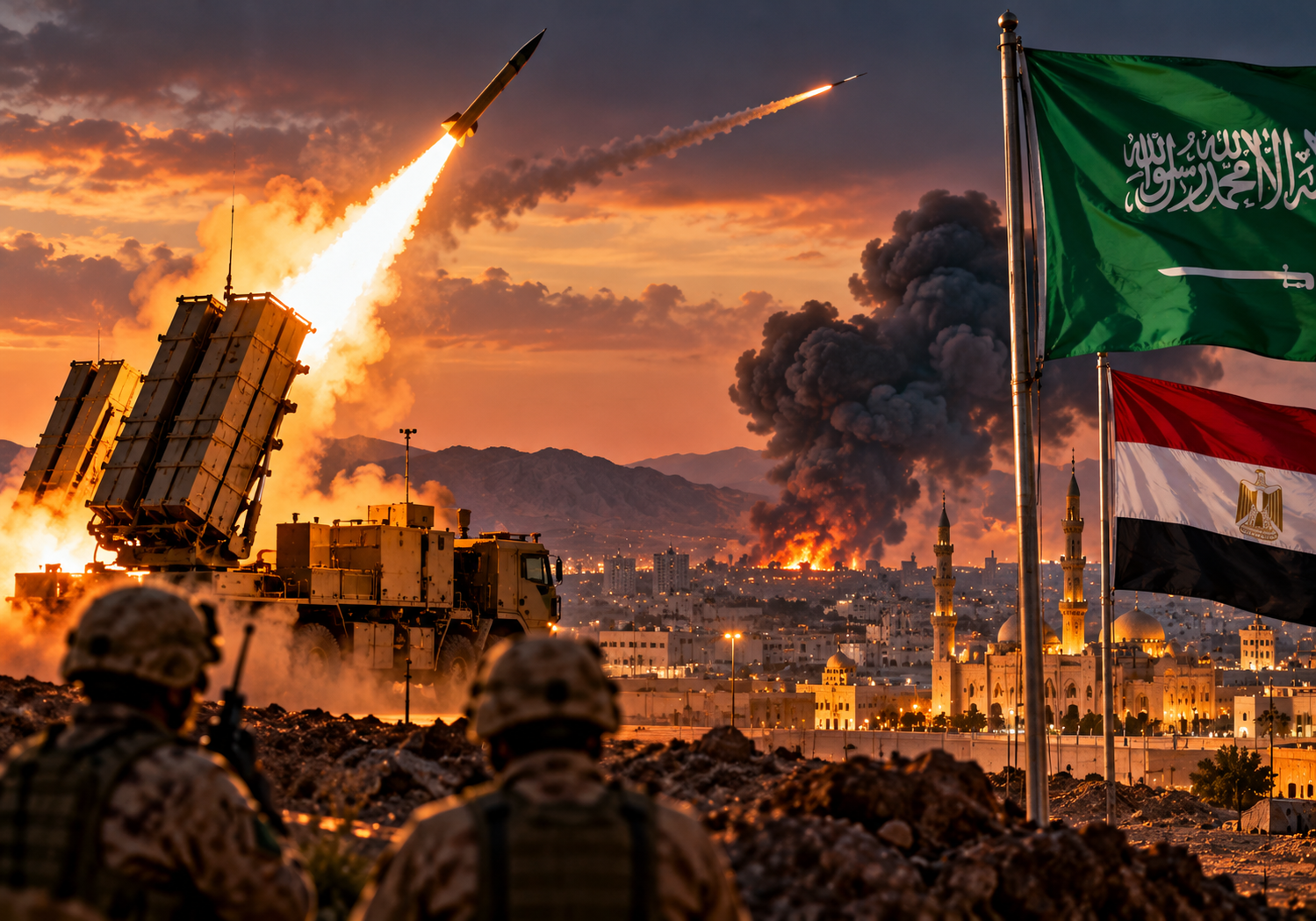
CAIRO – Fears of a wider Middle Eastern conflict are mounting after Egypt agreed to support Saudi Arabia against escalating attacks by Yemen’s Houthi rebels, raising the prospect of deeper regional involvement in a war already threatening civilian lives, international aviation and vital energy supplies.
The decision, announced following a meeting of Egypt’s senior security leadership chaired by President Abdel-Fattah el-Sissi, comes as Saudi Arabia faces renewed missile and drone attacks attributed to the Iran-backed Houthi movement.
The escalating confrontation has disrupted flights, threatened oil infrastructure and intensified concerns over shipping routes connecting the Red Sea with global markets.

For Egypt, the decision represents a significant development in its relationship with Saudi Arabia, a longstanding regional partner whose security has become increasingly entangled with the deteriorating situation in Yemen.
Egypt Signals Support as Saudi Arabia Faces Renewed Attacks
Egypt’s highest security authorities have agreed to assist Saudi Arabia in defending itself against Houthi attacks, according to the Associated Press.
The decision follows diplomatic discussions involving Saudi Crown Prince Mohammed bin Salman and Egyptian officials, amid growing demands for regional cooperation.
However, the precise nature of Egypt’s assistance remains important.
The announcement of support does not, by itself, establish that Egyptian combat forces have been deployed or that Cairo has entered the war directly.
Any such escalation would require separate confirmation.
Saudi Arabia has faced attacks involving drones and missiles, with airports and energy-related facilities among the reported targets.
Recent incidents have resulted in civilian casualties and disruptions to aviation operations.
The attacks have further destabilised an already volatile region where energy infrastructure, commercial shipping and military installations remain vulnerable to cross-border strikes.
For Riyadh, protecting these facilities is not merely a matter of national security.
It is also essential to maintaining international investor confidence and the country’s economic ambitions.
Yemen’s War Threatens to Draw in More Regional Powers
The Houthi movement, which controls significant areas of Yemen, has been engaged in a prolonged conflict against Saudi-backed forces.
The war has repeatedly drawn in neighbouring countries and international powers, creating a complex struggle involving competing political, military and regional interests.
Iran has long been accused by Saudi Arabia and Western governments of supporting the Houthis, although Tehran has disputed aspects of those accusations.
The latest escalation has coincided with intensified fighting inside Yemen.
Reports indicate that an airstrike in the northern province of Saada killed at least nine people, including children.
Meanwhile, concerns are growing over the humanitarian situation in Taiz, where renewed Houthi operations have threatened supply routes and access to essential goods.
Civilians remain trapped between armed groups as shortages of food, fuel and medical supplies worsen existing hardship.
The continuing violence illustrates why Yemen’s conflict cannot be viewed solely through the strategic interests of regional governments.
For millions of Yemenis, the consequences are immediate and devastating.
Aviation, Oil and Global Shipping Face Growing Risks
The conflict carries consequences extending well beyond Yemen and Saudi Arabia.
Saudi airports serve as important aviation gateways, while the kingdom remains one of the world’s most influential oil exporters.
Missile or drone attacks affecting aviation infrastructure can trigger flight delays, changes to operating procedures and additional security costs.
Energy installations are similarly sensitive.
Even when damage is limited, threats against major oil facilities can create uncertainty in international petroleum markets.
Another area of concern is the Red Sea, a critical maritime corridor connecting Europe, Asia and the Middle East through the Suez Canal.
Disruption to shipping routes can increase transport costs, insurance premiums and delivery times.
For countries dependent on imported petroleum and essential goods, including Sri Lanka, prolonged instability could add pressure to already sensitive prices.
Such effects are not automatic, however, and depend on the duration of the confrontation, the extent of actual supply disruption and market responses.
Diplomacy Faces a Narrowing Window
Egypt’s decision to support Saudi Arabia also places renewed attention on diplomatic efforts to prevent a wider confrontation.
Cairo has traditionally played an important role in regional diplomacy and maintains relationships with several governments involved in Middle Eastern security affairs.
The question now is whether Egypt’s support will strengthen deterrence or contribute to further escalation.
The United Arab Emirates has also remained engaged in discussions concerning regional security, although Gulf states have not always pursued identical objectives within Yemen.
Meanwhile, calls for mediation continue.
Egypt’s Al-Azhar has urged efforts to reduce tensions, while international diplomacy remains focused on preventing additional civilian casualties.
For the international community, the challenge is increasingly urgent.
A conflict that has already devastated Yemen now threatens to place additional strain on regional stability, commercial aviation and global energy supplies.
Unless diplomatic efforts gain traction, the confrontation risks expanding into another costly and prolonged Middle Eastern crisis.
SOURCES: Associated Press coverage of Egypt’s security decision, Saudi–Houthi hostilities and the humanitarian crisis in Yemen.