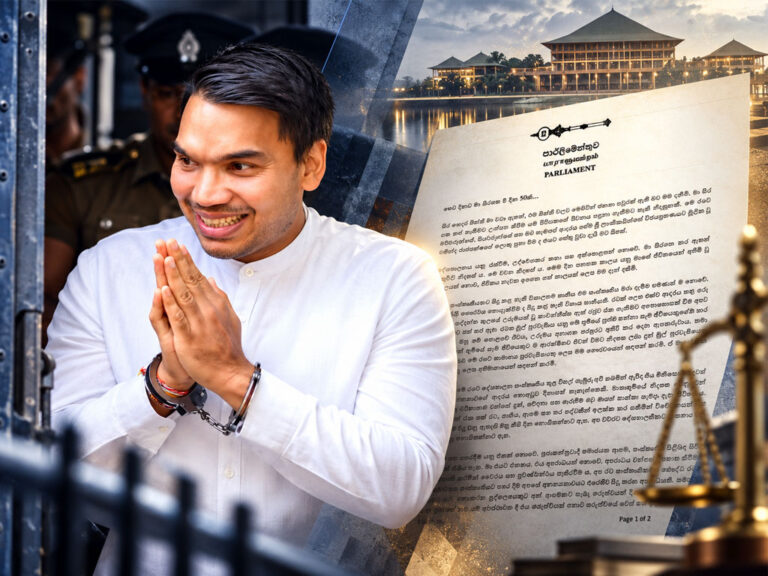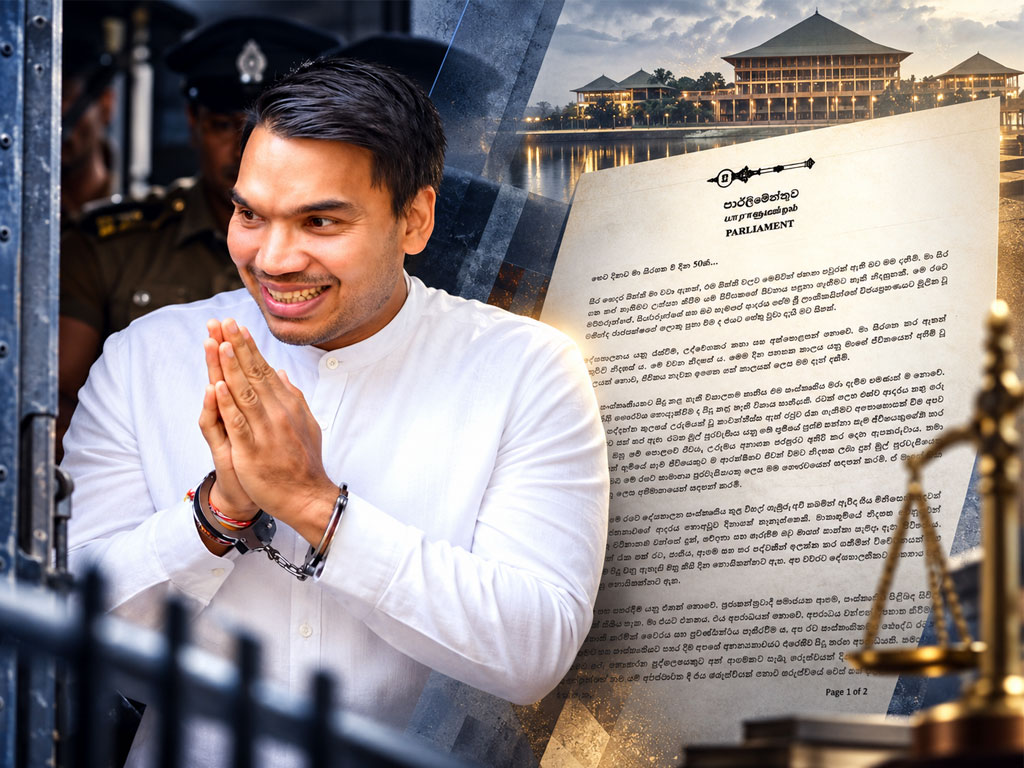
COLOMBO — Beyond its reflections on imprisonment, Namal Rajapaksa’s statement combines allegations of political persecution, economic criticism, cultural identity and the Rajapaksa family’s political legacy.
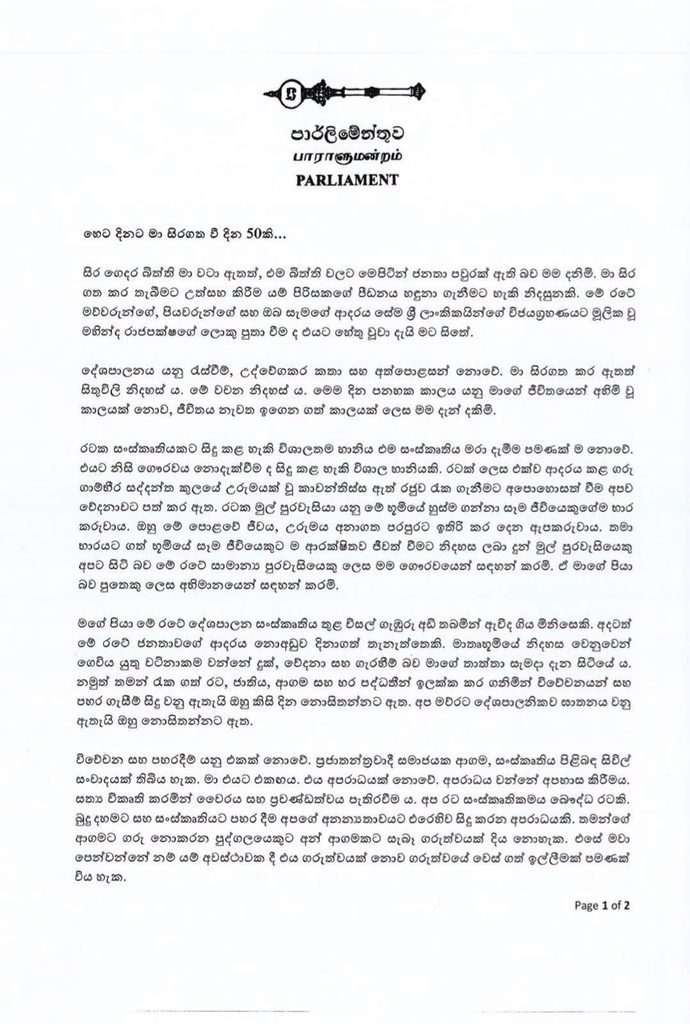
Sri Lanka Podujana Peramuna (SLPP) Parliamentarian Namal Rajapaksa has marked 50 days in remand custody with a statement that reaches well beyond his personal circumstances, using his imprisonment to challenge the Government’s economic record, defend his family’s political legacy and reaffirm his position within the opposition.
Issued on October 23, ahead of his 50th day in custody on October 24, the statement presents imprisonment as an opportunity for reflection rather than a period of political inactivity.
Rajapaksa questions whether his detention is linked to his identity as the eldest son of former President Mahinda Rajapaksa and the support he continues to receive.
He also challenges the Government over electricity tariffs, fuel prices, wages, taxation and the cost of living, while warning that Sri Lanka’s Buddhist identity and cultural heritage must be protected.
His declaration that the aspirations of his political supporters cannot be imprisoned gives the letter its clearest political message.
The statement can be read both as a personal defence by a politician facing legal proceedings and as an attempt to maintain his political relevance while in custody.
Five themes explain how the two purposes intersect.

What Namal Rajapaksa Says in His 50-Day Statement
Rajapaksa presents his imprisonment through several connected arguments, combining personal reflection with wider criticism of the Government.
– Imprisonment and political pressure: He portrays his 50 days in custody as a period of learning and reflection while questioning whether political pressure and his relationship to Mahinda Rajapaksa have influenced his treatment.
– Cultural heritage and his father’s legacy: He warns about threats to Sri Lanka’s cultural identity, referring to Buddhism, national heritage and the death of the tusker Kavantissa. He also recalls his father’s contribution to ending the country’s war and maintaining national security.
– Religion and social conduct: Rajapaksa supports democratic discussion but argues that religious and cultural differences should not become grounds for insults, hatred or deliberate disrespect. His statement calls for mutual respect among religious communities.
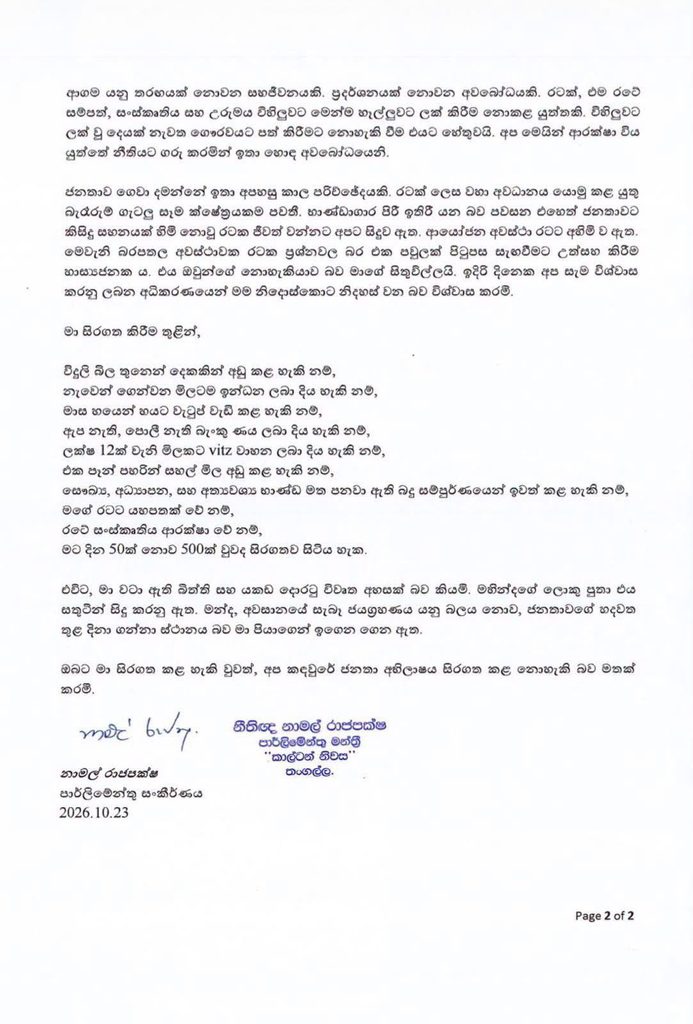
– Economic hardship and Government accountability: He criticises the lack of relief for ordinary citizens despite official claims of improving public finances. Rajapaksa also argues that the Government is attempting to divert attention from national problems by blaming one political family.
– Election promises and personal sacrifice: He refers to lower electricity bills, cheaper fuel, salary increases, interest-free loans, Toyota Vitz cars priced at approximately Rs. 1.2 million, lower rice prices and tax relief. He says he would accept imprisonment for 500 days rather than 50 if doing so brought these benefits to the public.
These arguments form the basis of a political message directed not only at his established supporters but also at citizens dissatisfied with their economic circumstances.
They do not, however, establish that the legal proceedings against him are politically motivated or that all the policies he lists were unconditional Government commitments.
Political Persecution as a Narrative of Personal Injustice
The first identifiable theme is Rajapaksa’s attempt to present his incarceration through the language of political victimisation.
Rather than concentrating exclusively on the allegations being investigated, he asks whether his family identity and political position have contributed to his imprisonment.
That question allows him to connect his personal circumstances with a broader claim familiar in Sri Lankan politics: that rival governments use legal and investigative institutions against their opponents.
For supporters already suspicious of the current administration, the suggestion could reinforce the belief that Rajapaksa is being subjected to selective treatment.
The political value lies in shifting public attention from the allegations under investigation towards the question of whether the process itself is fair.
Yet a claim of political persecution requires evidence independent of the person making it.
Rajapaksa has remained in remand custody since September 4 amid investigations involving alleged bribery and financial misconduct. He was further remanded until November 6 following the refusal of bail in the Krrish case on October 23.
Those proceedings do not establish guilt. Equally, the existence of criminal investigations does not, by itself, demonstrate political retaliation.
The distinction is essential when assessing the argument advanced in his statement.
Sinhala-Buddhist Identity Returns to the Political Message
A second prominent theme is the defence of Buddhist cultural identity and national heritage.
Rajapaksa’s references to Sri Lanka’s religious traditions, cultural inheritance and the death of the tusker Kavantissa provide an emotional dimension to an otherwise political statement.
The inclusion of Kavantissa allows him to frame heritage protection as a matter of national responsibility rather than merely a religious concern.
His remarks also connect with the cultural conservatism that has featured prominently in Rajapaksa family politics.
Historically, appeals to Sinhala-Buddhist identity have helped consolidate sections of the family’s electoral support.
The statement’s emphasis on cultural protection may therefore resonate with voters who believe that national traditions receive insufficient respect.
At the same time, Rajapaksa’s call for coexistence and respect among religions should be acknowledged as part of his stated position.
His argument does not consist exclusively of appeals to Buddhist identity. It also presents religious tolerance as a necessary feature of democratic society.
The political question is whether this language represents a broader, inclusive approach to cultural issues or primarily seeks to reconnect with a traditional voter base.
The statement alone cannot determine which objective carries greater weight.
Mahinda Rajapaksa’s Legacy as Political Legitimacy
Rajapaksa also draws upon his father’s political career to defend the family’s place in contemporary Sri Lankan politics.
Mahinda Rajapaksa remains a defining figure for supporters who associate his presidency with the military defeat of the Liberation Tigers of Tamil Eelam in 2009.
For those voters, the former President’s record on national security continues to carry political significance.
By presenting himself as Mahinda Rajapaksa’s eldest son and invoking his father’s leadership, Namal reinforces a connection with that legacy.
The approach offers both an advantage and a limitation.
It provides an established political identity and a constituency that may continue to regard the family favourably despite electoral defeats.
But it also invites scrutiny of the Rajapaksa administrations’ economic management and their role in the circumstances that preceded Sri Lanka’s 2022 financial collapse.
The present statement largely emphasises the family’s historical achievements and the perceived unfairness of directing national criticism towards one family.
It gives less attention to the question of what lessons Rajapaksa draws from the failures of previous administrations.
That omission matters for a politician seeking to establish an independent leadership identity.
Economic Promises Become a Test of Government Credibility
Perhaps the most accessible part of the statement concerns the everyday financial difficulties facing Sri Lankans.
Rajapaksa lists a series of promised or proposed benefits, including a two-thirds reduction in electricity bills, cheaper fuel, salary increases every six months, interest-free loans without collateral, affordable vehicles, lower rice prices and the removal of taxes on healthcare, education and essential goods.
He uses these examples to challenge the Government’s economic credibility.
The argument is straightforward: if the administration has delivered the improvements it promised, ordinary citizens should be experiencing meaningful relief.
By referring to familiar household expenses, Rajapaksa moves the debate away from the technical details of his legal proceedings and towards matters that affect a much wider electorate.
The statement also suggests that repeated criticism of the Rajapaksa family has become a convenient explanation for the country’s economic difficulties.
That framing has political potential because dissatisfaction over the cost of living can extend beyond traditional party loyalties.
Nevertheless, assessing whether the Government has failed to honour particular promises requires examining the original commitments, their conditions, implementation dates and measurable results.
Rajapaksa’s list is a political argument, not a completed audit of Government performance.
The 500-Day Pledge and a Future Leadership Message
The final theme is the portrayal of continued imprisonment as a sacrifice Rajapaksa would accept for the country’s benefit.
His willingness to remain in custody for 500 days if it would secure economic relief presents personal hardship as secondary to the public interest.
Such language can serve an important symbolic purpose.
It allows a politician facing criminal allegations to emphasise resilience, sacrifice and commitment to supporters rather than the restrictions imposed by remand custody.
Rajapaksa’s closing declaration that the aspirations of those supporting his political camp cannot be imprisoned reinforces that message.
The implication is that his political movement remains active and that his imprisonment does not prevent him from participating in its future direction.
It also helps maintain his visibility as a possible future leader within the SLPP.
Whether supporters interpret the statement as evidence of personal resolve, a familiar political tactic or an attempt to redirect public attention will depend on their existing attitudes towards the Rajapaksa family.
There is no basis for assuming that all readers will respond to the appeal in the same way.
Can the Rajapaksa Camp Offer More Than Its Political Past?
Taken together, the five themes give Rajapaksa’s 50-day statement a purpose extending beyond personal reflection.
The letter seeks to connect his imprisonment with questions of fairness, economic hardship, national identity and the political legacy of his father.
It places familiar features of Rajapaksa politics within the current environment, where the NPP Government faces pressure to deliver tangible improvements in living standards.
The strategy may help sustain support among voters already sympathetic to the SLPP.
Its wider effectiveness is less certain.
The statement does not offer a detailed alternative economic programme or explain how a future Rajapaksa-led administration would avoid the weaknesses associated with previous periods in power.
Instead, it relies principally on cultural identity, family legacy, Government criticism and the symbolism of personal sacrifice.
Those themes may be effective in political communication, but they do not replace the need for a credible programme addressing economic recovery, institutional accountability and public confidence.
Rajapaksa’s legal position remains a separate question to be determined through judicial proceedings, where allegations must be proved according to law.
His political future will depend on another test: whether he can move beyond defending the Rajapaksa legacy and persuade voters that he offers a substantially different approach to governing Sri Lanka.
The 50-day letter demonstrates his determination to remain politically engaged. Whether it signals the beginning of a new leadership programme or a return to familiar political methods remains unresolved.