BIYAGAMA, Sri Lanka, October 30, 2026 — The Maitri Sethu project aims to strengthen historic Buddhist ties through international education, cultural exchange and cooperation between the two nations.
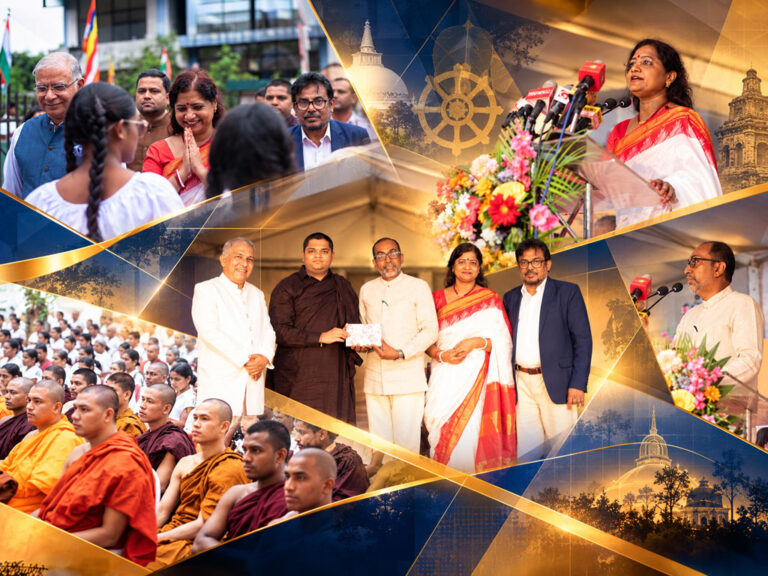
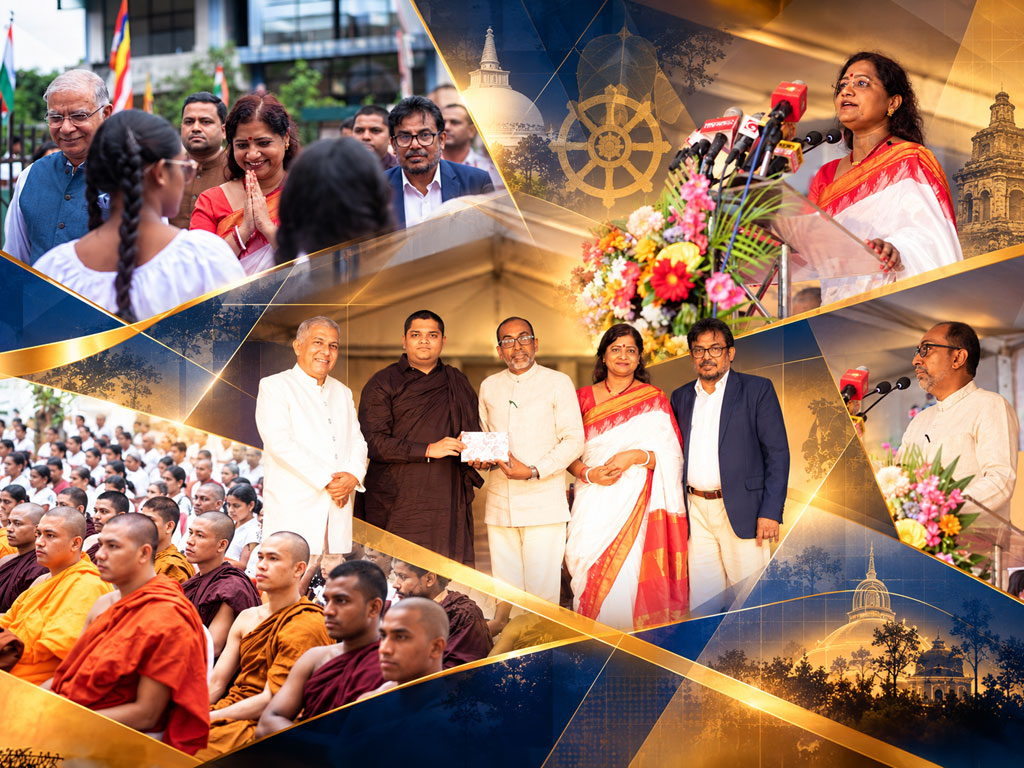
The foundation stone for the Maitri Sethu International Education and Cultural Complex was laid at the historic Sri Bodhidrumarama Temple in Biyagama on Friday, marking a new initiative to strengthen Buddhist educational, cultural and spiritual cooperation between Sri Lanka and India.
Religious leaders, diplomats, government representatives and academics from both countries attended the ceremony, which brought together more than 500 local scholars and other participants.
Conceived as an international centre for learning and cultural exchange, the project seeks to translate the two nations’ longstanding Buddhist connections into practical cooperation, particularly in education, religious scholarship and the preservation of shared heritage.
Proceedings commenced with the blessings of the Tri-Nikaya Maha Sangha, led by the Most Venerable Malwane Panñasara Thero, Maha Nayaka of the Kalyani Sri Dharma Maha Sangha Sabha of the Siam Maha Nikaya.
The ceremony also commemorated B. R. Ambedkar’s Dhamma Chakra Pravartana Day, observed on October 14. Fourteen traditional oil lamps were lit before the Maha Nayaka Thero administered the Five Precepts to the gathering.
Among those present were Indian High Commissioner to Sri Lanka Santosh Jha, Minister of Buddha Sasana and Religious Affairs Hiniduma Sunil Senevi, Gampaha District parliamentarian Ashoka Sapumal Ranwala and the Venerable Sangharatana Thero, Chairman of the Sangha Buddhist Foundation of India.
Indian parliamentarian Dr Jyoti Waghmare, Deputy Secretary General of the International Buddhist Confederation and project founder Damenda Porage also attended.

Honouring Dharmapala and Ambedkar
A central feature of the ceremony was the laying of foundation stones for statues honouring Anagarika Dharmapala and Dr B. R. Ambedkar, two figures whose contributions helped shape Buddhist revival, education and social reform.
Dharmapala played a prominent role in the modern Buddhist revival and in efforts to restore Buddhist heritage sites in India, while Ambedkar’s legacy encompasses constitutional reform, social justice, education and the revival of Buddhism among historically marginalised communities.
By commemorating both figures, the project seeks to introduce their ideas and achievements to younger generations while highlighting their contributions to the Buddhist histories of India and Sri Lanka.
Explaining the initiative, Damenda Porage, Chairman of the Pali and Sanskrit Cultural Exchange Centre, emphasised that the historical relationship between the two countries should extend beyond remembrance and ceremonial exchanges.
He outlined the importance of developing meaningful educational partnerships, encouraging international knowledge exchange and creating opportunities for cooperation rooted in the countries’ shared religious and intellectual traditions.
India Reaffirms Support for Buddhist Heritage
Addressing the gathering, High Commissioner Santosh Jha highlighted the importance of Buddhist heritage in strengthening relations between the two neighbouring countries.
He referred to India’s US$15 million grant programme supporting Buddhist ties with Sri Lanka, including the preservation and development of religious and cultural institutions.
The grant, originally announced in 2020, covers a broader range of activities, including Buddhist heritage conservation, monastic development, educational cooperation and cultural exchanges.
Jha also referred to India’s commitment to supporting the development of the Anuradhapura Sacred City Complex.
He expressed confidence that initiatives such as Maitri Sethu could strengthen mutual understanding and deepen cooperation between Buddhist communities in both countries.
Minister Hiniduma Sunil Senevi welcomed the project as a timely initiative that could bring Buddhist philosophical values into contemporary society through practical educational and cultural activities.
He assured those responsible for the development that the government would extend its fullest support to initiatives promoting these objectives.
Strengthening Regional and International Cooperation
Indian parliamentarian Dr Jyoti Waghmare described the relationship between the peoples of India and Sri Lanka as one founded on a shared sense of family and cultural belonging.
She highlighted the contributions of Maharashtra political leaders Eknath Shinde and Srikanth Shinde to Buddhist education and discussed the continuing relevance of Ambedkar’s philosophy to social advancement.
Gampaha District parliamentarian Ashoka Sapumal Ranwala welcomed the project for its potential contribution to Biyagama’s development and its ability to connect the locality with wider international educational and cultural networks.
He expressed appreciation to the religious organisations, institutions and individuals involved in bringing the initiative forward.
The Venerable Sangharatana Thero thanked the governments of India and Sri Lanka and the organisations supporting the development.
He also acknowledged the Venerable Balangoda Seelaratana Thero, who conducted the groundbreaking ceremony, alongside members of the Buddhist Brotherhood Foundation and the temple’s Dayaka Sabha.
His remarks emphasised the importance of building a prosperous future through spiritual friendship, mutual understanding and cooperation.
As the project moves beyond its foundation ceremony, its longer-term significance will depend on the educational programmes, cultural partnerships and institutional exchanges established through the proposed complex.
For Biyagama, Maitri Sethu offers an opportunity to become a centre for international Buddhist scholarship while contributing to the broader cultural relationship between Sri Lanka and India.