COLOMBO — Nearly three years after three-year-old Hamdi Fazlim underwent kidney surgery at Lady Ridgeway Hospital, the child’s death continues to expose troubling inconsistencies in medical evidence and unanswered questions about the Ministry of Health’s response to the case.
The continuing controversy centres on an extraordinary allegation: that surgery intended to remove Hamdi’s diseased left kidney also resulted in the loss of his healthy right kidney, leaving him dependent on prolonged medical treatment before his death in July 2023.
Yet the medical explanations surrounding the operation have remained disputed, while questions about the whereabouts and examination of the removed organs have complicated efforts to establish precisely what happened.
According to a Daily Mirror report published on November 11, 2026, medical rights activist Dr. Chamal Sanjeewa has accused the Ministry of Health of failing to provide adequate assistance in securing accountability.
His allegations place renewed scrutiny on the Ministry’s handling of a case that has remained before the courts for several years.

Conflicting Medical Evidence at the Centre of the Case
Hamdi underwent surgery at Lady Ridgeway Hospital in December 2022 after medical examinations identified serious problems affecting his left kidney.
According to his parents and evidence discussed in earlier court proceedings, preoperative investigations had indicated that the child’s right kidney was functioning normally.
The surgical procedure was intended to remove the poorly functioning left kidney.
However, Hamdi subsequently developed serious complications, and questions emerged about the condition and apparent absence of his remaining kidney.
Former Lady Ridgeway Hospital Director Dr. G. Wijesuriya previously explained that the child’s kidneys had been joined together, suggesting that the healthy kidney may also have been removed during surgery because of an anatomical abnormality.
That explanation has been disputed by the child’s parents.
Their position is that examinations conducted before surgery indicated that both kidneys were situated separately in their expected anatomical positions.
The contradiction is fundamental.
If medical imaging had established that the child’s kidneys were separate and that the right kidney was functioning normally, the explanation involving joined kidneys requires careful examination against the original clinical records and surgical findings.
Equally important is the question of what happened to the tissue and organs removed during the operation.
Earlier proceedings included conflicting accounts concerning the number and condition of Hamdi’s kidneys. His family’s representatives also questioned why the healthy right kidney had not been made available for examination.
The handling, preservation and production of any removed organs or tissue are matters of considerable evidentiary importance.
Without a complete and reliable account of that evidence, significant questions surrounding the operation may remain unresolved.
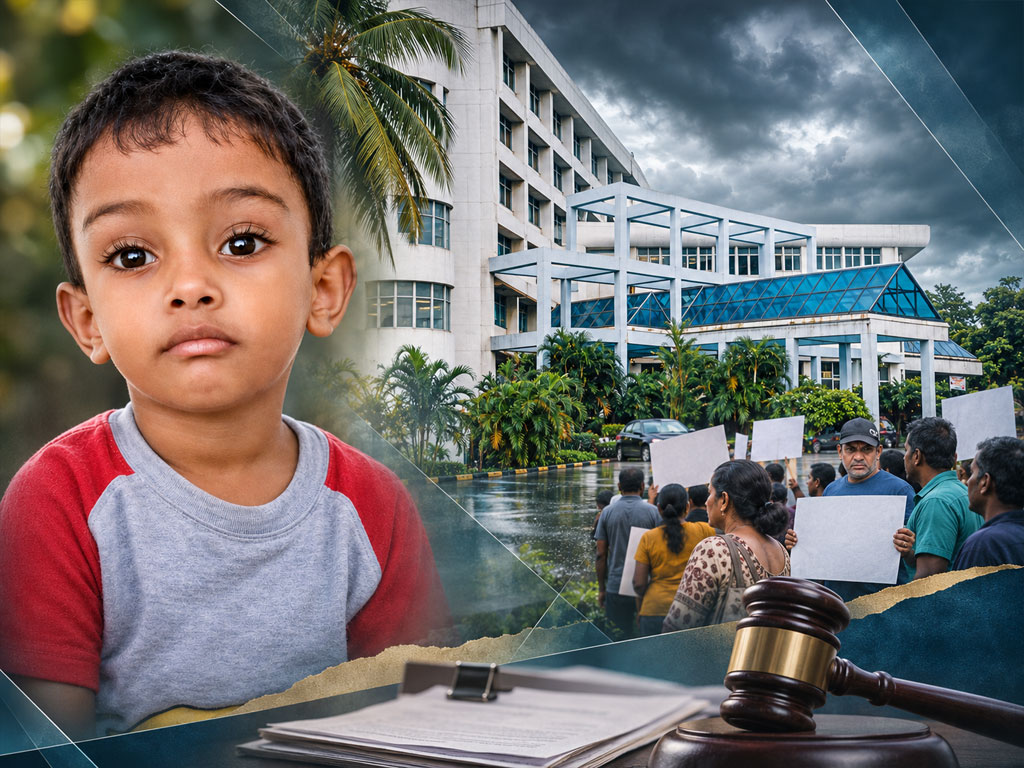
Hamdi Faslim’s Tragedy: How a Missed Scan Report Led to a Fatal LRH Surgery
Attorney General’s instructions prompt fresh court action as investigators examine conflicting medical evidence and allegations surrounding the removal of a child’s kidney.
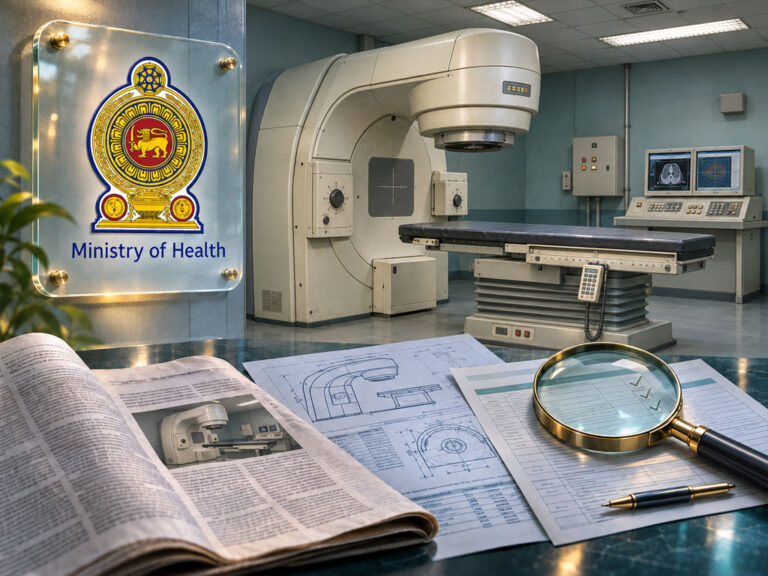
Questions Over the Health Ministry’s Response
Dr. Chamal Sanjeewa, President of the Medical Professionals’ Alliance for Medical and Civil Rights, has questioned the Ministry of Health’s handling of the investigation.
According to the November 11 Daily Mirror report, Sanjeewa alleged that the Ministry had failed to provide sufficient cooperation to ensure that the relevant legal processes were properly pursued.
He called on the Secretary to the Ministry of Health to conduct an internal investigation and provide the relevant findings to court.
Such concerns warrant a clear official response.
The Ministry should be able to explain what internal examinations were conducted, when their findings were completed, and whether the resulting documents were provided to investigators or the judiciary.
The absence of publicly available answers does not, by itself, establish an organised cover-up. Nevertheless, prolonged uncertainty over a child’s death and conflicting medical evidence makes transparency especially important.
The Ministry’s responsibility extends beyond responding to individual allegations.
It must ensure that relevant records are preserved, that lawful requests for information are addressed, and that officials cooperate with investigations conducted by the appropriate authorities.
Judicial Medical Evidence Also Questioned
Questions have also arisen over the initial post-mortem examination and the conclusions recorded by the Judicial Medical Officer.
Earlier court proceedings examined apparent inconsistencies between medical records, the reported preoperative condition of the child’s kidneys and findings contained in the post-mortem report.
The court subsequently directed investigators to consider the available medical evidence comprehensively rather than rely exclusively on disputed findings.
Reports have also referred to steps taken concerning the Judicial Medical Officer involved in the initial examination.
However, the existence of disciplinary or administrative action cannot automatically be interpreted as proof that officials attempted to suppress evidence.
Any allegation of deliberate interference would require independent investigation and supporting evidence.
What remains essential is that every relevant medical finding be subjected to appropriate scrutiny.
Doctor Overseas as Court Proceedings Continue
The doctor who performed Hamdi’s operation, consultant surgeon Dr. Naveen Wijekoon, has reportedly been residing in Australia.
His overseas residence has added a practical dimension to the continuing investigation, particularly regarding the collection and authentication of testimony.
Investigators previously informed court that arrangements were being pursued to authenticate statements obtained from the doctor through remote communication.
On November 5, 2026, the Colombo Magistrate’s Court issued notices to Dr. Wijekoon and Dr. Nuwan Herath, who was associated with the relevant preoperative examinations, requiring them to appear before court on March 29.
The order followed submissions concerning instructions from the Attorney General and the need to obtain further evidence.
These proceedings demonstrate that the investigation remains active.
Neither the issuance of court notices nor the existence of disputed medical findings constitutes a determination of criminal guilt.
Any findings of negligence, professional misconduct or criminal responsibility must be established through the appropriate investigative and judicial processes.
Public Protest Reflects Demand for Answers
A protest outside the Ministry of Health on November 11 brought renewed public attention to Hamdi’s death and the prolonged effort to secure answers.
Demonstrators questioned the authorities’ handling of the case and demanded greater accountability.
The Daily Mirror reported that attempts to obtain comment from the Director of Lady Ridgeway Hospital were unsuccessful. A response from the Ministry of Health was also unavailable at the time of publication.
That leaves several important questions requiring official clarification.
What became of the medical evidence associated with the operation?
Have all relevant internal investigations been completed?
Have their findings been submitted to the appropriate authorities?
And what further action is necessary to resolve the contradictions identified during court proceedings?
These are questions that can be answered through medical records, documented investigative findings and evidence presented before the judiciary.
They should not remain matters of speculation.
Accountability Must Extend Beyond an Individual Doctor
Hamdi’s death carries implications extending beyond the conduct of any single medical practitioner.
Parents entrust public hospitals with their children’s lives on the understanding that treatment will be guided by professional judgement, recognised medical standards and effective institutional oversight.
When a child dies following a disputed procedure, the responsibility to investigate thoroughly does not rest solely with the treating medical team.
Hospital administrators, health regulators, investigators and the Ministry of Health all have responsibilities within their respective legal and professional jurisdictions.
A credible process must examine not only the operation itself but also the adequacy of preoperative assessments, postoperative care, medical documentation and the handling of evidence.
It must also protect the right of the professionals concerned to respond to allegations and receive a fair hearing.
The purpose of accountability is not to assume guilt. It is to ensure that the facts are established and that any wrongdoing identified through a lawful process receives an appropriate response.
A Family Still Waiting for Answers
For Hamdi’s parents, the investigation concerns far more than conflicting medical reports or administrative procedures.
Their son underwent an operation intended to treat a serious kidney condition. Instead, he developed complications requiring months of further treatment before his death.
Nearly three years after that loss, his family continues to seek a definitive explanation.
The Ministry of Health now faces an opportunity to address the concerns surrounding its response by providing a transparent account of the investigations undertaken and the evidence made available to court.
The next stage of judicial proceedings is scheduled for March 29.
Whatever conclusions ultimately emerge, Hamdi’s family deserves a process in which all relevant evidence is examined, conflicting medical accounts are properly tested and responsibility, if established, is determined without favour or interference.
The credibility of Sri Lanka’s public health system depends not on shielding institutions from difficult questions, but on demonstrating that even the most painful allegations can be investigated openly, independently and fairly.