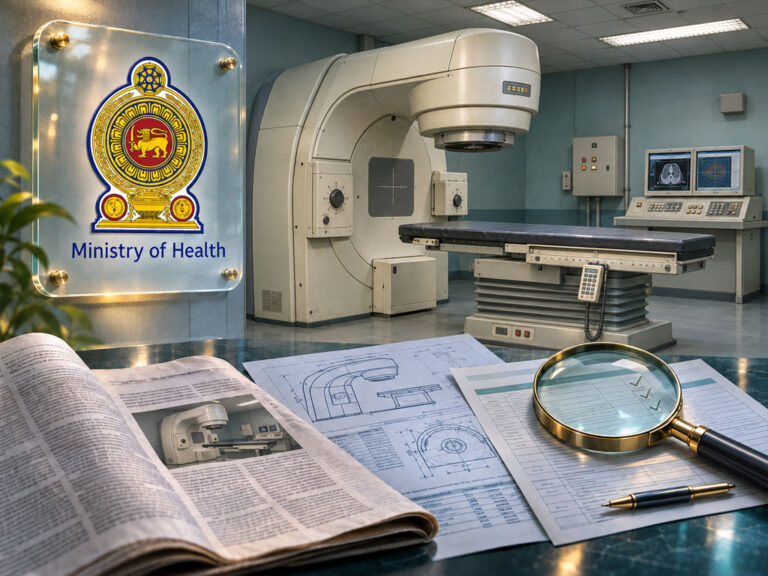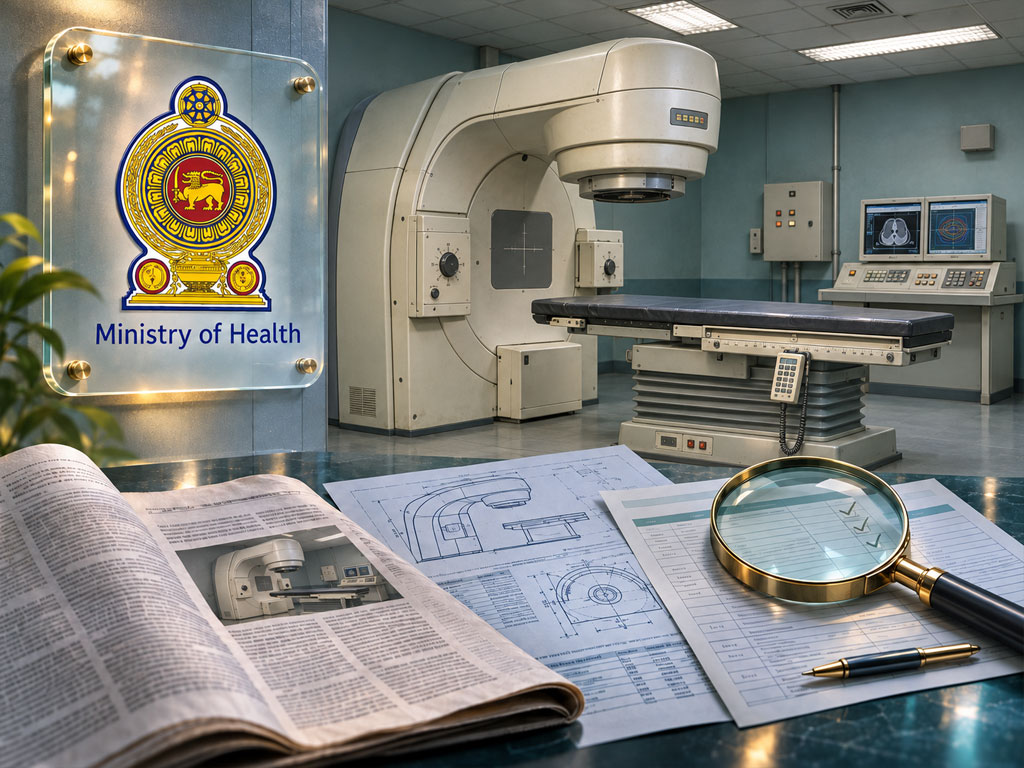
COLOMBO — Consultant physician Dr Chamal Sanjeewa has called for an investigation into the procurement of linear accelerator machines for two major Sri Lankan hospitals, alleging that the tender process could result in the purchase of outdated cancer treatment technology at substantial public expense.
Sanjeewa, President of the Medical and Civil Rights Professional Association of Doctors, has reportedly lodged a complaint with the Commission to Investigate Allegations of Bribery or Corruption (CIABOC), seeking scrutiny of the procurement process and those involved in evaluating the equipment.
The complaint concerns machines intended for Apeksha Hospital in Maharagama and the National Hospital in Galle under an Asian Development Bank (ADB)-financed programme.
Sanjeewa alleges that equipment offered in the procurement process uses technology comparable to models developed around 2010, despite the availability of more advanced radiotherapy systems.
The proposed equipment’s precise specifications, manufacturing dates and compliance with the tender requirements have not been independently established.

Concerns Over Proposed Cancer Treatment Technology
Linear accelerators, commonly known as LINAC machines, are used to deliver radiation treatment to cancer patients.
Their clinical capabilities depend on factors including beam delivery, imaging, treatment planning and the ability to target tumours while limiting unnecessary radiation exposure to surrounding healthy tissue.
According to Sanjeewa, the proposed purchase should prioritise modern systems capable of meeting current treatment requirements rather than technology he considers outdated.
He argues that procuring less capable equipment at a substantial price could place an unnecessary financial burden on the Treasury while limiting the benefits available to patients.
The complaint refers to equipment comparable to technology introduced approximately 16 years ago.
However, a machine’s age cannot be established solely from the year in which a particular technology was introduced. Any assessment would require examination of the exact model, its specifications, available upgrades and clinical performance.
The Ministry of Health’s published tender documentation for the National Hospital in Galle specifies a high-end linear accelerator with a surface-guided radiotherapy system, alongside other specialised treatment equipment.
Whether the equipment proposed by individual bidders satisfies those requirements is a matter for the procurement and technical evaluation process.
Allegations of Conflicts of Interest
Sanjeewa has also questioned the independence of officials involved in assessing bids.
His complaint raises concerns that the preferences of certain medical physicists and relationships with equipment suppliers may have influenced the evaluation process.
The allegations have not been established through an independent investigation.
Further concerns relate to promotional activities organised by a company associated with a potential supplier.
Sanjeewa has alleged that such activities included presentations and hospitality involving individuals connected to the tender evaluation process.
In earlier public remarks, he questioned a promotional event held at a Colombo hotel shortly before the scheduled opening of bids.
He called for an examination of whether officials involved in technical evaluations attended the event and whether any participation created a conflict of interest.
Attendance at a professional or promotional event does not, by itself, establish corruption.
Nevertheless, procurement officials must comply with applicable rules governing contact with suppliers, the declaration of interests and impartial evaluation.
Any investigation should establish the nature of the event, who attended, whether hospitality was provided and whether participants had responsibilities relating to the tender.
Investigation Requested Into Procurement Officials
The medical association has called for scrutiny of the institutions and officials connected to the procurement.
Its request includes an examination of:
- Members of the relevant procurement committees.
- Officials serving on technical evaluation committees.
- Representatives involved in administering the ADB-financed procurement.
- Senior Ministry of Health officials responsible for approving and supervising the process.
- The role of any suppliers or local agents whose activities may have created conflicts of interest.
Sanjeewa has urged investigators to establish whether procurement requirements were followed and whether technical decisions were influenced by considerations unrelated to patient care or value for money.
His complaint also calls for the responsibilities of senior officials, including the Secretary to the Ministry of Health, to be examined.
Such requests are allegations requiring investigation, not findings of wrongdoing against the individuals concerned.
Delays Raise Concerns for Cancer Patients
The controversy comes amid longstanding concerns about delays in expanding Sri Lanka’s radiotherapy capacity.
Sanjeewa maintains that disagreements involving officials and commercial interests have unnecessarily prolonged the acquisition of essential equipment.
He argues that delays can affect patients who depend on timely access to radiotherapy through the public health service.
The procurement of linear accelerators involves more than purchasing the machines themselves. Hospitals also require suitable treatment facilities, installation, commissioning, quality assurance and trained personnel.
Consequently, delays at any stage can affect the availability of treatment.
The Ministry of Health has previously considered the need to upgrade radiotherapy equipment and improve access to modern cancer treatment.
In July 2024, the Cabinet approved measures to upgrade equipment for several hospitals after concerns were raised about the limitations of specifications contained in an earlier procurement agreement.
The continuing debate highlights the importance of ensuring that new purchases meet current clinical requirements.
Call for Presidential Intervention
Sanjeewa has also urged President Anura Kumara Dissanayake to intervene to ensure that the procurement is examined and completed without unnecessary delay.
He maintains that public funds should be used to obtain equipment offering appropriate clinical benefits and long-term value.
An independent review could establish whether the proposed machines meet the published specifications, whether technical evaluations were conducted impartially and whether any procurement rules were breached.
It could also clarify the current status of the tenders and identify the steps needed to deliver the equipment to the hospitals.
No conclusion should be drawn that a supplier or public official acted improperly without reliable evidence and an opportunity to respond.
The immediate priority is to resolve the concerns transparently while protecting the interests of patients awaiting treatment.
For Sri Lanka’s cancer patients, the outcome will ultimately be measured not by the conclusion of a procurement dispute but by the timely availability of safe, effective and appropriate radiotherapy services.