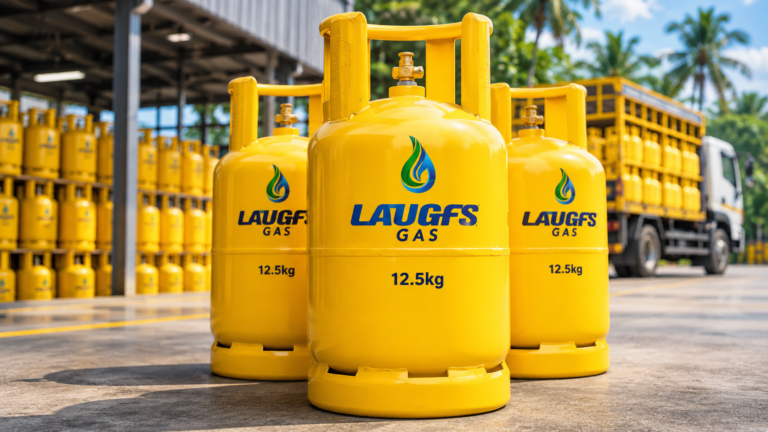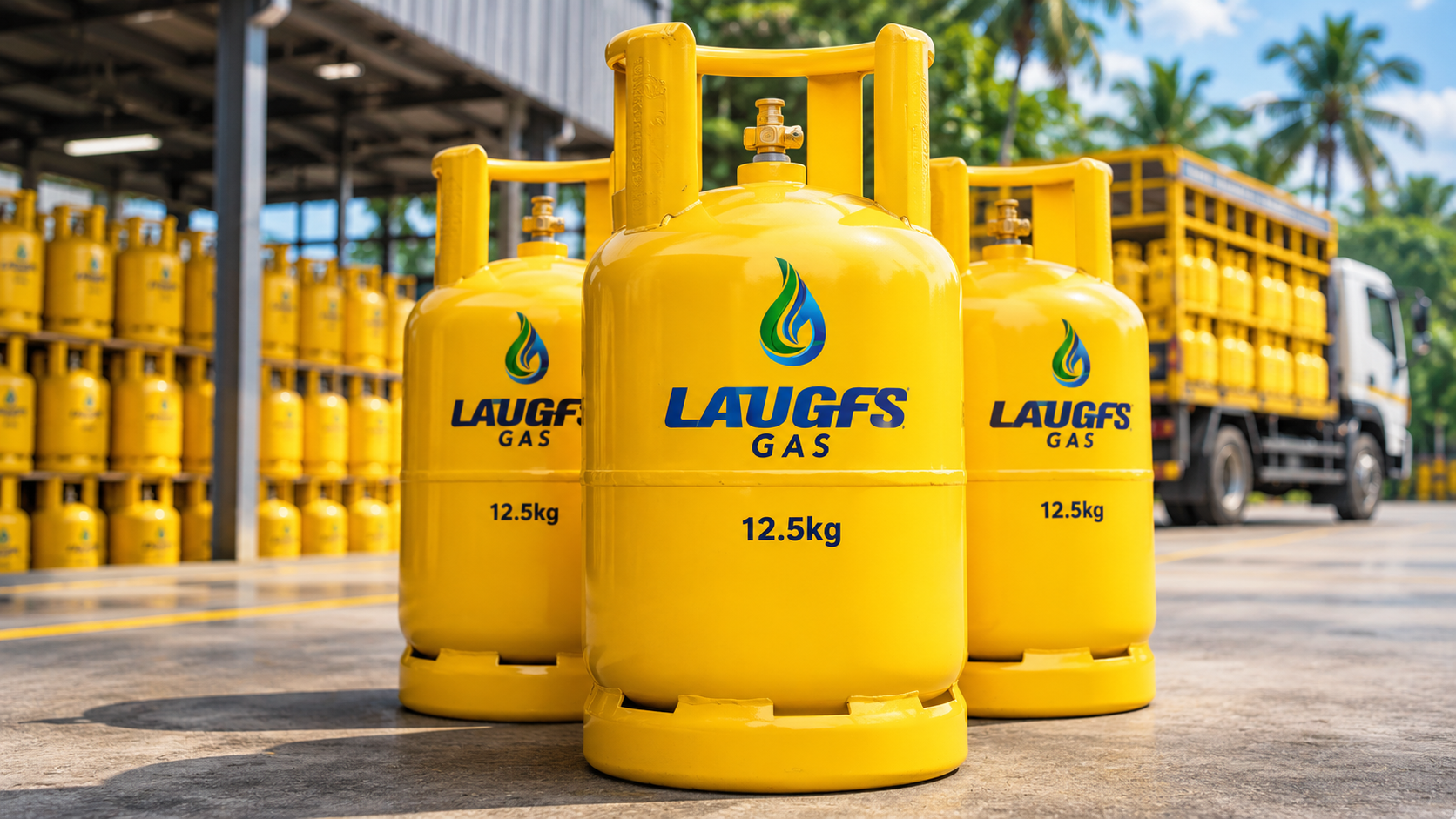
LAUGFS Gas cuts its 12.5kg cylinder price by Rs. 745, but Sri Lankan households still pay Rs. 1,030 more than before the November 13 hike.
COLOMBO, November 18, 2026 — LAUGFS Gas has reduced the price of a 12.5 kg domestic cooking gas cylinder by Rs. 745 following government intervention, but an examination of the company’s pricing decisions reveals that consumers are still paying Rs. 1,030 more than they were before a substantial price increase introduced just five days earlier.
The latest price reduction, announced on November 17, brought the cost of a 12.5 kg cylinder down from Rs. 6,740 to Rs. 5,995.
The price of the smaller 5 kg cylinder was also reduced by Rs. 322, from Rs. 2,720 to Rs. 2,398.

Although the adjustments provide some relief compared with the higher prices imposed earlier this month, they reverse only part of the original increase.
The figures raise questions about how domestic cooking gas prices are calculated, how quickly they can be revised and whether consumers have sufficient information to assess the justification for major price adjustments.
A Rs. 1,775 Increase Followed by a Rs. 745 Reduction
On November 13, LAUGFS increased the price of its 12.5 kg cylinder from Rs. 4,965 to Rs. 6,740.
That represented an increase of Rs. 1,775, or approximately 35.8%.
Four days later, the company announced a reduction of Rs. 745, bringing the price down to Rs. 5,995.
Despite the reduction, the cylinder remains approximately 20.7% more expensive than it was before November 13.
The smaller 5 kg cylinder followed a similar pattern.
Its price increased from Rs. 1,988 to Rs. 2,720 before subsequently being reduced to Rs. 2,398.
Consumers purchasing the smaller cylinder are therefore still paying Rs. 410 more than before the original increase.
The latest reductions reverse approximately 42% of the increase imposed on the 12.5 kg cylinder and approximately 44% of the increase imposed on the 5 kg cylinder.
The remaining increases represent a considerable additional expense for households that rely on LPG for cooking.
Government Intervention Leads to Price Revision
The original increase attracted scrutiny from the Consumer Affairs Authority, which summoned LAUGFS officials on November 16 to explain the company’s pricing decision.
Following the discussions, company representatives indicated that the possibility of reducing prices would be considered by the Board of Directors.
The subsequent price revision followed a request from Minister of Trade, Commerce, Food Security and Cooperative Development Wasantha Samarasinghe.
LAUGFS stated that its Board had considered the difficulties faced by consumers when deciding to reduce prices.
However, the announcement has created a further question.
If the original price increase was necessary to recover operating costs, what made it possible to reduce the price by Rs. 745 within days?
The subsequent reduction does not automatically establish that the original increase was unjustified, but a detailed explanation of the company’s pricing calculations would help clarify the position.
LAUGFS Cites Rising International Costs
The company attributed the earlier increase to higher international LPG prices, freight charges and other import-related expenses.
LAUGFS stated that it had absorbed rising costs for approximately three months before deciding that the losses could no longer be sustained.
The company also referred to pressure on international supply arrangements and higher procurement costs.
These explanations suggest that external market conditions contributed to the company’s pricing decision.
However, domestic retail prices also depend on factors such as the timing of purchases, shipping arrangements, taxation, distribution costs and exchange-rate movements.
A clear breakdown of those elements would allow consumers to understand why such a substantial increase was necessary and how the subsequent reduction was calculated.
Parliament Seeks Answers From LAUGFS
The issue has also attracted parliamentary attention.
According to News 1st, LAUGFS officials were summoned before the Sectoral Oversight Committee on Consumer Affairs on November 18 to answer questions about the recent increase.
The development indicates that scrutiny of the company’s pricing decisions has continued even after the announcement of the partial reversal.
Whether further information will emerge concerning the company’s cost calculations and pricing decisions remains to be seen.
Impact Extends Beyond Households
The price of cooking gas affects more than households purchasing cylinders for domestic use.
Restaurants, bakeries, small food outlets and other businesses depend on LPG to prepare food and maintain daily operations.
When cooking gas prices rise sharply, businesses may face higher operating costs.
Some may absorb the additional expense, while others may seek to recover it through higher food prices.
This creates a potential secondary impact for consumers who purchase prepared meals rather than cooking at home.
A partial reduction in LPG prices does not necessarily mean that other prices affected by the original increase will immediately fall.
Litro Increases Supply to Meet Demand
Meanwhile, state-owned Litro Gas has taken steps to strengthen domestic LPG supply.
According to Cabinet Spokesperson Dr. Nalinda Jayatissa, Litro has ordered approximately 45,000 metric tonnes of gas for December after ordering 44,000 metric tonnes for November.
The company has also increased the number of cylinders released to the market to help address demand.
The expanded supply arrangements are intended to reduce the risk of further shortages and improve the availability of LPG.
However, availability and affordability remain separate concerns for households.
Even when cooking gas is readily available, a substantial price increase can place pressure on family budgets.
The Reduction Does Not Erase the Increase
The LAUGFS price adjustment demonstrates why consumer announcements should be assessed against earlier prices rather than only the immediately preceding rate.
The Rs. 745 reduction is real.
So is the Rs. 1,030 increase that remains.
For a family purchasing one 12.5 kg cylinder every month, the difference between the price before November 13 and the new price amounts to Rs. 12,360 over twelve purchases, assuming the new price remains unchanged.
That is a meaningful additional expense for households managing already constrained budgets.
The central question is whether domestic LPG prices accurately reflect the costs involved and whether consumers receive sufficient information when major revisions are introduced.
LAUGFS raised its 12.5 kg cylinder price by Rs. 1,775, reduced it by Rs. 745, and left consumers paying Rs. 1,030 more than before.
The widely publicised reduction may have eased the immediate impact of the original increase, but it has not restored the price households were paying five days earlier.
Sources
- The Morning — LAUGFS cuts domestic gas prices, November 18, 2026
- News 1st — Committee seeks answers from LAUGFS over gas prices, November 18, 2026
- Newswire — LAUGFS Gas gets cheaper after Trade Ministry intervention, November 17, 2026
- Daily Mirror — LAUGFS slashes 12.5 kg gas price to Rs. 5,995, November 17, 2026