COLOMBO, Sri Lanka — November 23, 2026 — Renewed questions surrounding the Sunil Watagala passport controversy have brought attention back to the reported acquisition of 17 passports by an individual who allegedly misrepresented his connections to the Deputy Minister of Public Security. Separate allegations concerning fraudulent passports linked to organised crime have intensified calls for transparency, although no verified evidence establishes a connection between the two matters.
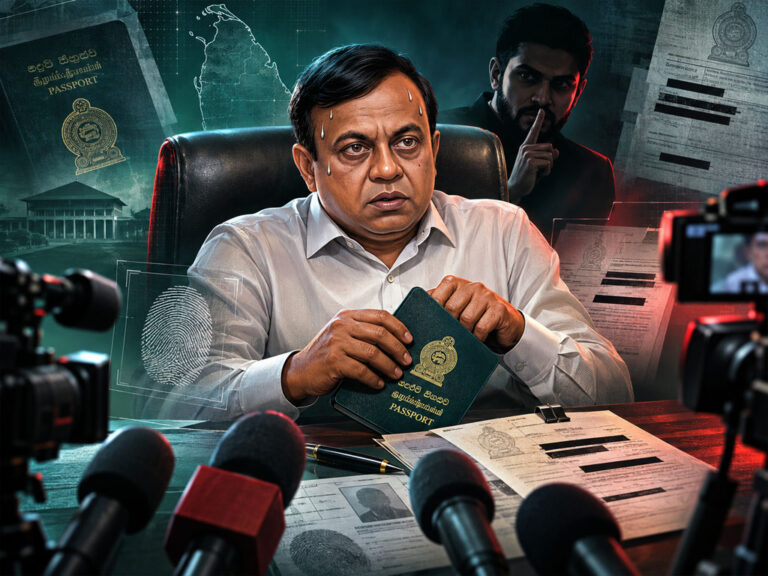
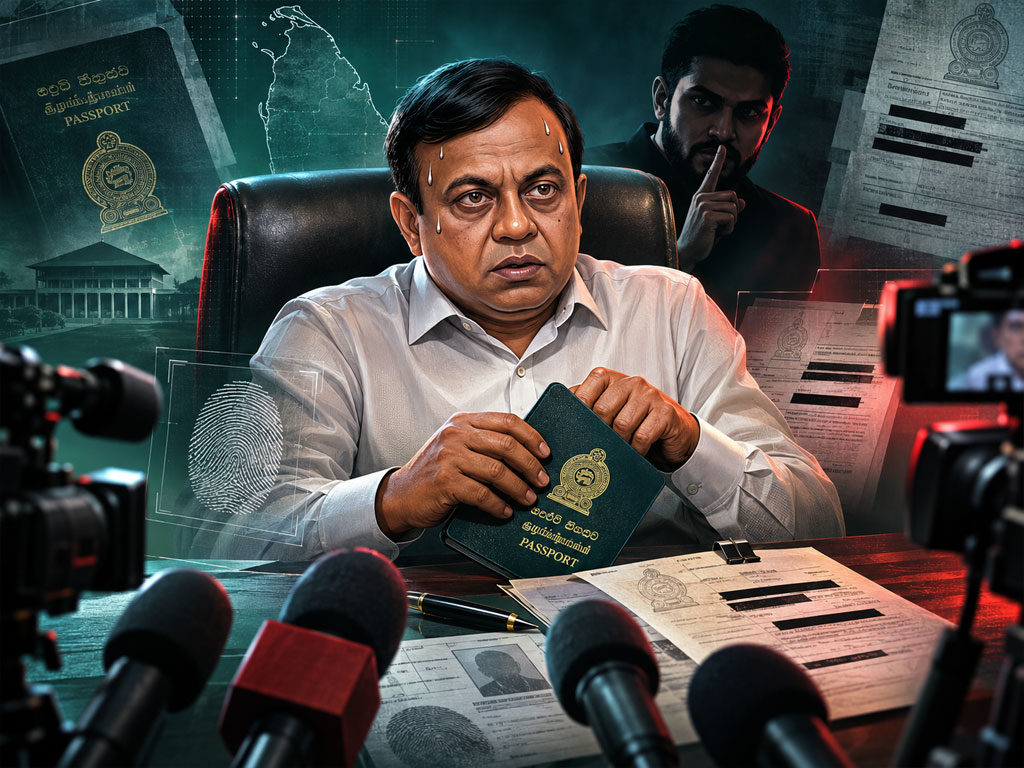
Deputy Minister of Public Security Sunil Watagala publicly disclosed in December 2024 that an individual had impersonated a person connected to his office, deceived officials and obtained 17 passports by claiming to act on his instructions.
Watagala maintained that the individual had misrepresented his relationship with the Deputy Minister and that police had been instructed to investigate the incident.
The disclosure attracted considerable attention because it raised questions about how a person without the necessary authority could allegedly influence official passport procedures by invoking the name of a senior government representative.
Nearly two years later, the central issue is whether the public has received a sufficiently detailed account of the investigation, including the circumstances in which the passports were obtained, the identity of the individual involved and any action taken against those responsible.
Further claims circulating on social media have also prompted demands for an examination of passports reportedly issued on January 3 and 6, particularly amid separate investigations into fraudulent travel documents allegedly obtained for individuals associated with organised crime.

Questions Surrounding the Original 17-Passport Incident
The controversy began after Watagala described how an individual had presented himself as someone connected to the Ministry of Public Security during the Deputy Minister’s initial period in office.
According to his account, the individual accompanied him during official activities and subsequently used the appearance of an authorised relationship to approach officials involved in passport processing.
Watagala said he later discovered that the individual had obtained 17 passports while claiming to be acting under his instructions.
The incident raised immediate questions about the verification procedures followed before the documents were issued.
Public Security Minister Ananda Wijepala was subsequently reported to have requested a police investigation into Watagala’s account.
Nevertheless, the original article argues that the public should be informed of the investigation’s outcome, rather than being left solely with the Deputy Minister’s initial explanation.
Several matters require clarification, including whether the individual was identified and questioned, whether all 17 passports were traced, and whether any officials were investigated for possible procedural violations.
Equally important is whether the documents were legitimately issued to their named holders or whether false information was used during the application process.
Without an authoritative account addressing these matters, the circumstances surrounding the reported incident remain insufficiently explained in the material available for this article.
Fresh Allegations Involving January Passport Records
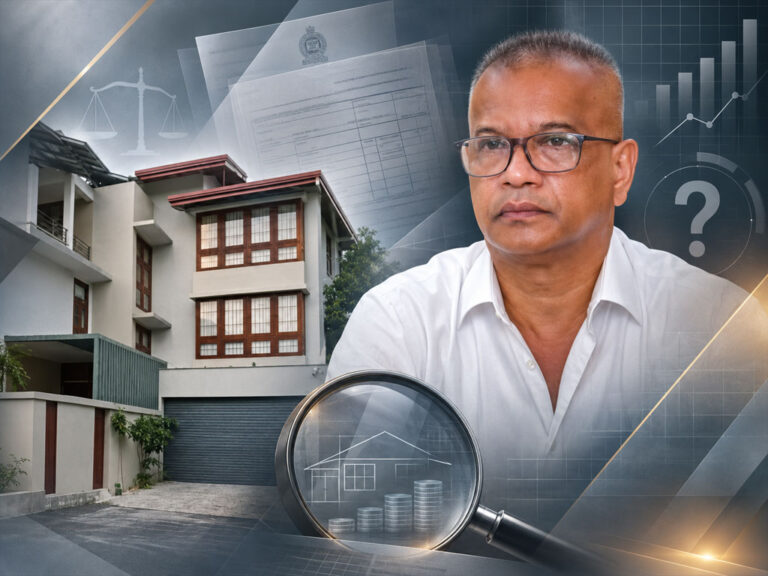
Social media commentators have separately called for an investigation into passports allegedly processed on January 3 and 6, including claims concerning documents issued to entire families.
Those making the allegations have challenged Watagala and the relevant authorities to disclose whether irregularities occurred during the period and whether any such cases were investigated.
However, the claims presented in the original report do not identify the applicants, provide passport application records or establish that the documents were issued unlawfully.
Nor do they demonstrate that any alleged irregularities on those dates were connected to the earlier 17-passport incident.
These distinctions are essential. A passport issued during a particular period does not, by itself, establish misconduct, and an administrative irregularity cannot automatically be attributed to the Deputy Minister.
Nevertheless, the allegations provide grounds for seeking an official explanation from the Department of Immigration and Emigration, including whether the relevant records have been examined and whether any complaints were referred for investigation.
Alleged Passport Fraud Linked to Kehelbaddara Padme
A separate and potentially more serious concern involves reports of fraudulent passport applications associated with Koralagamage Mandinu Padmasiri, commonly known as Kehelbaddara Padme, an individual identified in police investigations involving organised crime.
The original article states that information received by its authors concerns a passport allegedly issued under another person’s identity, bearing a photograph said to resemble Padmasiri.
That assertion requires independent verification. A resemblance between photographs cannot conclusively establish identity, nor does the information supplied establish the circumstances in which the alleged passport was issued.
There is, however, a documented basis for examining the wider problem of fraudulent passports connected to this individual.
In May 2025, police investigations led to the arrests of individuals suspected of facilitating fraudulent passport applications involving Kehelbaddara Padme.
Investigators reportedly examined allegations that photographs and false personal details had been used to obtain travel documents under different identities.
An Assistant Controller attached to the Department of Immigration and Emigration was also arrested in connection with allegations concerning the issuance of fraudulent passports.
These reported arrests demonstrate that authorities had identified suspected irregularities serious enough to warrant criminal investigation.
They do not, however, establish that Watagala personally authorised, facilitated or knew about any fraudulent passport application.
Neither do they prove that the earlier 17 passports formed part of the same alleged scheme.
Demands for Transparency and Institutional Accountability
The central concern extending across these allegations is the integrity of Sri Lanka’s passport issuance system.
Travel documents are issued through procedures intended to establish the identity and eligibility of applicants. Where those procedures are circumvented, the consequences can extend beyond administrative misconduct to immigration fraud and national security risks.
For that reason, the original article calls upon Watagala and the responsible authorities to provide clear answers to several outstanding questions:
1. The 17-passport investigation: What action followed the Deputy Minister’s original disclosure, and was the individual accused of misrepresenting his authority identified or prosecuted?
2. Verification of passport recipients: Were the identities of all 17 passport recipients independently checked, and were any documents found to have been obtained through false information?
3. January 3 and 6 records: Have the authorities examined the passport applications highlighted by social media commentators, and did any irregularities emerge?
4. Organised crime connections: Have investigators established whether fraudulent passport applications associated with Kehelbaddara Padme involved officials or intermediaries acting outside their lawful authority?
5. Possible connections between investigations: Is there any verified evidence linking the original 17-passport incident to subsequent investigations involving suspected organised crime figures?
6. Administrative safeguards: What measures have been introduced to prevent applicants or intermediaries from obtaining passports through impersonation, fabricated identities or claims of political influence?
These questions should be addressed through documentary evidence, official investigative findings and appropriate legal proceedings.
Accountability Must Be Established Through Evidence
Watagala’s initial disclosure presented the 17-passport incident as an alleged deception of government officials by an unauthorised individual.
The original report challenges whether that explanation has been adequately followed by a transparent account of the investigation and the measures taken to prevent similar incidents.
Such scrutiny is legitimate where public institutions are responsible for issuing documents that establish legal identity and facilitate international travel.
At the same time, allegations that a senior government official deliberately concealed passport fraud, assisted organised criminals or participated in a wider operation require substantive evidence before they can be treated as established facts.
The material provided does not establish those accusations.
Sri Lanka’s authorities have previously investigated alleged passport fraud involving individuals associated with organised crime. What remains necessary is a clear public distinction between those documented investigations, the earlier incident disclosed by Watagala, and the newer allegations concerning particular passport issuance dates.
The Department of Immigration and Emigration, the police and the Ministry of Public Security are therefore best placed to clarify the status of the investigations, the authenticity of the documents in question and whether any official misconduct has been established.
Until those findings are made available, the controversy remains a matter of unresolved public accountability rather than proof of wrongdoing by the Deputy Minister.
The Morning Telegraph remains open to publishing responses or clarifications from Deputy Minister Sunil Watagala, the Ministry of Public Security, the Department of Immigration and Emigration and other parties mentioned in this report.
SOURCE:- KAIWARU.NET