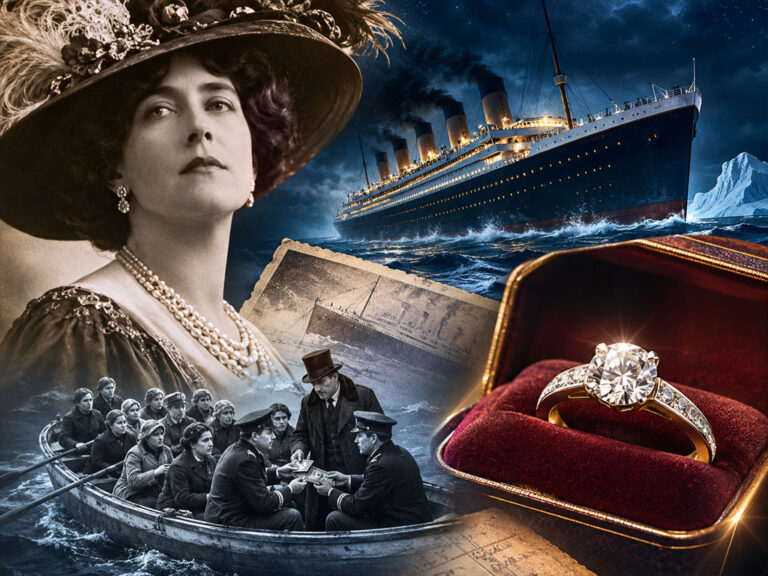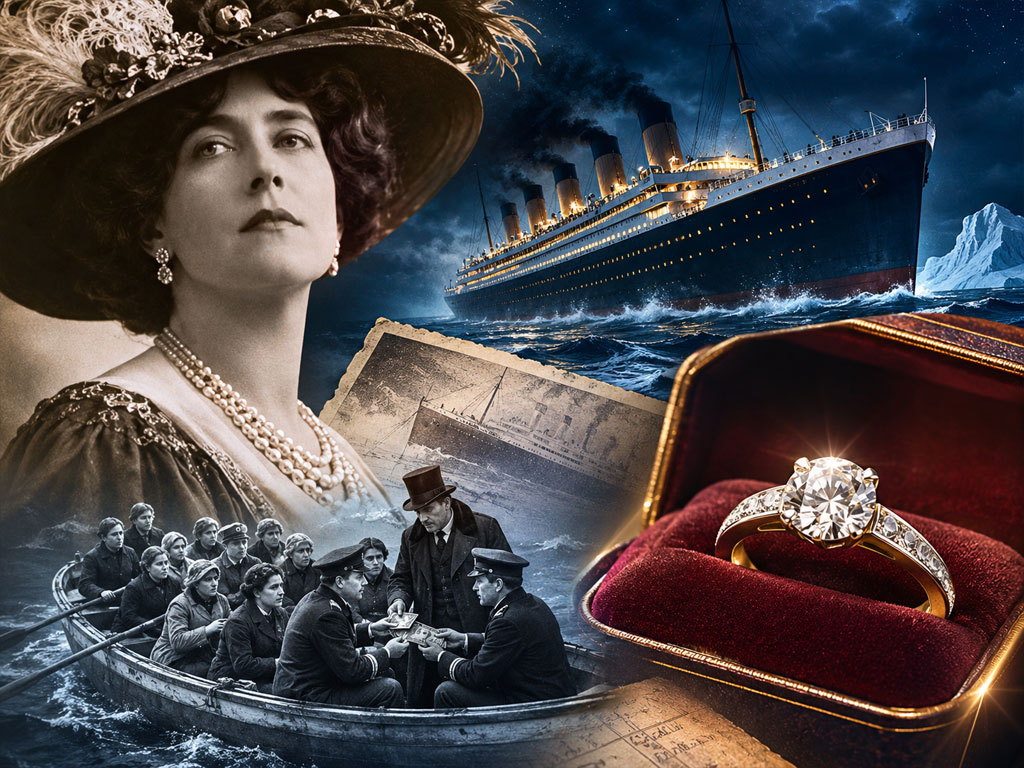
LONDON, November 23, 2026 — A diamond ring worn by Titanic survivor Lucy, Lady Duff Gordon, during the 1912 maritime disaster has sold for £150,000 at a British auction, bringing renewed attention to the controversial £5 payments made by her husband to lifeboat crew members and the bribery allegations subsequently rejected by an official inquiry.
The ring, believed to have been Lady Duff Gordon’s engagement ring, was sold on Saturday, November 21, through Henry Aldridge & Son in Devizes, Wiltshire, England, substantially exceeding its pre-auction upper estimate of £80,000.
According to reports of the sale, the final price reached £150,000, including the buyer’s premium, making it a notable result for jewellery associated with the Titanic disaster.
The auction has revived interest in one of the most contentious episodes surrounding the sinking of the RMS Titanic on April 15, 1912, when approximately 1,500 passengers and crew lost their lives in the North Atlantic.
At the centre of the controversy was Sir Cosmo Duff Gordon, Lady Lucy’s husband, who survived with her aboard a lifeboat carrying just 12 people despite having space for 40.
His subsequent decision to give each of the seven crew members aboard the lifeboat a cheque for £5 prompted allegations that the money had been offered to prevent them from returning to rescue passengers struggling in the freezing water.
Although the payments were genuine, the British Wreck Commissioner’s Inquiry subsequently concluded that the allegation of bribery was unfounded.

A Diamond Ring That Survived the Titanic Disaster
Lucy, Lady Duff Gordon, was a prominent British fashion designer whose creations attracted wealthy and influential clients in Europe and the United States.
She was travelling to America aboard the Titanic with her husband, Sir Cosmo Duff Gordon, and her secretary, Laura Mabel Francatelli.
All three survived the disaster after boarding Lifeboat No. 1 during the ship’s evacuation.
Among Lady Duff Gordon’s possessions, the solitaire diamond ring was particularly significant because it was the only valuable piece of jewellery she was wearing that survived the sinking.
Family members subsequently referred to it as the “Titanic Ring”, preserving it as both a personal heirloom and a reminder of one of history’s deadliest maritime disasters.
The ring was eventually passed to her grandson, John, the 3rd Earl of Halsbury, a British peer and scientist. Following his death, it remained in the family until being offered for sale through a direct descendant.
Auctioneer Andrew Aldridge described the appearance of such a personal possession at auction as exceptionally unusual, particularly given Lady Duff Gordon’s prominence and the ring’s documented family history.
The item’s significance extended beyond its precious stones. Its value lay partly in its direct connection to someone who had survived the sinking and whose escape subsequently attracted intense public scrutiny.
Lifeboat No. 1 and the £5 Payments That Caused a Scandal
The controversy surrounding the Duff Gordons began with the circumstances of their escape.
As the Titanic sank during the early hours of April 15, 1912, the couple and Francatelli boarded Lifeboat No. 1 alongside other occupants.
Although designed to accommodate approximately 40 people, the boat was lowered with only 12 aboard, including seven crew members.
Its departure with so many empty places became a source of criticism, particularly because hundreds of passengers remained aboard the sinking liner.
After the survivors were rescued by the RMS Carpathia, Sir Cosmo gave each of the seven crew members a cheque for £5.
He explained that the payments were intended to assist the men financially after the loss of the Titanic had brought their employment and wages to an abrupt end.
Nevertheless, allegations circulated that the money had actually been offered to persuade the crew not to return to the sinking ship or rescue people in the water.
According to the accusations, the occupants feared that approaching large numbers of struggling passengers might cause the lifeboat to be overwhelmed.
These claims circulated widely in the press, transforming the Duff Gordons’ escape into a public controversy.
Sir Cosmo’s position as a wealthy first-class passenger further intensified scrutiny of the payments and the conduct of those aboard Lifeboat No. 1.
The central accusation was serious: that passengers possessing considerable wealth had allegedly used money to influence a life-or-death decision during the disaster.
However, the existence of the cheques did not establish that they had been offered as bribes.
What the Official Titanic Inquiry Actually Found
The allegations were examined during the British Wreck Commissioner’s Inquiry into the Titanic disaster.
Sir Cosmo gave evidence on May 17, 1912, while Lady Duff Gordon appeared before the inquiry on May 20.
Their testimony attracted considerable public attention as investigators examined the events surrounding Lifeboat No. 1 and the subsequent payments.
The inquiry ultimately rejected the accusation that Sir Cosmo had bribed the crew to avoid rescuing other passengers.
Its final report explicitly described the bribery allegation as unfounded.
Nevertheless, the inquiry distinguished between the accusation of bribery and the separate question of whether the lifeboat’s occupants could have attempted to save additional lives.
The commissioner considered that the crew might have made an effort to rescue people in the water and that such an attempt could have succeeded.
He also expressed the view that encouragement from Sir Cosmo might have prompted the crew to return.
These observations established an important distinction in the historical record.
While the inquiry found no basis for concluding that Sir Cosmo had bribed the crew, it did not suggest that the conduct of those aboard the lifeboat was beyond criticism.
More than a century later, the controversy remains part of the wider debate over how passengers and crew responded during the Titanic’s evacuation.
Other Titanic Memorabilia Fetches Thousands at Auction
The November 21 auction also featured several historically important objects associated with passengers and crew who travelled aboard the Titanic.
Among the items sold was a rare day pass allowing visitors to board the vessel at Southampton on April 10, 1912, before its departure on its maiden voyage.
The pass was associated with Eliza Dibden, whose 18-year-old son, William Dibden, was a second-class passenger who died in the disaster.
Accompanying the document was William’s first Holy Communion certificate, dated Easter Sunday 1908.
Together, the items offered a personal connection to a family whose lives were profoundly affected by the tragedy.
The collection sold for a reported £40,000, including the buyer’s premium.
Another significant item was a postcard written by Jack Phillips, the Titanic’s 25-year-old senior wireless operator.
Phillips wrote the postcard to his sister, Elsie Phillips, on April 6, 1912, while the vessel was docked at Southampton.
Featuring a photograph of the Titanic, the postcard offered a rare personal glimpse into the life of a man whose actions during the disaster helped alert other ships to the unfolding emergency.
As the Titanic sank, Phillips continued transmitting distress messages, helping summon assistance to the stricken liner.
His postcard sold for £32,000, substantially exceeding its anticipated upper estimate of £20,000.
The sale demonstrated the continuing demand for personal possessions and documents associated with the Titanic, particularly those linked to individuals whose experiences became part of the disaster’s historical record.
More Than a Century Later, the Titanic’s Legacy Endures
The sale of Lady Duff Gordon’s ring represents more than another expensive transaction involving historical memorabilia.
Its connection to the Titanic, the circumstances of its survival and the controversy surrounding Lifeboat No. 1 have made it an unusually compelling artefact.
Unlike objects recovered from the wreck, the ring survived because its owner escaped wearing it.
Its subsequent preservation within the family maintained a direct connection between the disaster and later generations.
The renewed attention surrounding the auction also illustrates how historical allegations can persist long after official investigations have addressed them.
In the Duff Gordon case, the distinction is particularly important.
Sir Cosmo’s £5 payments were documented, and the limited number of occupants aboard Lifeboat No. 1 remains an established historical fact. The allegation that those payments constituted bribes, however, was rejected by the official inquiry.
For collectors, the ring’s extraordinary value reflects its provenance, rarity and association with one of the best-known survivors of the disaster.
For historians, its reappearance provides another opportunity to revisit the evidence surrounding the Titanic’s evacuation and the decisions made during its final hours.
More than 114 years after the sinking, the ring has passed into new ownership, but the events surrounding its survival remain an enduring part of maritime history.