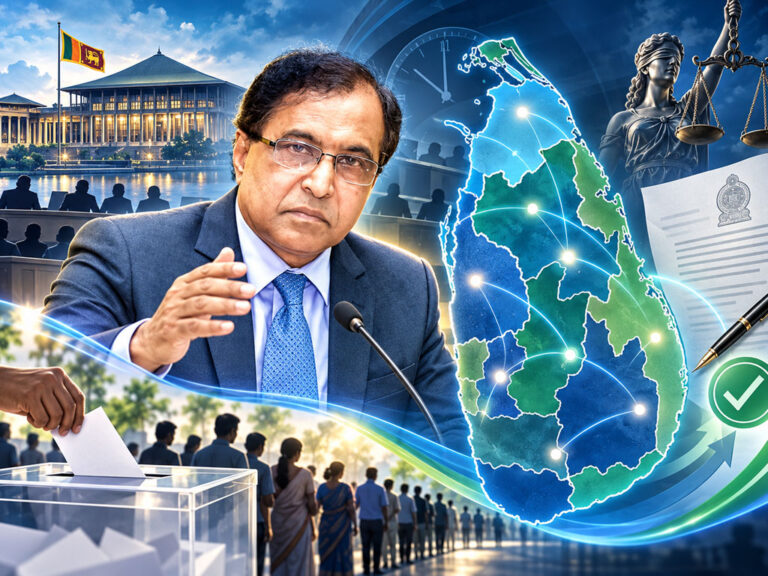
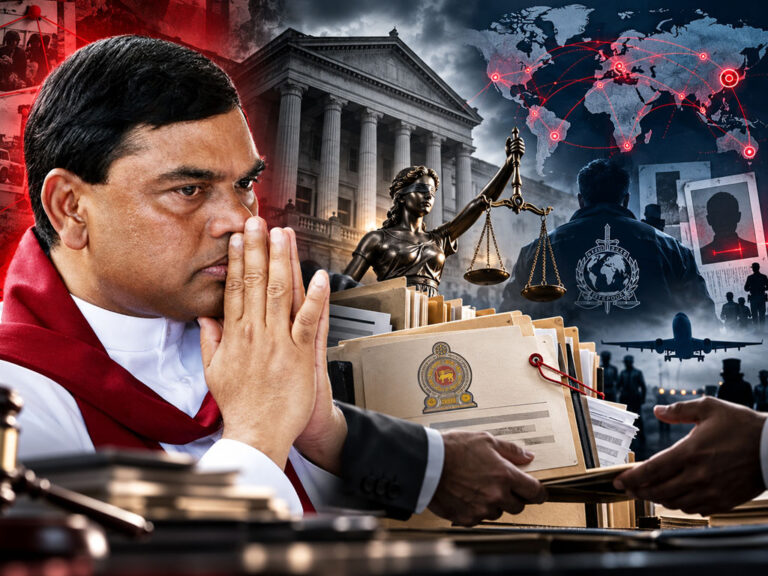
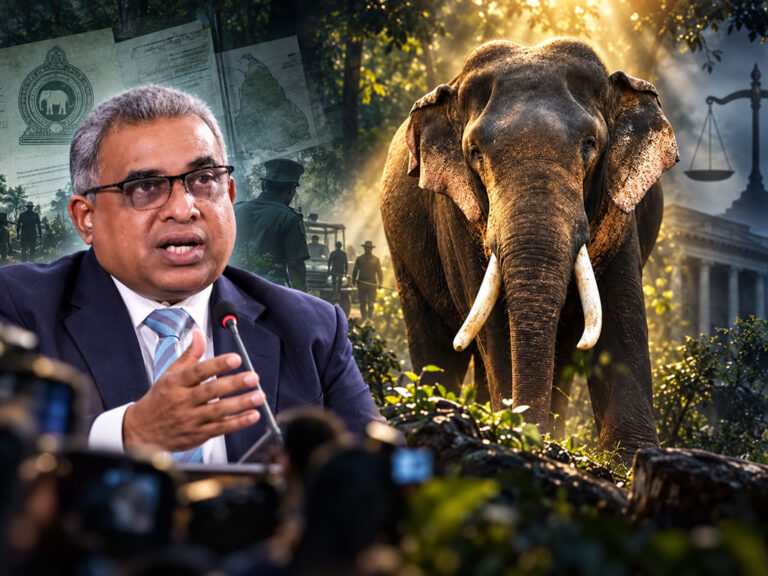
The National People’s Power (NPP) government, once the loudest voice against corruption, nepotism, and military interference in civil life, is now mired in the very scandals it once condemned. From questionable political appointments and shady diplomatic postings to family ties and military favoritism, this exposé reveals how Sri Lanka’s new rulers may be rewriting the same old script.
The National People’s Power (NPP) government is now facing serious public scrutiny over its recent political appointments. The backlash was triggered by the naming of retired Commodore M.B.N.A. Premarathne as the new Commissioner General of Excise, which quickly drew criticism as it was revealed his wife, senior Professor Wasantha Subasinghe, had not only been a candidate on the NPP’s National List in 2024 but was also recently appointed Vice Chancellor of the Gampaha Wickramarachchi University of Indigenous Medicine. This back-to-back rise of a couple closely affiliated with the NPP has led to outrage across social media.
Premarathne replaced U.L. Udaya Kumara Perera, a Special Grade Inland Revenue officer who retired at 60 on July 10, 2025. The Excise Department now being entrusted to a former Navy officer has intensified public concern. The NPP’s historic opposition to nepotism and militarisation in civilian appointments is now being questioned, especially as Subasinghe was among those who failed to secure a National List seat, with the party instead naming two unsuccessful electoral candidates.
The list of those nominated to the NPP National List includes Bimal Niroshan Rathnayake, Dr. Anura Karunathilake, Prof. Upali Pannilage, Eranga Udesh Weeraratna, Aruna Jayasekara, Dr. Harshana Sooriyapperuma, Janitha Ruwan Kodithuwakku, Punya Sri Kumara Jayakody, Ramalingam Chandrasekar, Dr. Najith Indika, Sugath Thilakarathne Lakmali Kanchana Hemachandra, Sunil Kumara Gamage, Gamini Rathnayake, Prof. Ruwan Chaminda Ranasinghe, Sugath Wasantha de Silva Abubakar Adambawa (Digamadulla District), and Ranthnayake Hettige Upali Samarasinghe (Vanni District).
There is speculation that Subasinghe might have gained a National List seat if not for the party’s decision to select defeated candidates Adambawa and Samarasinghe. This decision now seems to contradict the NPP’s own anti-nepotism messaging. Furthermore, Premarathne’s appointment is one in a growing list of ex-military officers being granted prominent public service roles under the NPP’s administration.
The Excise Department, being one of the nation’s primary revenue generators alongside Inland Revenue and Sri Lanka Customs, is a sensitive appointment. Historically riddled with accusations of corruption and inefficiency, this institution has long been a target of public criticism. The NPP had once joined in lambasting the institution’s failings. Now, with Premarathne at its helm, critics argue the NPP is reneging on its reformist promises.
Adding to the optics problem, Premarathne’s wife’s recent appointment has amplified public suspicion. Many feel these positions are now being awarded to loyalists under the guise of meritocracy. This further muddies the waters for a party that had pledged to uphold transparency and merit.
Social media platforms have become a hotbed for criticism, where users accuse the NPP of double standards. The NPP’s past criticisms of public sector mismanagement and nepotism now appear to be rebounding on them. With transparency as one of its core pledges during the election campaign, the near-simultaneous appointments of a couple into high public office have raised alarm bells.
On the broader issue of ex-military roles, parallels have been drawn to the Rajapaksa era. The former ruling coalition was notorious for giving former military men diplomatic and administrative posts. Ironically, the NPP—a coalition dominated by the JVP, which had suffered brutal military crackdowns in the past—is now being seen as following a similar path.
The emergence of figures like retired Air Vice Marshal Sampath Thuiyakontha as Secretary to the Ministry of Defence and his earlier clashes with the Defence Ministry are seen as symbolic of the NPP’s shifting power dynamics. Not long ago, Thuiyakontha had been persona non grata, banned from military bases by the Wickremesinghe administration. Today, he holds a powerful post under an NPP-led government.
Likewise, retired Major General Aruna Jayasekera was appointed Deputy Defence Minister. Both men had campaigned publicly for the NPP. Their rise to key defence roles has shocked political observers who recall the JVP’s long-standing anti-military stance, born from its own history of armed insurrections and brutal state reprisals.
The trend extends to diplomatic appointments. Rear Admiral (Retd.) Fred Seneviratne was appointed as Sri Lanka’s High Commissioner to Pakistan. Similarly, former Chief Justice Jayntha Jayasuriya became the UN envoy, and academic professionals like Prof. Janaka Kumarihsinghe and Prof. Arusha Cooray were given ambassadorial roles. Despite protests from the Sri Lanka Foreign Service Association, these appointments stood.
The shift in NPP’s position on military figures in politics is underlined by recent electoral success of ex-military candidates. Parliamentarians such as Lt. Commander Prageeth Madhuranga and Maj. Gen. G.D. Sooriyabandara entered the fray post-Aragalaya. A once-unimaginable scenario is now part of mainstream NPP strategy.
Meanwhile, nepotism charges have resurfaced with the election of Bimal Rathnayake and his wife Sammanalee Gunasinghe to Parliament. Gunasinghe is a JVP Central Committee member from Colombo. Furthermore, NPP General Secretary Dr. Nihal Abeysinghe and his son Chathuranga were both elected from different districts, compounding concerns about political dynasties.
These developments have not gone unnoticed by the public, who once rallied behind the NPP’s call for system change. Criticism has become more vocal, particularly from grassroots activists and independent watchdogs who see these moves as a betrayal of the principles the NPP claimed to uphold.
The controversy extended further with President Anura Kumara Dissanayake’s appointment of close associate Nandika Sanath Kumanayake as Secretary to the President. Critics questioned whether such an appointment reflected a merit-based process, even though Kumanayake had prior administrative experience.
Another scandal broke when SSP Shanie Abeysekera and DIG Ravi Seneviratne were reappointed. Their return, according to Leader of the House Bimal Rathnayake, was due to the request of the Catholic Church, particularly Archbishop Malcolm Cardinal Ranjith. This intervention surprised many, as both officials are linked to the controversial 2019 Easter Sunday investigation.
The Church has not refuted the claim, giving credibility to Rathnayake’s assertion. If true, these appointments further entangle religious influence in civil administration. Questions about objectivity and fairness in public service have grown louder.
Yet another appointment that caused concern was that of Pushpitha Chandana Hewa Kondilage as Auditor General. Many believed this post should have gone to Acting AG Dhamarapala Gammanpila, a veteran of three decades. Kondilage’s nomination to the CPC Board only added to public frustration.
Meanwhile, in Parliament, Speaker Jagath Wickramaratne faced corruption allegations filed by Nawa Jathika Peramuna. The charges include misuse of government vehicles and overuse of fuel allowance. Although Parliament refuted the claims in a press release, the issue remains unresolved.
Critics argue the Speaker received 900 litres of fuel in addition to his official allowance. While no prior Speaker has faced such allegations, the growing number of complaints is casting a shadow on Parliament’s credibility.
Interestingly, the Speaker recently announced plans to turn his official residence into a knowledge hub for local officials, a move some see as an attempt to restore public faith.
All of this occurs while the NPP teams up with previously labelled “corrupt” actors to form local governments. The Norwood Pradeshiya Sabha is cited as an example. Critics say the party has lost its reformist zeal.
Public anger is growing, but opposition parties have been slow to capitalize. With little trust in traditional opposition voices, many Sri Lankans feel politically orphaned.
In conclusion, political watchers are reminded of the efforts of Lacille de Silva, a House official sacked under President Chandrika Kumaratunga for exposing corruption. Supported by The Island, he took his case to the Supreme Court and won. His story serves as a cautionary tale, a reminder of what happens when institutions fail to hold themselves accountable.
Sri Lanka cannot afford another cycle of waste, cronyism, and mismanagement. True reform is not about slogans but about consistency and courage to do what is right, even when it’s inconvenient.